The Hooligans
May 1, 2026
-
The Hooligans
Venue: White Rabbit Contemporary Chinese Art Collection
19 Dec 2025 – 17 May 2026
At the White Rabbit Gallery in Sydney, The Hooligans reframes the figure of the “hooligan” as integral to the exercise of power. Curated by David Williams, the exhibition traces this relation across works that move between intimate experience and geopolitical scale, showing how authority is asserted and challenged. At the same time, it turns the term back on itself, prompting us to ask who, exactly, the real hooligans might be, in the historical past as well as the dumpster fire of the present.
The exhibition’s introductory text traces the genealogy of “hooliganism” in the Chinese context. The term, we learn, has functioned as a flexible instrument, deployed by different forms of authority to discipline a range of purportedly anti-social activities. During Mao’s long reign, the outlawed act of “hooliganism” (流氓罪) was defined with such breadth that it could be applied to almost any perceived disruption of the social and cultural order, enabling authorities to police conduct that fell outside accepted norms, including overt political dissent and individual expressions of non-conformity. The charge was eventually removed from the national Criminal Code, with its last application being against one of the 1989 Tiananmen Square dissidents. In the post-Mao period came successor offences such as the charge of “picking quarrels and provoking trouble” (寻衅滋事), a formulation broad enough to encompass a wide range of range of acts deemed disruptive to the Chinese Communist Party’s carefully maintained image of civility and control. The same is true of more recent anti-corruption campaigns, which, we are told, operate under slogans such as “hunting tigers and swatting flies” (打虎拍蝇), which promise to target both powerful elites and low-level bureaucrats.
The logic of the “hooligan”, the show suggests, is one that persists across these radically shifting political landscapes. Rather than denoting a clearly defined offense, the figure of the hooligan has marked in twentieth-century China a boundary-case for power, its evocation a technique for containing behaviour that lies outside social norms even as it threatens them. In this respect, the figure of the hooligan bears some comparison to terms such as the “outlaw” or the “public enemy” in other national contexts, labels that serve to designate perceived threats to social order and cohesion.

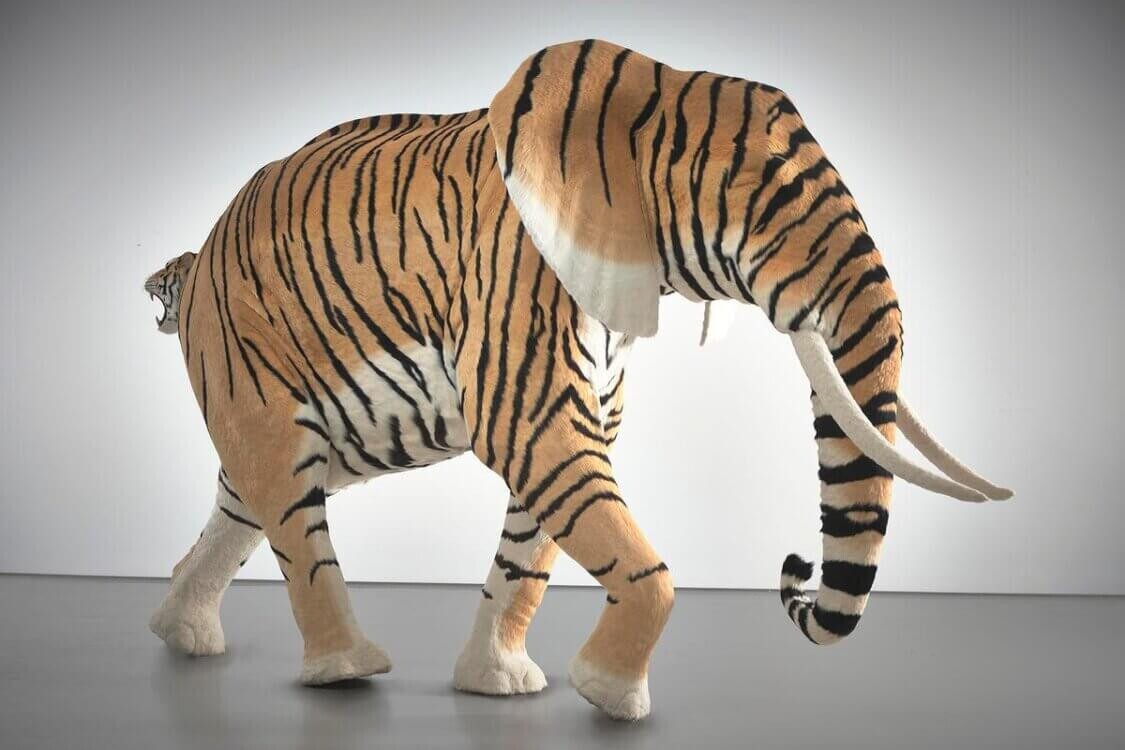
Tian Longyu, A… O!, 2014-2015, fur, leather, fibreglass, metal, approximately, 251 x 195 x 430 cm.
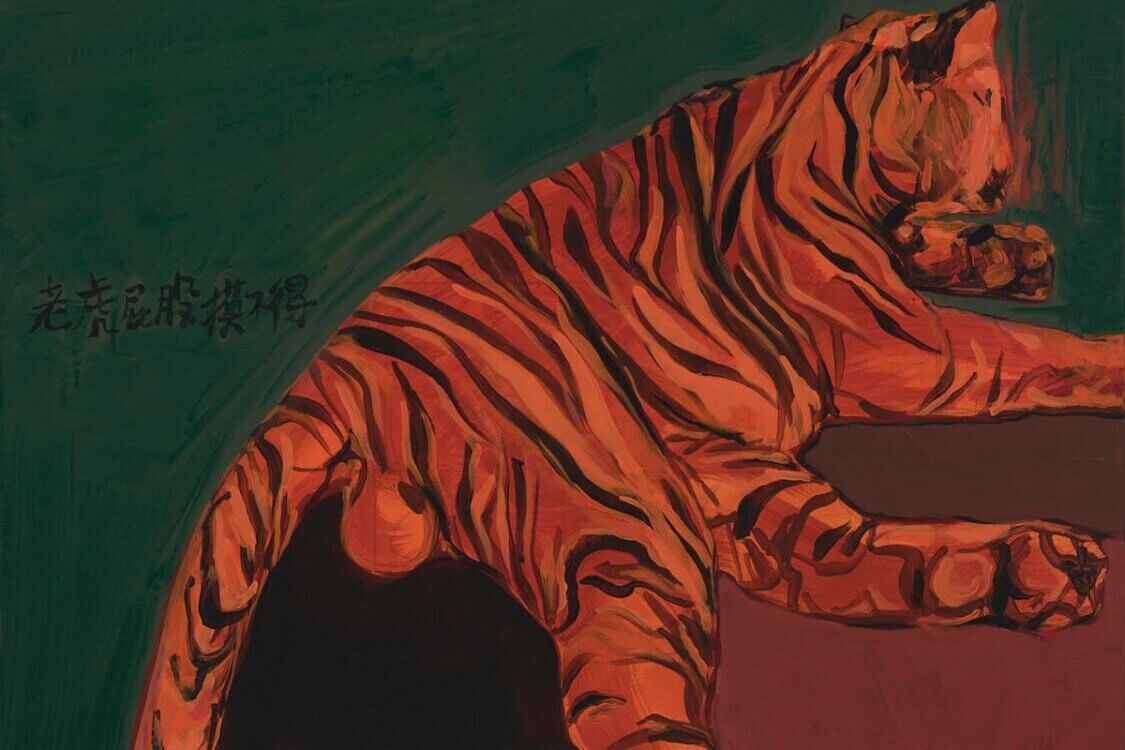
This contextual information helps to explain why the exhibition opens with Yu Ji’s The Tiger’s Butt Cannot be Touched (2023). The painting, which alludes to Xi Jinping’s aggressive and concerted drive to stamp out corruption in China, is striking in its simplicity. Executed in acrylic on linen, it utilises a limited palette, depicting a tiger of saturated orange set against vivid green, its sprawling body taking up much of the canvas, its sensitive genital area exposed. The tiger in Chinese culture has long been associated with masculine qualities of strength and dominance. On the left-hand side of the painting, a series of characters spell out the Chinese colloquialism “laohu pigu mo bu de” (老虎屁股摸不得), a popular saying that cautions against provoking those in positions of power.
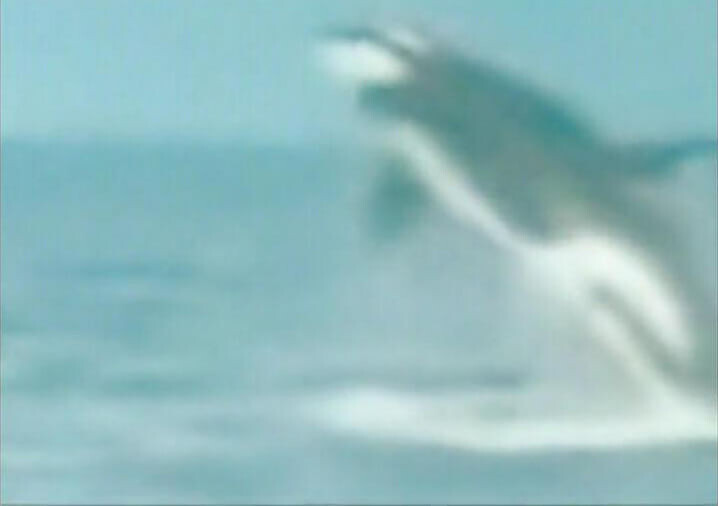
We find similar sentiments expressed in the other three works on the ground floor of the exhibition. Tian Longyu’s A… O! (2014-15) recasts authority at a very different scale. The work is a monumental sculpture of an elephant swallowed whole by a tiger, its massive bulk almost entirely subsumed within the latter’s body. Constructed from metal, leather, fibreglass, and fur scoured from pet-grooming salons over a two-year period, the piece is in equal measure arresting and bizarre. As the exhibition guidebook clarifies, Tian took inspiration from the proverb “rén xīn bù zú shé tūn xiàng” (人心不足蛇吞象), which likens human greed and overweening ambition to a snake attempting to devour an elephant. Tian has here replaced the snake with a tiger, an emblem of absolute power that, Tian posits, can, when left unchecked, lead to excess and corruption. The tiger succeeds in swallowing the elephant, yet at a great material cost: its body is utterly distorted, its face emerging from the elephant’s hindquarters. Authority is secured through an act that leaves it visibly comprised. An adjacent set of concerns animates Untitled—Animals Attack Humans (2013) by Jin Shan. If Tian’s sculpture depicts the distorting strain of domination, Jin’s work stages moments in which that dominance begins to give way. A composite of found footage drawn from new reports, wildlife documentaries, surveillance recordings, and mobile phone videos, the work presents us with a series of blurred, disorientating scenes in which animals turn on their human counterparts. In Jin’s hands, the familiar hierarchies that place humans securely above animals begin to break down. As with the other works on this level, it invites a metaphorical reading, but one that remains deliberately unstable. The reversals it stages expose the fragility of relations of mastery, suggesting a world in which power can shift suddenly and without warning.

Jin Shan, Untitled – Animals Attack Humans, 2013, video (colour, silent), 3 min 15 sec.
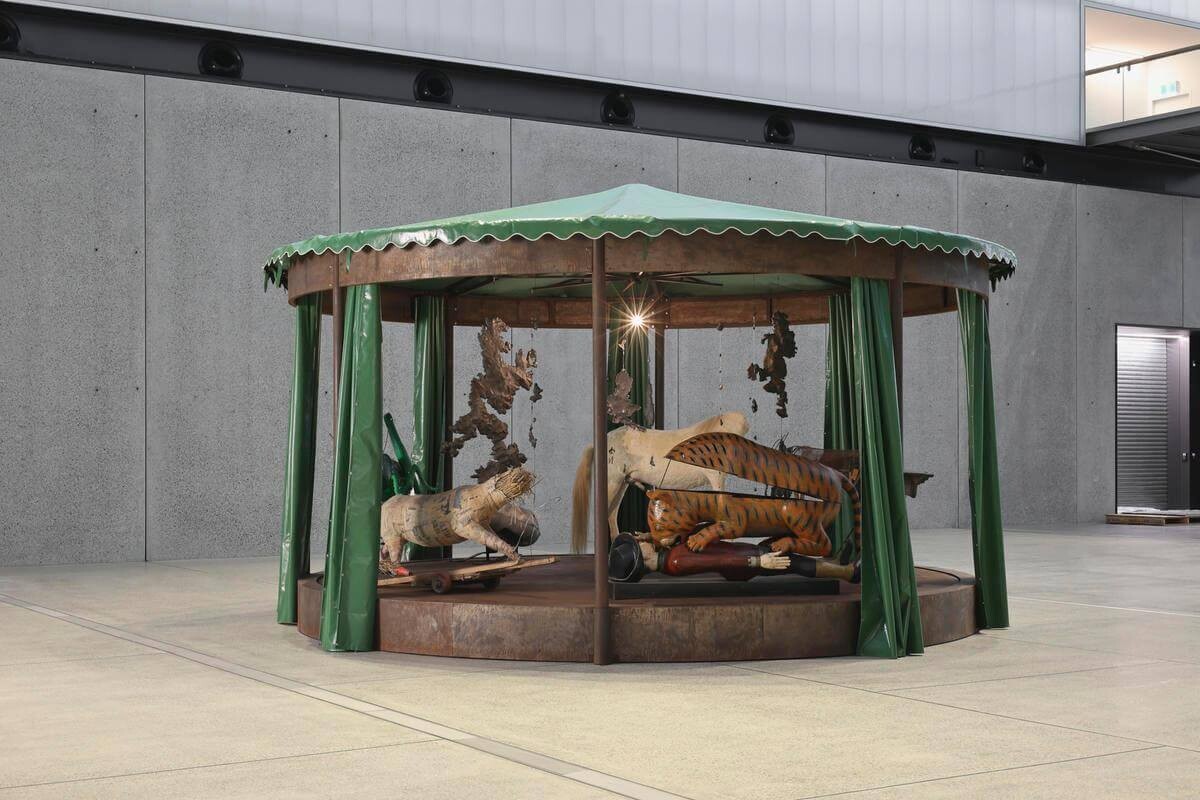
Where the ground floor renders sovereign power in figurative, animal form, the first floor starts by turning its to textual articulation, tracing how it is codified and expressed through history and geopolitics. This shift is immediately apparent in Wax Seal (2017) by Huang Yongping. Stretching to several metres in length, the work takes the form of a large-scale scroll, a parodic legal document, combining inked depictions of Hong Kong’s islands with calligraphy, animal imagery, imperial stamps, and the repeated imprint of red seals. The reference to nineteenth-century treaties is key. By invoking agreements such as the 1842 Treaty of Nanking, through which Hong Kong Island was ceded to Britain, Huang proffers a commentary on the legal fictions through which sovereignty is asserted and maintained. Hong Kong is quite literally at the heart of another of Huang’s works on this level of the exhibition: Les Consoles de Jeu Souveraines (2017). The piece is a large, rotating carousel. Its circular motion produces a sense of repetition without resolution, as a series of sculptural figures and objects move continuously around the outer ring. At the centre, we find a suspended map of Hong Kong and its surrounding islands. This focal point returns the viewer to the question of sovereignty raised in Wax Seal, here arranged in spatial terms, with Hong Kong positioned as a pivot within a shifting constellation of imperial and cultural references.

Huang Yongping, Les Consoles de Jeu Souveraines, 2017, steel, aluminium, bronze, wood, plastic, fibreglass, paper, straw, taxidermied horse, 345 x 586 cm diameter.
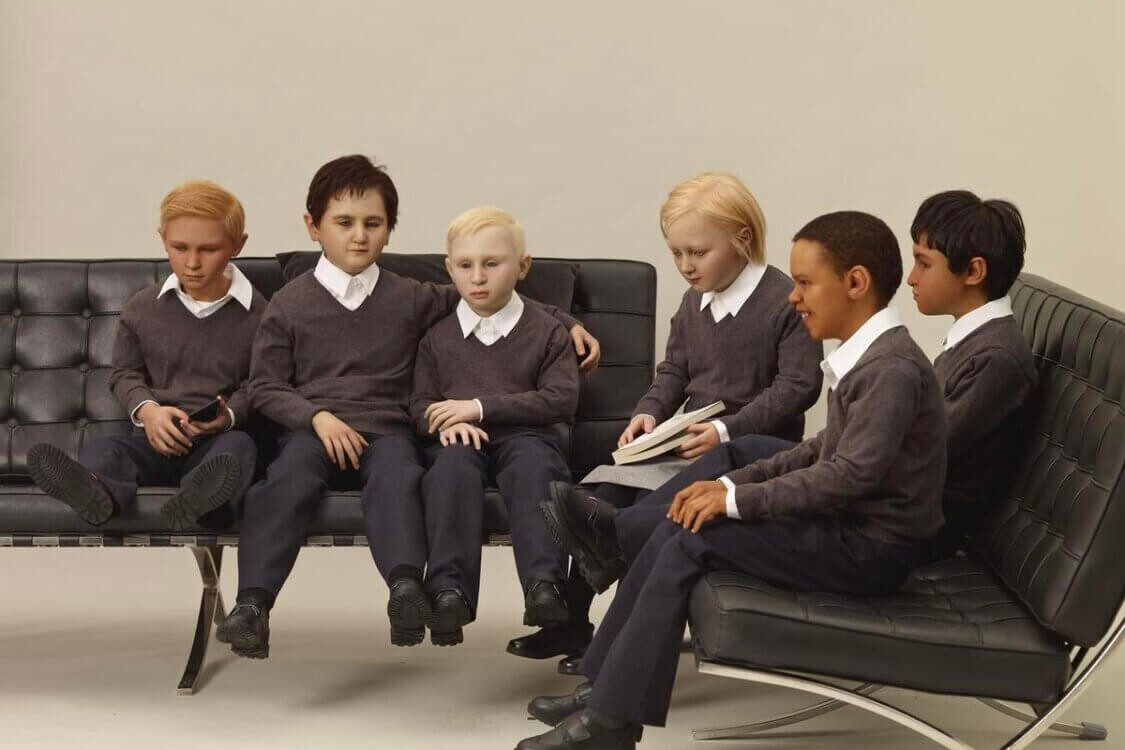
Global elites of a very particular sort come into focus in what is the physical centrepiece of this level of the exhibition, Li Wei’s Once Upon a Time (2019). Taking up much of the main space, this work is, to put it politely, unsettling and uncanny. Six hyperreal silicone children with gormless, glass-eyed expressions on their faces are arranged within a playground setting, sitting astride spring-loaded mock-ups of military equipment and weaponry. It takes a moment to appreciate that these aren’t just any children: we are looking at sculptures of Barack Obama, George W. Bush, Angela Merkel, Vladimir Putin, Bashar al-Assad, and Osama bin Laden. The emphasis falls on potential as a condition from which power emerges, with the playground (which also houses Huang’s carousel) recast as a site in which authority assumes human shape. As Li contends, these are the contemporary politicians, autocrats, and ideologues we have come to know and, in some instances, fear, reimagined and fixed at a moment when they still exhibited, in the artist’s words, “raw potential.” By dissolving power into potential, Li imagines an alternative future for these world leaders—and thus for us too.

Li Wei, Once Upon a Time, 2019, silicone, metal, 3D printed plastic, paint, clothing, human hair, six figures, each approximately 120 x 33 x 21 cm.
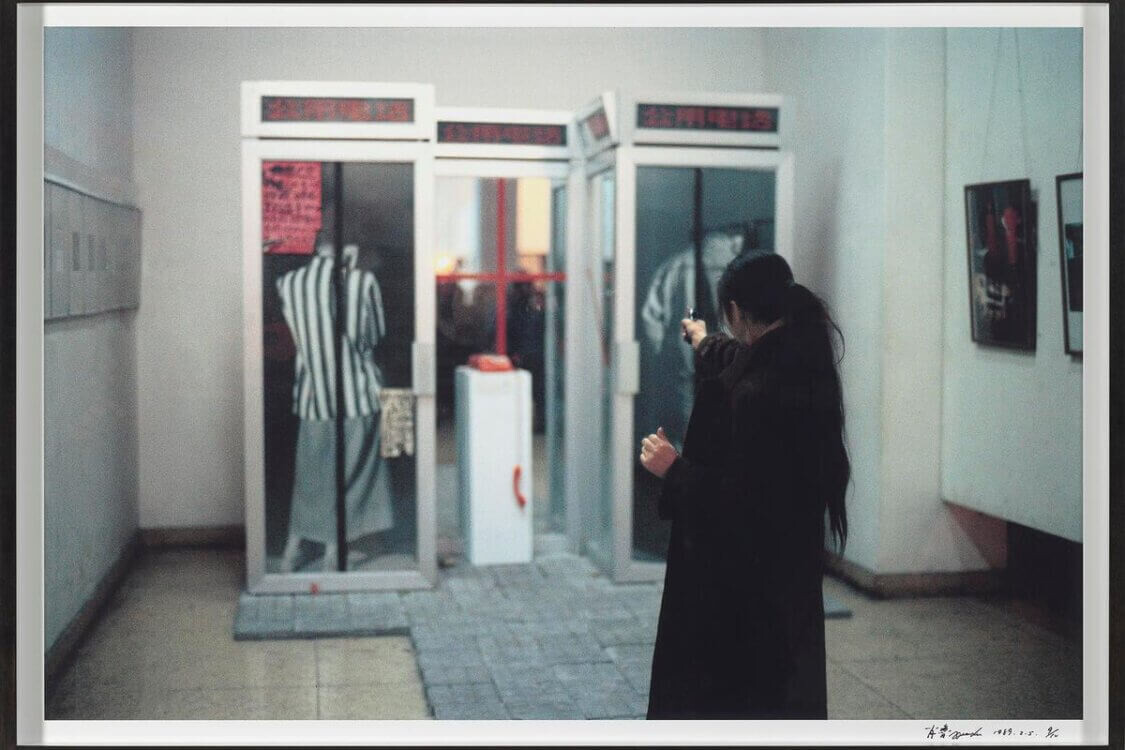
The second floor turns from figures of power to the figure of the “hooligan”. Here, dissent is present as a mode of both political and aesthetic practice, one that operates within and chafes against the structures that would seek to contain it. The first work we see is a photograph. A woman dressed entirely in black stands with her back to us. She holds a small gun. In front of her are two booths. In the left one, there is a shop mannequin dressed in women’s clothing. The contents of the right one are a bit harder to make out, partially obscured by the woman—it appears to contain a man’s jacket. Between the booths stands a small plinth. A red telephone hangs from it by its cord. Above this is a mirror, bisected with red tape, which holds the blurred reflection of a cluster of people and what appears to be the flash of a camera. The photograph documents the artist Xiao Lu in front of her installation Dialogue (1989), which staged the failure of communication across the gender binary in post-Mao China. The work was first presented at the groundbreaking China/Avant-Garde exhibition in Beijing, which opened on 5 February 1989. As the photograph shows, however, a couple of hours after the exhibition was officially opened, Xiao walked into the gallery, pulled out a loaded gun, and fired two shots at the reflection of herself in the mirror. Xiao was arrested and the exhibition shut down by the Beijing police for several days.

Xiao Lu, Dialogue, 1989, C-type print, 80 x 120 cm.

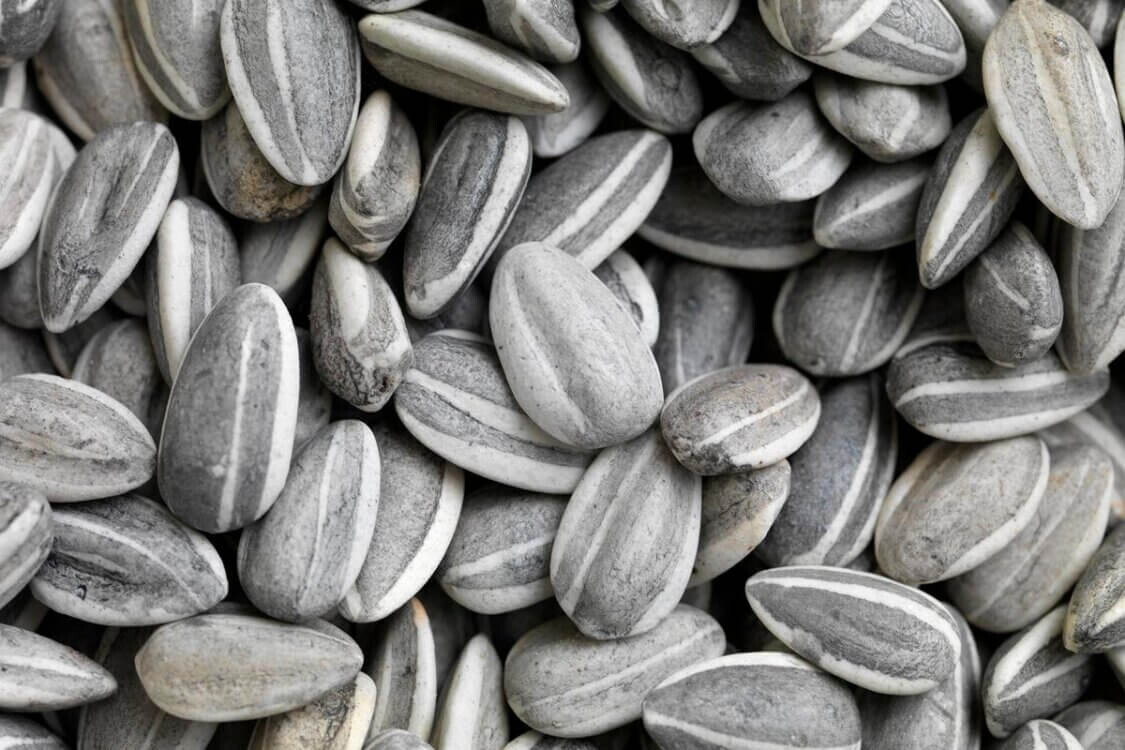
Ai Weiwei, Sunflower Seeds, 2009, porcelain
weight approximately 500kg.
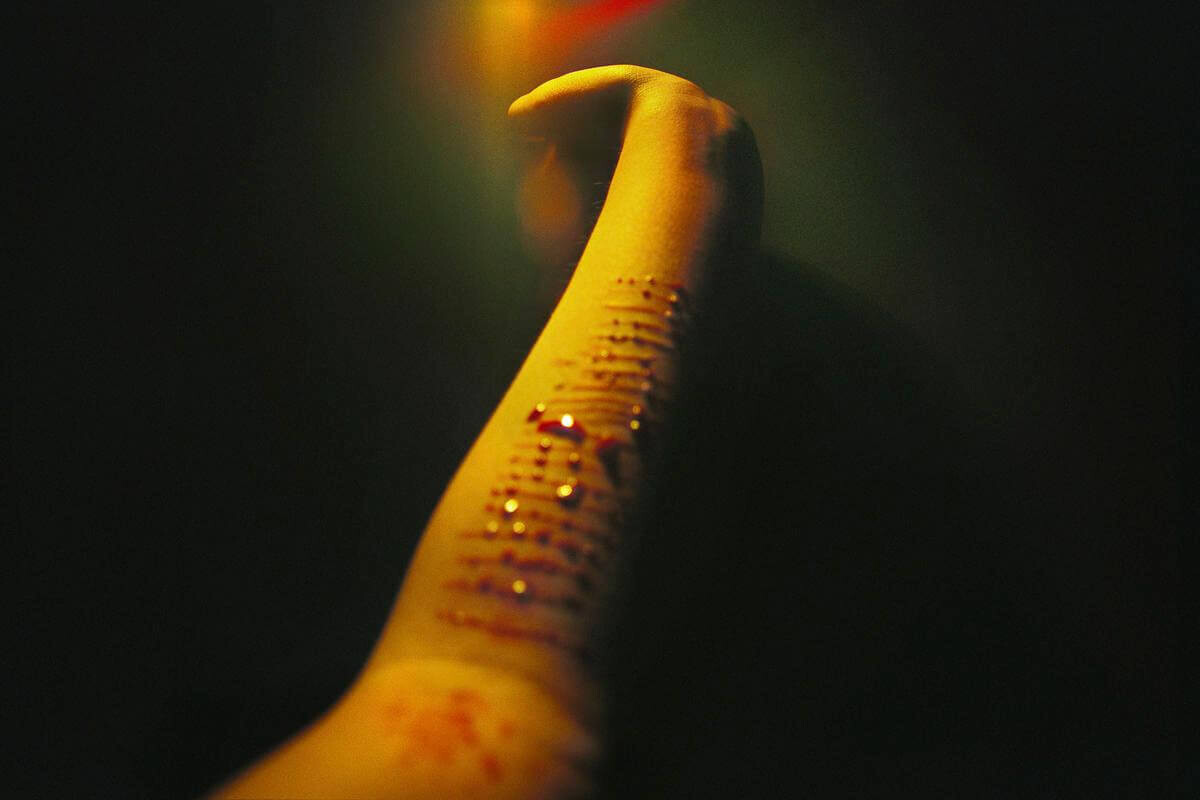
Xiao’s act, which was unplanned and captured on film by chance, has become one of the most discussed episodes in Chinese contemporary art. While Xiao has consistently maintained that the gesture was an expressive personal gesture rather than a political one, the work has long been read otherwise. The communication breakdown staged by the installation has been taken to echo the failed negotiations between student demonstrators and Chinese Communist Party officials in the spring of 1989, while the violence of Xiao’s act has been read as prefiguring the Tiananmen Square crackdown in early June. Xiao’s act is also playfully referenced in Ju Anqi’s A Missing Policeman (2016), a sprawling film that tracks the transformation of the Chinese avant-garde across several decades. Set against the backdrop of the Anti-Spiritual Pollution Campaign of the 1980s, which sought to curb liberal thought and reassert ideological control over cultural production, the film imagines a group of artists imprisoning a policeman, only for the balance of power to gradually shift as China undergoes rapid social and economic change. The works on this level, spanning emerging practitioners such as Chen Zhe, whose deeply personal photographic series The Bearable (2007–10) is a real highlight of the exhibition, and the presence of established figures like Ai Weiwei, whose signature Sunflower Seeds (2009) make an almost obligatory appearance, attest to the persistence of an avant-garde impulse that continues to adapt and thrive in often hostile conditions.
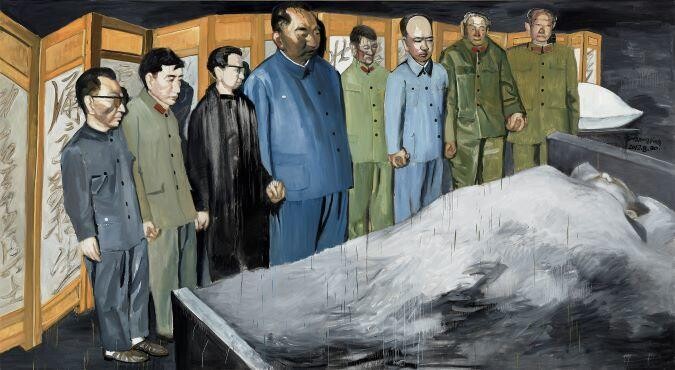
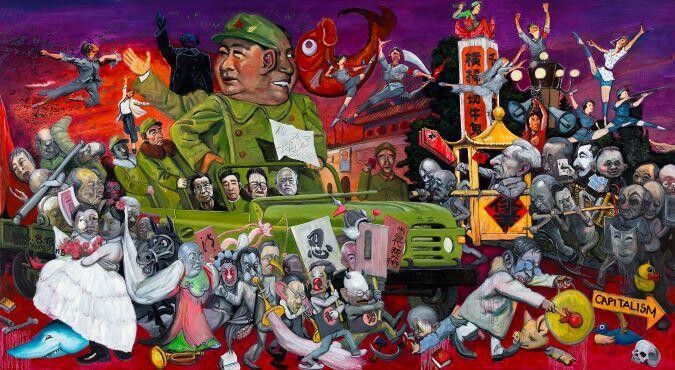
The exhibition’s third and final floor is given over to a sequence of works by a single artist, Song Yongping. His History Series (2012–16) comprises a suite of large-format paintings that stage a remarkable individual reckoning with China’s collective past. Brash and, at times, deliberately grotesque, the densely-layered works put me in mind of Bruegel and Banksy, drawing on a dense mix of visual references that combine elements of caricature, satire, and historical pastiche. Indeed, there is something faintly Rabelaisian about their unruly excess, as figures swell, distort, and crash into one another across crowded pictorial fields. Mao makes several appearances as a figure subject to distortion and reconfiguration. In Long Live Chairman Mao (2012), the first painting in the series, he is presented as a lifeless corpse, surrounded by the so-called Gang of Four, the scene stripped of any sense of solemnity or reverence. In With You in Charge, My Heart is at Ease (2016), he is symbiotically fused with his successor, Hua Guofeng, the two bodies collapsed into a single, surrealistic form that none-too-subtly hints at the ambiguities of political transition. Deng Xiaoping doesn’t fare much better. Story of Spring (2014) presents him as a swollen Buddha, a grotesque emblem of reform-era prosperity recast as hypocritical excess.

Song Yongping, With You in Charge, My Heart Is at Ease, 2016, oil on canvas, 220 x 401 cm.

Song Yongping, Long Live Chairman Mao, 2012, oil on canvas, 220 x 400 cm.
The exhibition ends with 1989 (2016), a work commissioned by the White Rabbit Gallery and created in Sydney. In this painting, the exiled Zhao Ziyang—the one-time general secretary of the Chinese Communist Party, purged for being too lenient with the protesting students—appears golf club in hand, mid-swing, set before Tiananmen’s Gate of Heavenly Peace, its façade shadowed by the silhouettes of tanks. He is surrounded by watermelons and pandas, symbols of unity and soft power respectively. Built up through successive layers of images that partially obscure one another, the surface of the painting becomes a record of accumulation and erasure, mirroring the uneasy persistence of induvial and collective forms of memory under repressive conditions. Sardonic and striking, it lingers in the mind as a final image. It also returns us to the exhibition’s central propositions. If the “hooligan” names a figure used to mark and manage disruption, then these works argue that such disruption necessarily remains an imminent threat to the power structures that seek to contain it. The fact that this exhibition is being staged in Sydney, rather than Beijing, gives that question added force. It points to the conditions under which such questions can be asked, and to the limits that continue to shape them.
Gallery