Knowing Otherwise
March 7, 2026
-
Knowing Otherwise
Venue: Monash University Museum of Art (MUMA)
07 Feb 2026 – 02 Apr 2026
If you are going around prosecuting your belief in the concept of objective truth these days, then you are revealing yourself to be a member of a minor, somewhat pitiful modern sect, one that adheres to a naive and esoteric belief system. Mostly everyone else is Knowing Otherwise, to quote the title of the witchy exhibition now on at the Monash University Museum of Art (MUMA). Curated by Stephanie Berlangieri, Amanda Haskard (Gurnaikurnai), and Francis E. Parker, Knowing Otherwise brings together an eclectic mix of artworks from the 1950s to the present, made by a group of fifteen artists channelling the ancestral, the spiritual, and ye olde embodied knowledge: Paola Balla (Wemba Wemba, Gunditjmara), Carla Cescon, Yin-Ju Chen, Mel Deerson, David Egan, Gail Mabo (Meriam), Naminapu Maymuru-White (Maŋgalili), Clare Milledge, Tracey Moffatt, Vali Myers, Rosaleen Norton, Leyla Stevens, Heather B. Swann, Suzanne Treister, and Karina Utomo. It’s a good show: thoughtful, thought-provoking, filled with viscerally affecting growls, and exhibiting some arcane deep cuts that are worth a trip to Caulfield. Still, I didn’t leave convinced that some systems of knowledge production—astrology, for example—urgently need to go from marginal to major.
Knowing Otherwise buttresses Catherine Liu’s argument that contemporary artists “occupy the space once held by shamans, mystics, court artists and musicians, and craft guild workers.” The introductory curatorial text contextualises the show within a general political arena marked by existential dread and systemic floundering. It reads:
Today, rising authoritarian populism, extremist movements and declining trust in government have thrown twentieth-century knowledge systems into question. Artists and communities disillusioned by the promises of liberal democracy—and by the assumption that modernity would inevitably deliver freedom and progress—are turning to heterodox forms of sense-making long excluded from institutional narratives.
The curators are too smart to directly suggest that art or artists could or should offer explicit political solutions to Trumpian leaders or mass cynicism towards liberal democracy. Instead, Knowing Otherwise suggests that, parallel to this doomsday scenario, some life might be found in knowledges previously repressed and/or seen as being the purview of outsiders, laggards, and weirdos. It has a reparative tilt and is divided into four subsections: “Branded as Witches: Accusation and Reclamation,” “Lineages of the Female Divine,” “Between Pagan and Christian,” and “Cosmos as Resistance: Land, Sea and Sky.” Knowing Otherwise is also part of a popular curatorial tendency to question what is broadly (sometimes too broadly) sketched as the legacies of Enlightenment humanism. (A velvet ant, a flower, and a bird walk into a bar. Bartender: “Lemme guess… another post-humanist reading group.” Bird: “Shut up and get me a beer.” Velvet ant: “Make it two.” Flower: (aggrieved silence.))

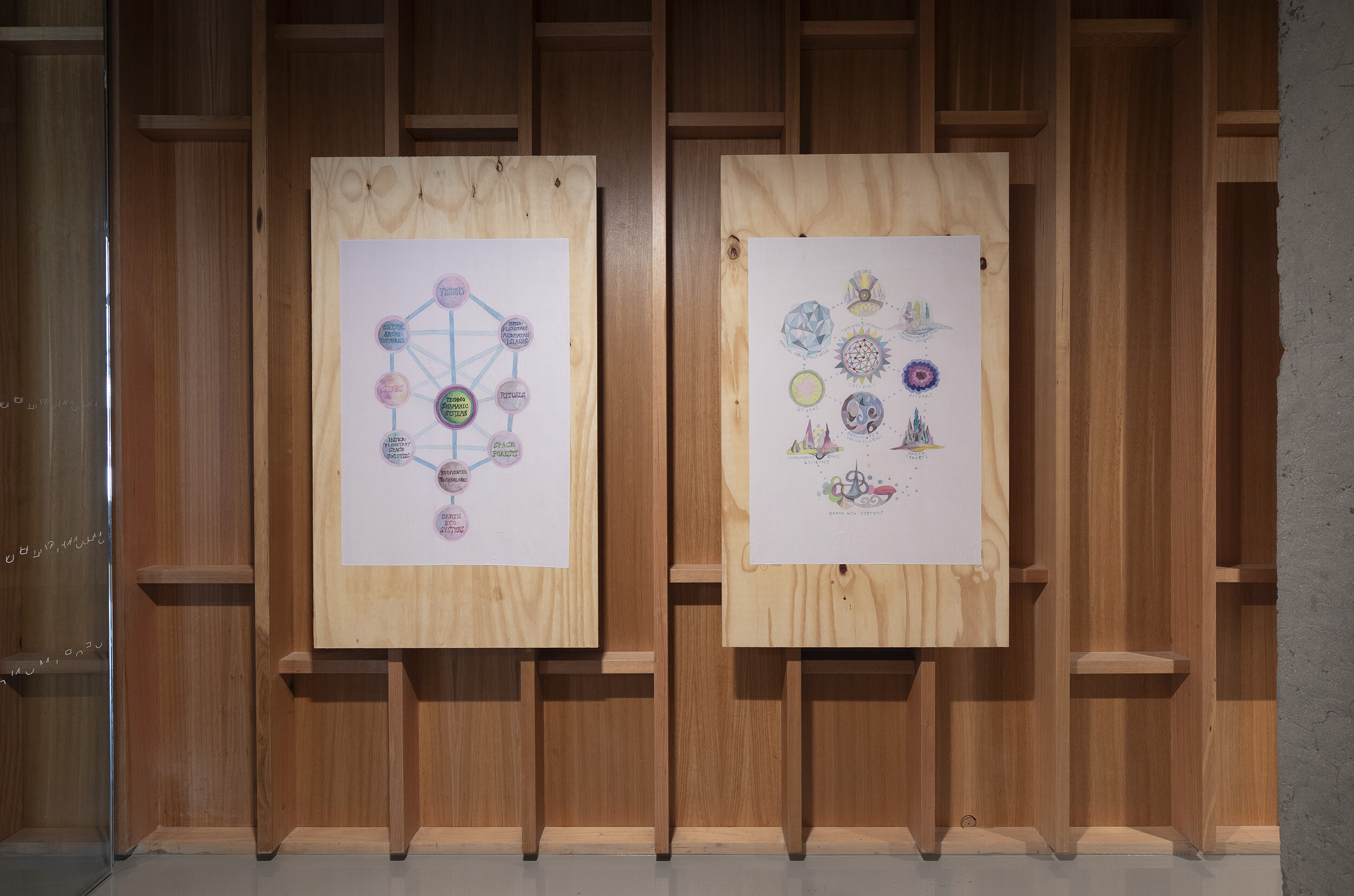
Suzanne Treister, left to right: Tree of Life 01; Tree of Life 02 from the series TECHNOSHAMANIC SYSTEMS/Diagrams 2020–23. Installation view, Knowing Otherwise, Monash University Museum of Art, Naarm/Melbourne, 2026. Photo: Christian Capurro.
I enter Knowing Otherwise through possibly the wrong door, walking along a corridor pasted up with digitally printed posters by the British artist Suzanne Treister. These are essentially new technology word salad diagrams, rendered in watercolour paint. “Cosmic permaculture,” “interplanetary meditation and biosphere islands,” “cosmic energy,” “crystal architectures,” and “vultures,” read one concentric composition dedicated to cybershamanic systems analysis.
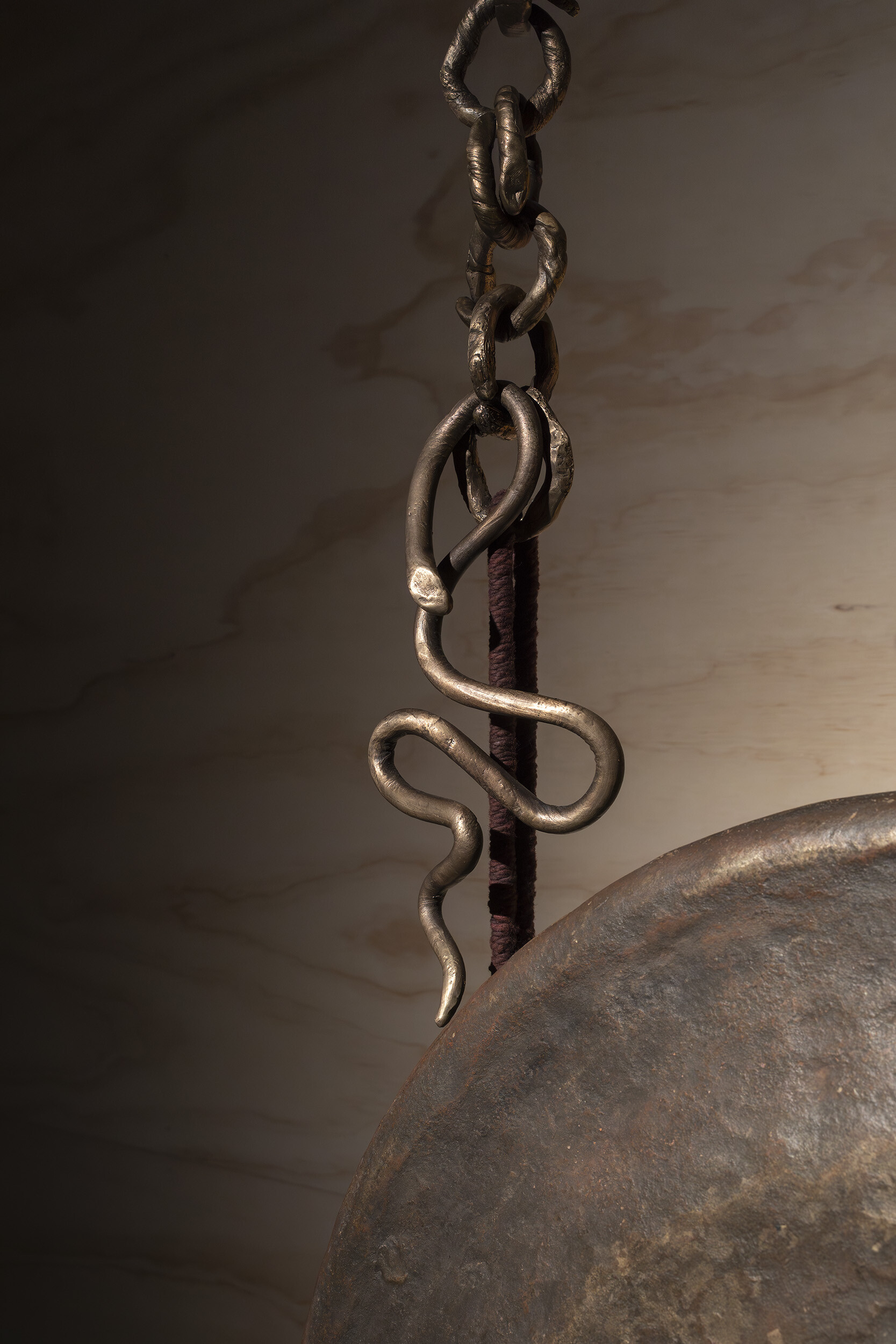
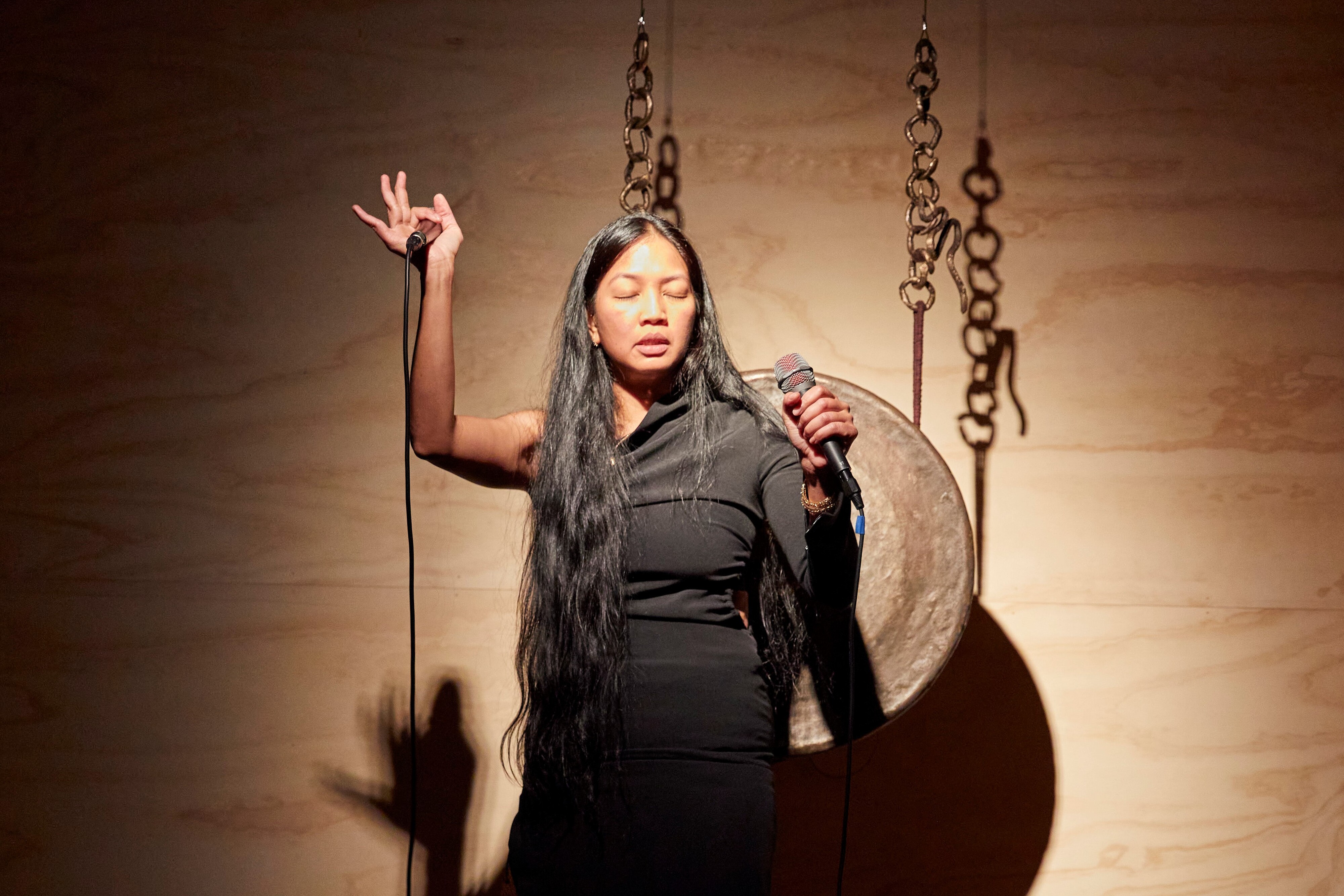
A gong hung from bronze snake chains at the darkened end of the corridor, emitting buzzing, quivering, clattering, metallic sounds. A woman’s voice whispered rhythmic incantations. The thing had aura. Most of the surface of the instrument was matte and beaten, but there was a burnished, golden, nipple-like protrusion in its centre. This was Karina Utomo’s Kuala Jagad (Confluence of Realms) (2025). Utomo is a metal musician who also keeps bees; this gong, commissioned from Javanese gongsmiths, produces sounds that are of a similar pitch and frequency to the wingbeat of the Apis mellifera—the flying honeybee. Kuala Jagad drew from Kejawèn, an animist Javanese belief system, but it was also a visual and aural synthesis of Utomo’s other artistic interests.

Karina Utomo, Kuala Jagad (Confluence of Realms) 2025 (detail). Commissioned by Monash University Museum of Art. Installation view, Knowing Otherwise, Monash University Museum of Art, Naarm/Melbourne, 2026. Photo: Christian Capurro.
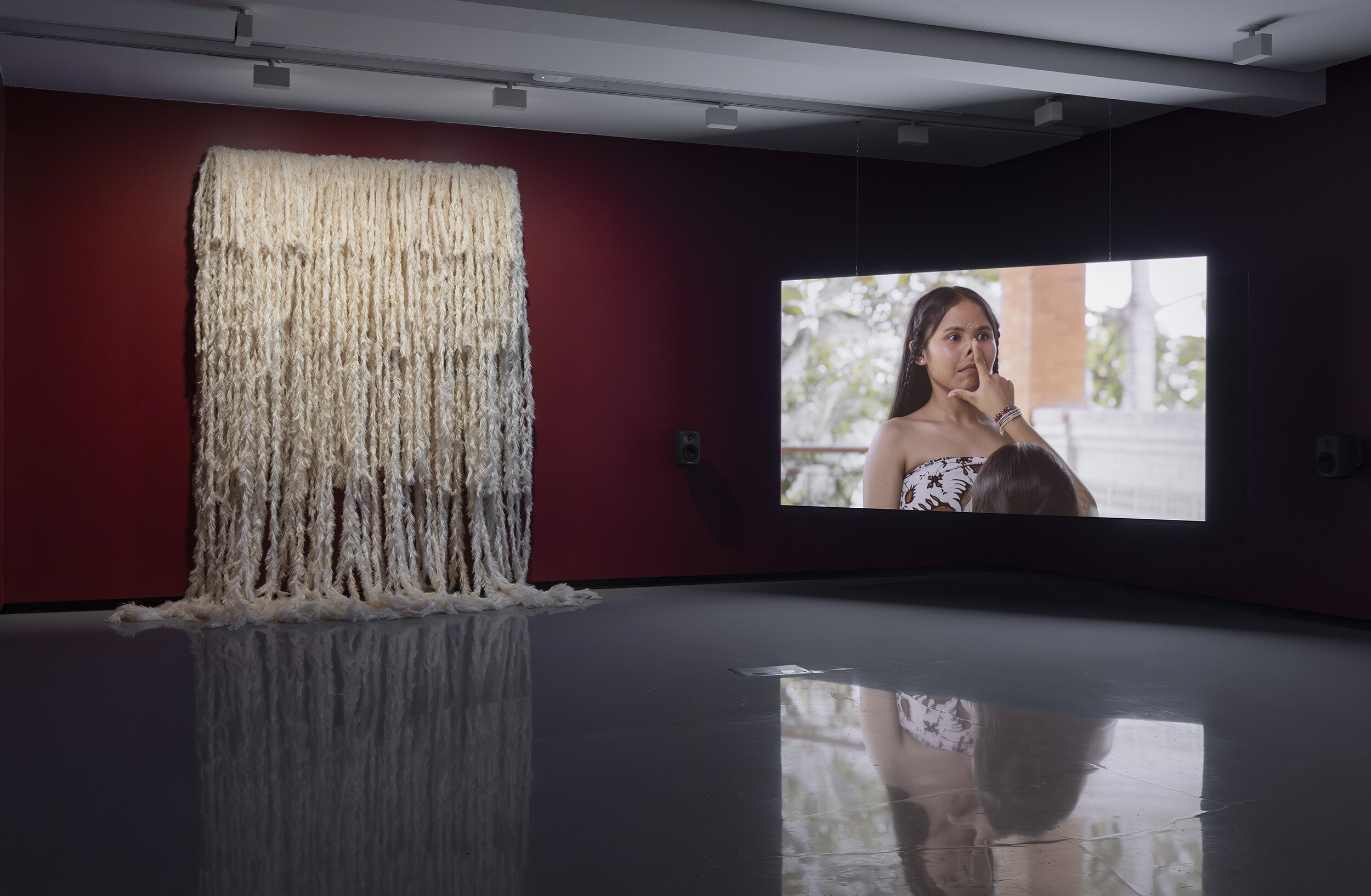
In a radio interview about the work, Utomo spoke about how she does beekeeping for “the free allegories.” The encounters she has with the insects offer a framework for parsing meaning in her life; when she went to do beekeeping the day her mother died, the bees she had been caring for absconded. There was also a link between the discipline, training, and attunement of her body required by performing as a metal vocalist and caring for hives. In each practice, there was the possibility of dangerous injury, avoidable through restraint and poise. Bees sense stress and fear in humans. And once, Utomo said, she had lost control of her emotions before a gig and cried from nerves, to disappointing results: “The growl lost its gruesomeness.” Standing by the gong, I could hear the sound of Utomo’s voice coming from another room in MUMA, making roiling, guttural expulsions—she had also contributed to Leyla Stevens’s work about a child-eating witch widow of Balinese mythology, Groh Groh (Rehearsal for Rangda) (2023). No gruesomeness seemed to have been lost in the making of that video.

Leyla Stevens, Groh Groh (Rehearsal for Rangda) 2023. Installation view, Knowing Otherwise, Monash University Museum of Art, Naarm/Melbourne, 2026. Photo: Christian Capurro.
The nineteenth-century novelist Gustave Flaubert famously lived by the maxim “be regular and orderly in your life, so that you may be violent and original in your work.” This might apply to Utomo. It does not apply to some other artists in Knowing Otherwise. One strand of the exhibition is that of a genealogical feminist historiography, on display in the selection of works by two countercultural Australian artists framed as “foremothers,” Vali Myers and Rosaleen Norton. (Is Tracey Moffatt canon enough to bear the foremother label too, or is that prematurely aging?)
Norton (1917–79) was an occultist who was known in the tabloid press as the “Witch of King’s Cross.” Her biography is a series of dramatic and possibly Satanic incidents. She was expelled from school at the age of fourteen after producing a series of drawings of lascivious creatures apparently so disturbing that they had potential to corrupt the other girls. She studied at art school under the sculptor Rayner Hoff and worked sporadically as an artist’s model, including for Norman Lindsay. In the 1950s, Norton, her poet boyfriend, and their friend, a prominent composer and conductor they’d been sleeping with, were subjected to a puritanical media scandal after a pair of thieves stole sexually explicit images and letters from Norton’s home. The thieves intended to sell them to the papers, but the papers passed them onto the Vice Squad, who charged Norton with “engaging in unnatural sexual acts.” Norton and her acquaintances were publicly shamed for participating in “devil rites.” It was a proto-Epstein doc drop—though, crucially, with only consenting adults involved. Roie, as Norton’s friends called her, was a genuinely transgressive person living on the margins, whose beliefs in the god Pan and Aleister Crowleyesque “sex magick” rituals subjected her to prurient fascination and extreme ostracisation from middle-class Australian society. Her art was one facet of a lifestyle defined by a totalising aesthetic vision, not just a short-term research project (not that there’s anything wrong with those, but there’s a palpable difference in the deliverables).

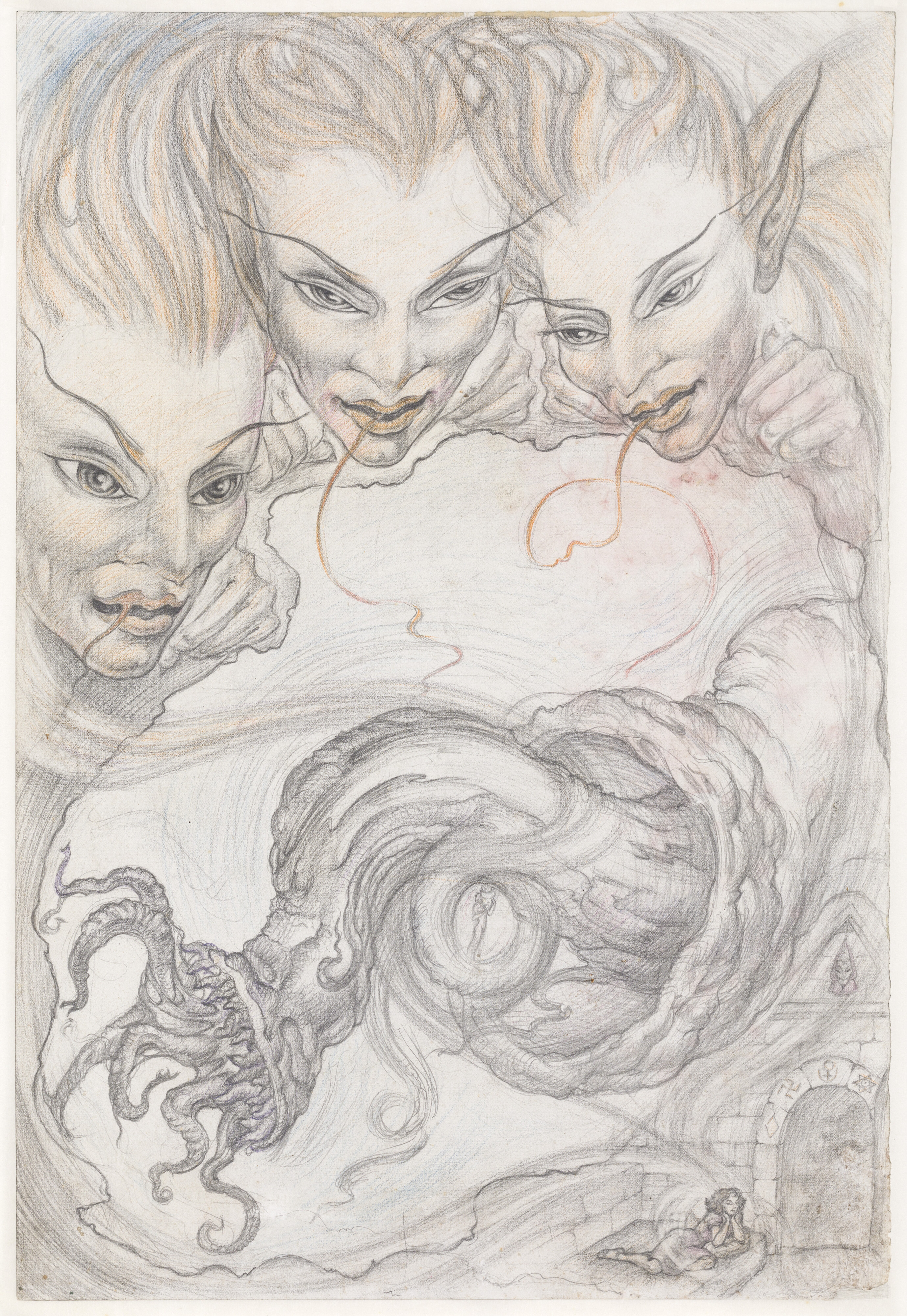
Rosaleen Norton, Three Witches c.1951. Pencil and coloured pencil, 57.1 x 39.0 cm (image and sheet, irreg.); 59.2 x 40.8 cm (backing sheet). Mornington Peninsula Regional Gallery, Mornington. Gift of Dr and Mrs C. B. Christesen, 1986.
For Knowing Otherwise, the curators borrowed five Norton artworks and one rare Norton book. A couple of these works are from the private collection of one Keith Richmond, of Maine, USA. Richmond is the author of a book about Crowley, who also went by the self-bestowed nickname “the Beast 666,” and one of his acolytes, Frank Bennett. He also wrote an essay in a booklet about Norton, published alongside a 2000 exhibition by the Oceania Lodge of the Ordo Templi Orientis (and, less intriguingly, by the King’s Cross Arts Guild): “Not only did she drink, smoke, and take other drugs, but she also favoured outlandish garments and was sometimes unwashed. … she stood out as a proud nonconformist at a time when conformity and conservatism were clearly the order of the day.” As the curators rightly note, underground, occult, and countercultural communities embraced Norton and artists like her long before the art establishment.
Norton’s actual art lives up to her reputation. In one pencil drawing, a miniscule woman lies tucked in the bottom right corner of the page, daydreaming beneath an otherworldly scene. A door with an archway made of stones carved with symbols from world religions opens onto shadows. Sweeping lines that resemble gusts of wind lead from the woman’s head up to a massive, lurching, phallic worm creature, which spouts reptilian tendrils. At the top of the image, looking down at the worm and the woman, three leonine heads hover, a trio of near-identical women with high cheekbones, sharp eyebrows, and pointed elf ears. Thin ribbons of tongue snake out of their lips. These artworks still possess an intense weirdness—they’re like if Norman Lindsay sirens were yassified with a Bratz filter, then sent through a wind tunnel on acid. Vali Myers has a similarly interesting personal story and series of archetypal freaky chick artworks, and Carla Cescon has made a new work responding to Norton’s legacy, but in the interests of semi-thorough coverage, I’ll move on.

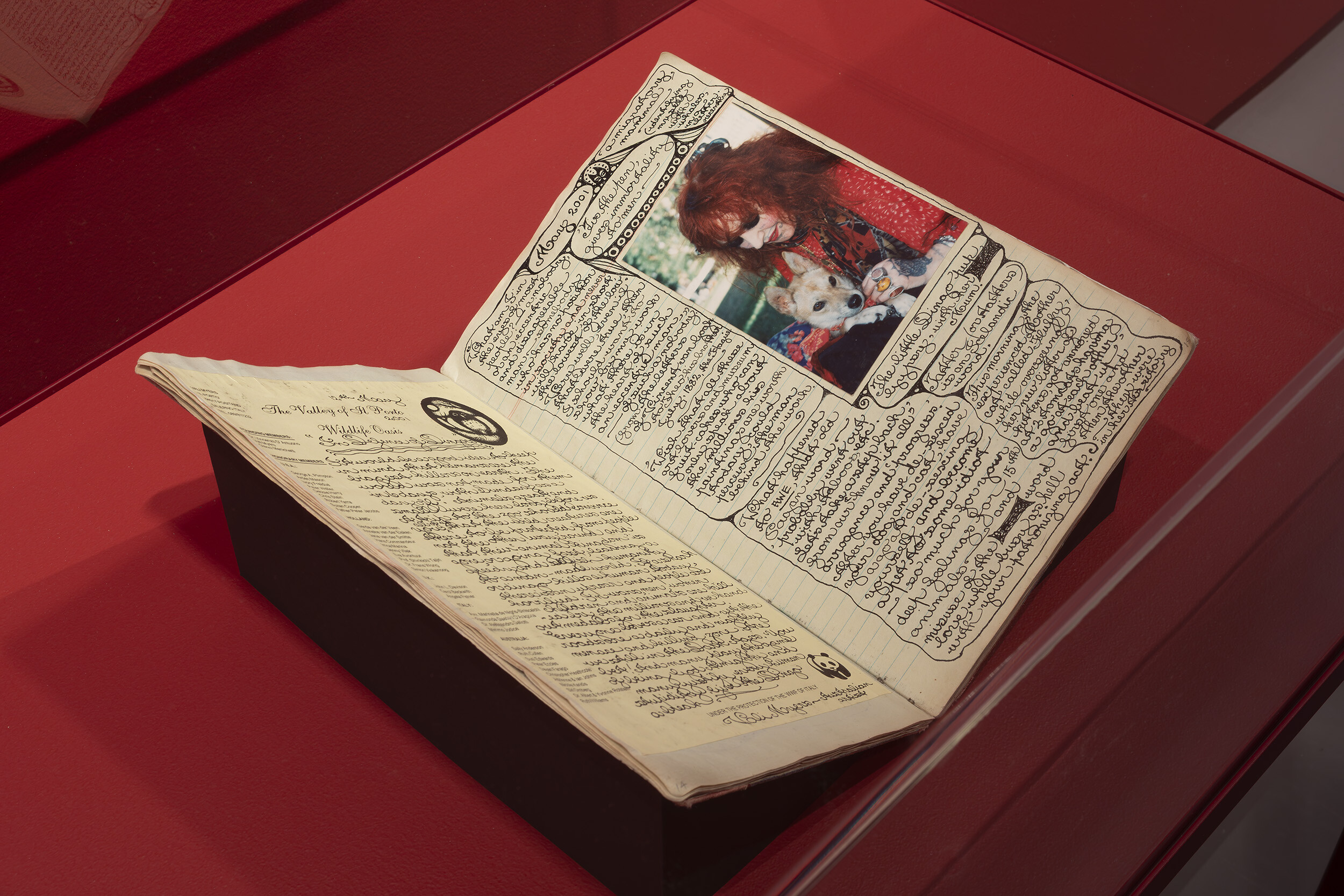
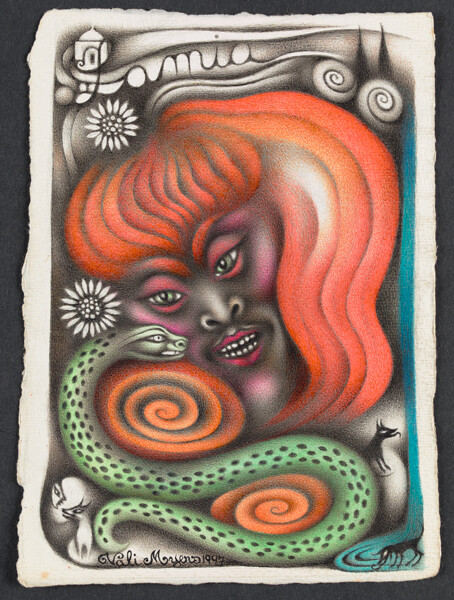
Vali Myers, The Valley of Tiger II Porto 2001 – 2002. Pictures Collection, State Library Victoria, Naarm/Melbourne. Installation view, Knowing Otherwise, Monash University Museum of Art, Naarm/Melbourne, 2026. Photo: Christian Capurro.
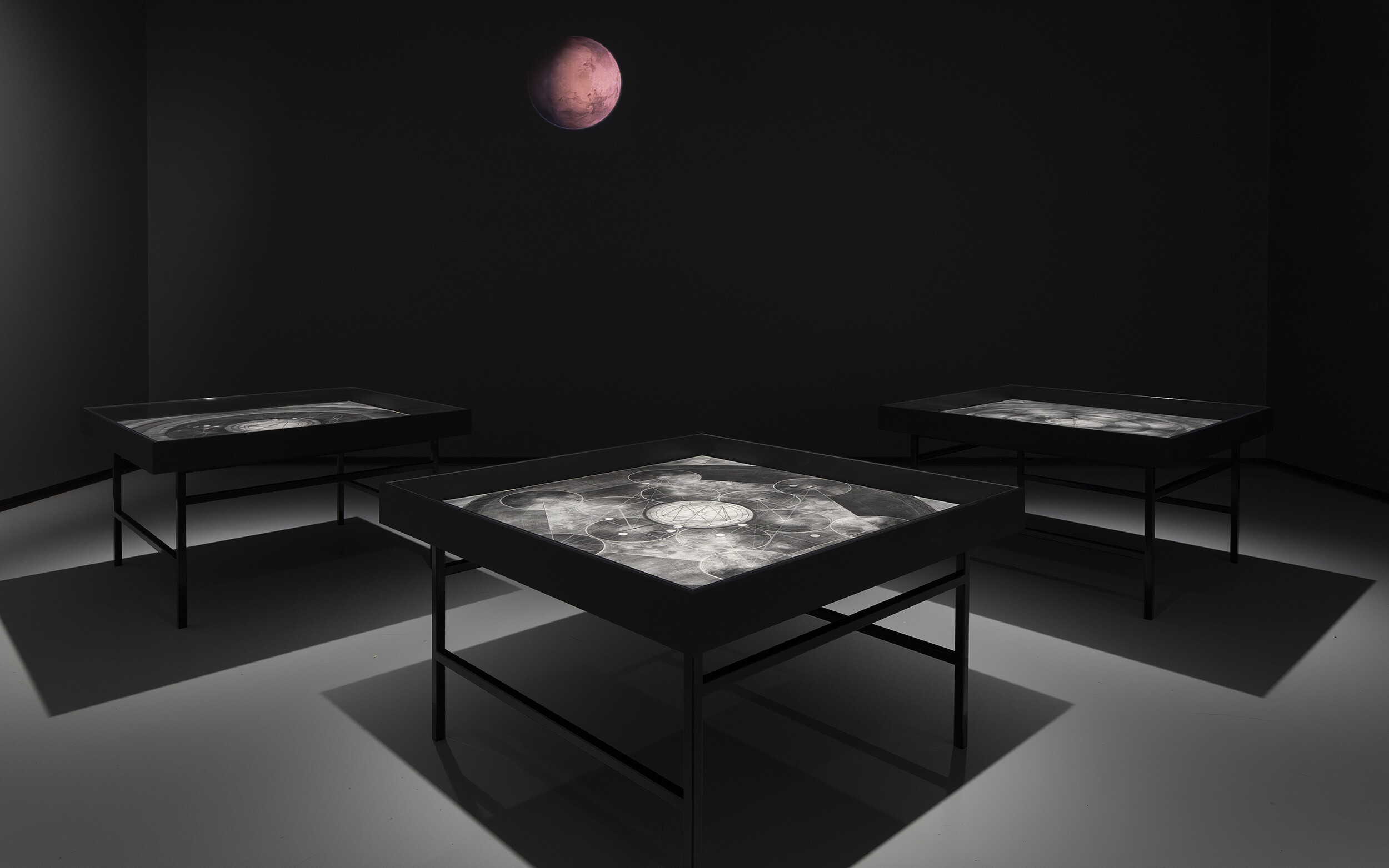
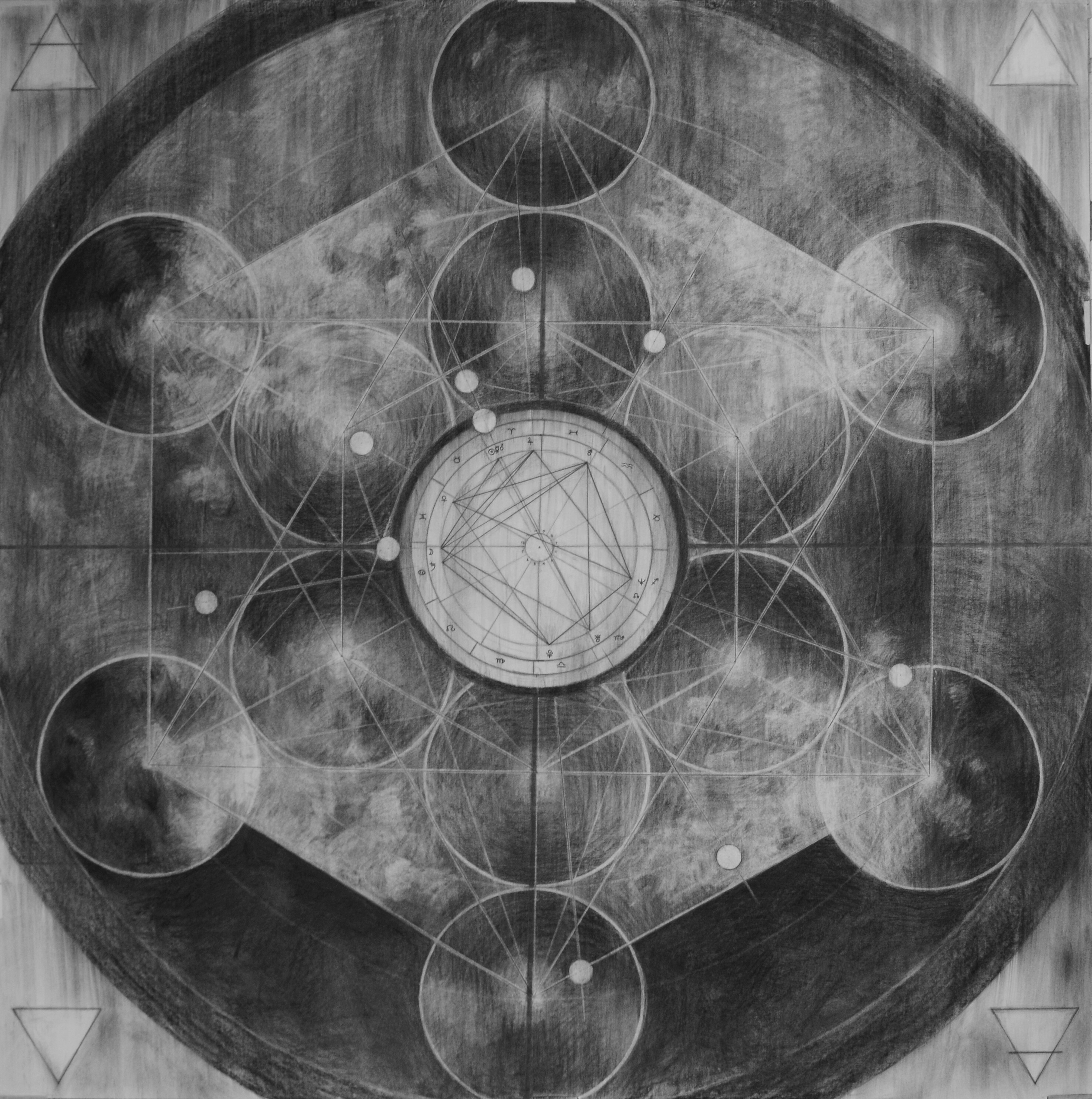
Another room in Knowing Otherwise is dedicated to the cosmological. Gail Mabo (Meriam) and Naminapu Maymuru-White (Maŋgalili) have delicate, beautiful works on show, which represent alternate First Nations ways of viewing and depicting night skies. (Elsewhere, a star of a different kind is visible in Paola Balla’s Blak Madonna Dreaming, an installation filled with images of the pop singer Madonna, herself a devoted student of Kabbalah…) This room also hosts a large installation, Liquidation Maps (2014), by Yin-Ju Chen, in which five modern political massacres in the Asia region—1987 Lieyu Massacre, Taiwan; 1975 The Khmer Rouge; 1942 Sook Ching Massacre; 1980 Gwangju Uprising; 1999 East Timorese Crisis—are represented in 125 x 125cm graphite and pencil astrological star charts. This work was previously shown at the 20th Biennale of Sydney in 2016. At MUMA, the drawings are displayed in five flat cabinets. Planets are projected onto the wall. Wall texts written by an astrologer, Amber Tang, outline the key events of the massacres and their relation to their astrological alignments. To me, this artwork and its framing encapsulates some of the more contentious aspects of Knowing Otherwise.

Yin-Ju Chen, Liquidation Maps 2014. Collection of Katy Hsiu Chih Chien, Taipei, Taiwan. Installation view, Knowing Otherwise, Monash University Museum of Art, Naarm/Melbourne, 2026. Photo: Christian Capurro.
There is a quality of political nihilism and passivity in credibly accepting that stars align to cause mass casualty events—that Mercury being in retrograde can preordain massacres, which are hardly able to be prevented by human agency or organised collective action. Taken seriously, this is a provocative idea. Is a 2024 massacre of Palestinians seeking flour rations, perpetrated by Israeli soldiers, during a famine caused by Israeli occupation of Gaza, something we should accept as inevitable due to the stars being in a particular configuration? What about Bondi? No. Yet if extrapolated, this is what the ideas set out across Chen’s artwork and the exhibition seem to lead towards. The didactic proposes that Chen is “questioning whether such actions by humanity are inevitable under the predetermined and inexorable laws of the universe and whether our lives are predetermined by universal, cosmic forces beyond our control.” Hopefully not?
To be fair to Tang, the astrologer, her texts add specific historical context and some degree of human responsibility and failure to the artwork’s interpretations of the events; writing about the 1987 Lieyu Massacre, when 24 Vietnamese refugees were shot and killed by the Taiwanese military, she wonders “what language the refugees used when speaking to the soldiers? Was it Chinese or Vietnamese? Did the language differences lead to miscommunication?” These are human questions, borne of human interactions. The fault is not in the stars but in martial law, failures of mutual intelligibility, displacement, territorial, and ideological battles, and so on. And to be fair to Liquidation Maps in general, there are illogical, irrational motivating factors that incite war, conflict, and violence—ones which can be discussed through the rubric of psychoanalysis, for example, and that can’t be explained by purely logical frameworks. Maybe astrology is actually a useful conceptual apparatus and set of metaphors for opening up that mode of discussion.

Yin-Ju Chen, Drawing of Liquidation Maps (Khmer Rouge genocide in Cambodia) 2014. Charcoal and pencil on paper, 125 x 126 cm. Collection of Ms. Chien Hsiu-chih, Taipei.
Last week, The Australian art critic Christopher Allen published a lengthy screed titled ‘How a plague of antisemitism revealed a crisis of self-loathing in Australian culture.’ Among the many objectionable parts of the piece, too complex to go into here, is a fixation with so-called Western values and traditions, which Allen sees as going back to the Greeks. He rallies himself and the reader as ardent defenders of the teachings of the West, seen as currently under siege. Finally, Allen concludes: “We need more than ever to assert the values of the West that are now the values of all enlightened people … When members of our cultural and academic class indulge their decadent pleasure in moral self-mortification they are betraying not only their own civilisation but the hopes of a better world for all of humankind.” This is extreme, and gratuitous. Someone should probably hire an Etsy witch to do a non-violent curse on Allen, one that will make a mysterious queasy feeling come over him every time he wants to write about Khaled Sabsabi’s YOU again. Yet in some ways, Knowing Otherwise reifies this position in the inverse.
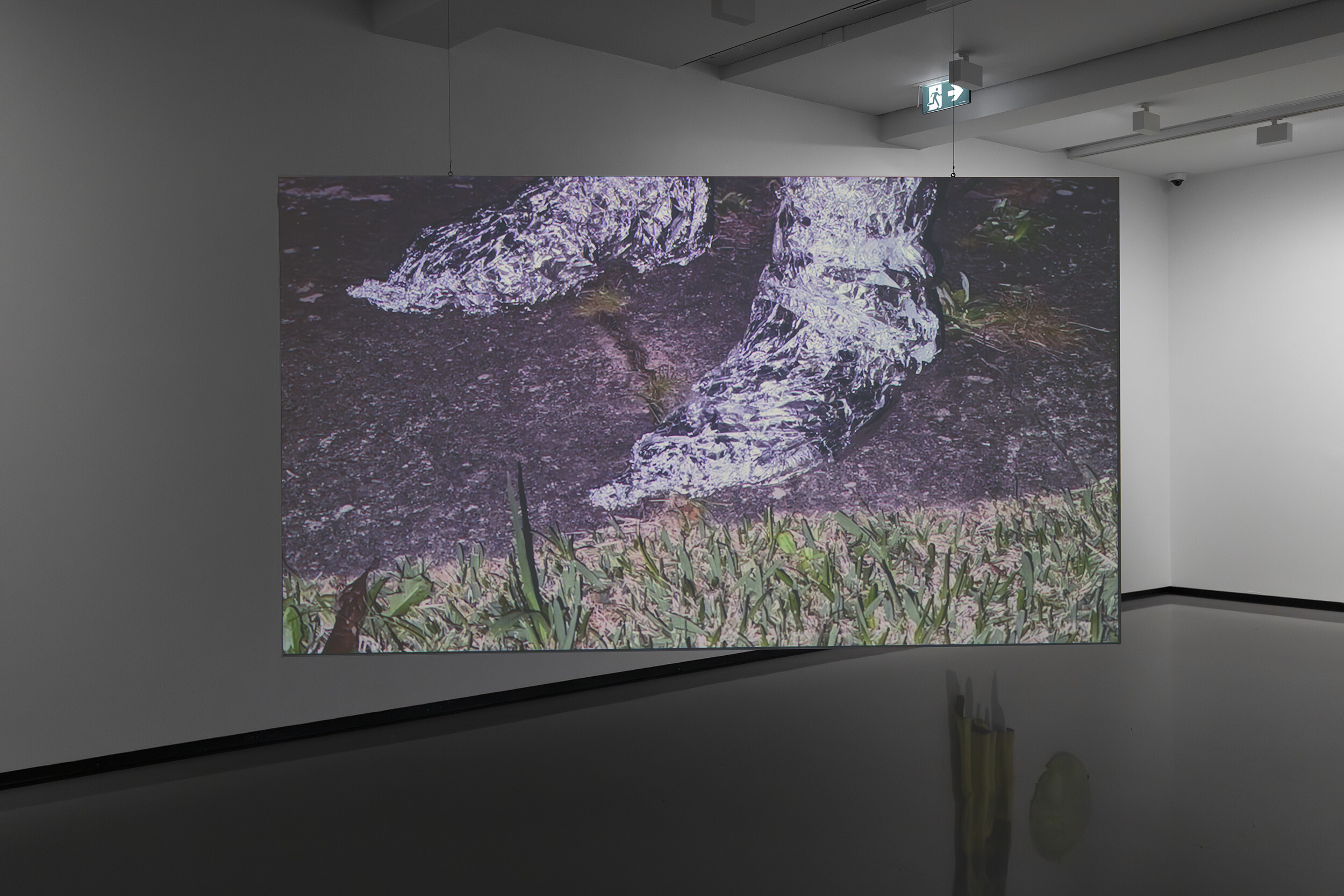
Stating, as the curatorial introduction does, that there is such a thing today as “dominant Western frameworks and authority” is a similarly vague and generalising shorthand gesture. It’s one that is knowingly shot through by the show’s inclusion of works that address paganism and esoteric Christianity’s complex relations with the present (like in David Egan’s map of Hell and Mel Deerson’s video of ghostly, settler-colonial, aluminium-wrapped feet traversing a mystic garden landscape at night); by many of the artists’ engagement with European or American artists or places or species; and even by the fact that much of astrology as it’s practiced today is as Greco-Roman as it is Babylonian or Alexandrian-Egyptian. Framing art as being for or against “the West” usually mashes it into the rhetoric of culture war.

Mel Deerson, Dream of the Empty Garden 2026. Commissioned by Monash University Museum of Art. Installation view, Knowing Otherwise, Monash University Museum of Art, Naarm/Melbourne, 2026. Photo: Christian Capurro.
The strength of Knowing Otherwise is that it brings together works from quite different artists working in different registers. But the capaciousness of its central conceit also means that it is structured by a kind of anthropological ambivalence, a mystic multiculturalism where all ritualistic or spiritual practices are treated similarly despite their divergent contexts. The histories, cultures, audiences, and stakes for each of the works in the show are worlds apart. Occult sex is not the same as occult geopolitics. Knowing Otherwise asks some interesting epistemological questions; your answers to them will depend on your tolerance for witchiness and your inclination to see signs. Sometimes a bee is just a bee, but it doesn’t always have to be.
Gallery