John Medley Building
April 1, 2026
Eclecticism dominates contemporary architectural production in Melbourne. In fact, the practice is so widespread that the question is less whether one adopts stylistic quotation or not, but whether one is forthright about it. This sleight of hand reveals a conflict inherent in our profession: that while the discipline of architecture relies on reference and the study of existing works, the business of architecture should not. That is to say that, under capitalism, the underlying assumption is that a client (customer) has engaged an architect to produce a bespoke, unique building (product).
But if we did acknowledge the use of references in the design of our buildings, we could progress to the more useful question of how we use them. The current proposed demolition of the John Medley Building (1969–1971), formerly Arts South, at The University of Melbourne’s Parkville campus on Wurundjeri Country, provides a moment to define a method of design with references. For the building’s architect, Roy Grounds, despite being understood as one of our modern architects (in the partnership of Grounds, Romberg & Boyd), had a Beaux-Arts training and was known for his flirtation with the eclectic. This review focuses on a close observation of the building’s roof and bay windows, in particular, demonstrating how the principles of the figure and abstraction suggest possible methods for using references today.
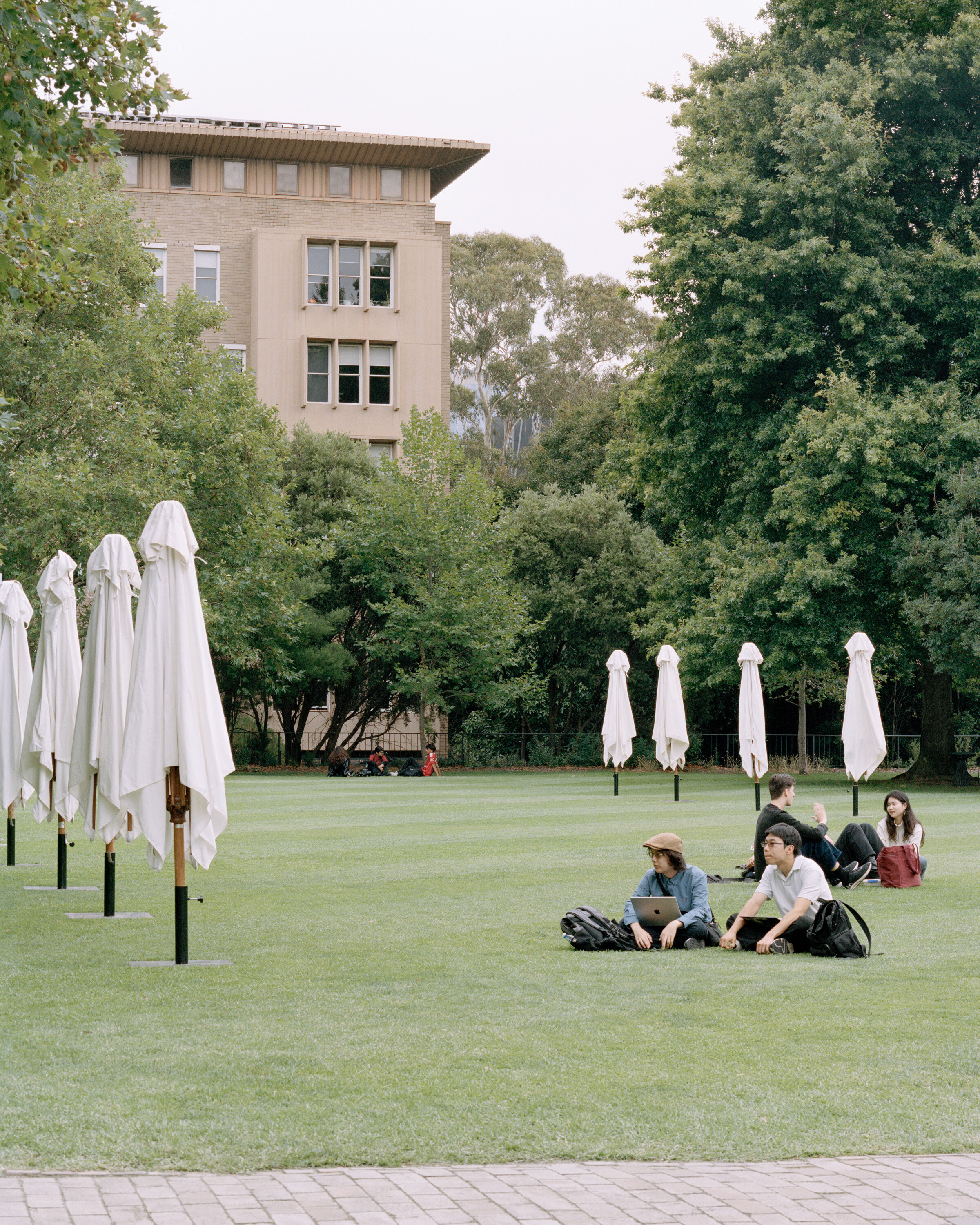
Unusually for large buildings of this period, two primary volumes are topped with hipped roofs and deep eaves (1.5m). At first glance, the raked eaves recall Grounds’ Hill Street House (1953) and his National Gallery of Victoria (1959–1968), but the resemblance is only in silhouette. Instead of the horizontal strip of clerestory windows in the two earlier projects, in this case metal Stramit Colorbond roof sheeting continues from the roof down the fascia and soffit, becoming the wall cladding of the building’s top level. The roof plan includes a note on the eaves lining: “Begin setout on centreline of building for north and south elevations”, suggesting artistic intent for a material usually hidden behind parapets.

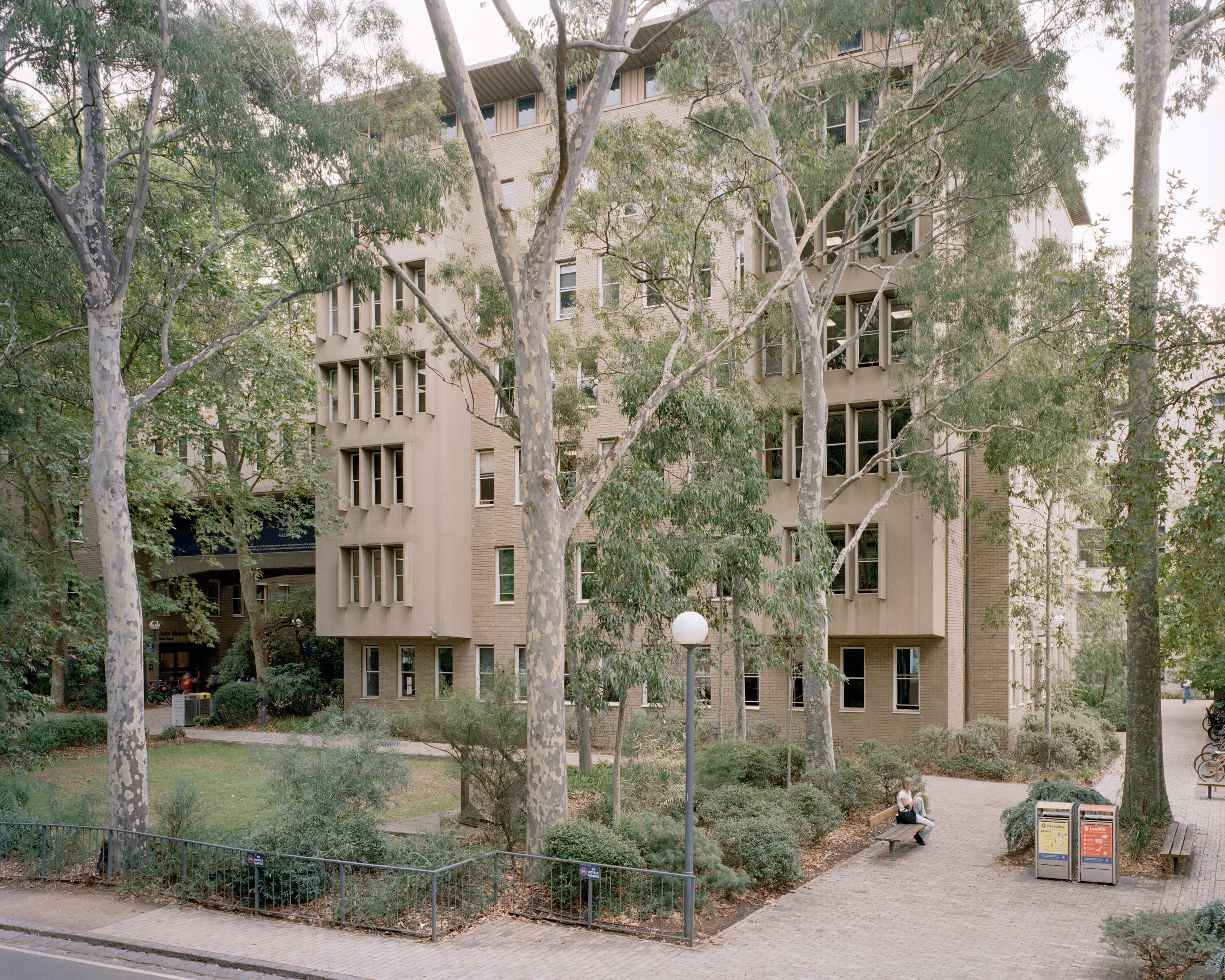
From the raised ground of the South Lawn, the windows of the sixth floor appear above the trees, alternating with equal solid walls between them. This combination of elements builds up into a familiar configuration—a classical entablature. The three ribs of roof decking read as triglyphs between the voids (metopes) of the almost square windows. The continuous horizontal band of wall along the top of the brick-veneer volume acts as an architrave to complete the entablature. Here, the reality of readily available building materials, drainage, and architectural form combine to create a figure that is both a continuation of the history of Western architecture and intrinsic to the realities of building in a specific place at a specific time.
It is the familiar configuration that Alan Colquhoun attributes in Form and Figure (1978) to the figure in architecture—a configuration whose meaning is given by culture as a result of continued social use. Today, the use of the figures of architecture is considered largely untenable, doomed as we are to consider representation impossible and conventional meanings as “problematic.” But Grounds’ inclusion of these elements reminds us that, historically, meaning in architecture has come from the re-interpretation and abstraction of construction techniques.
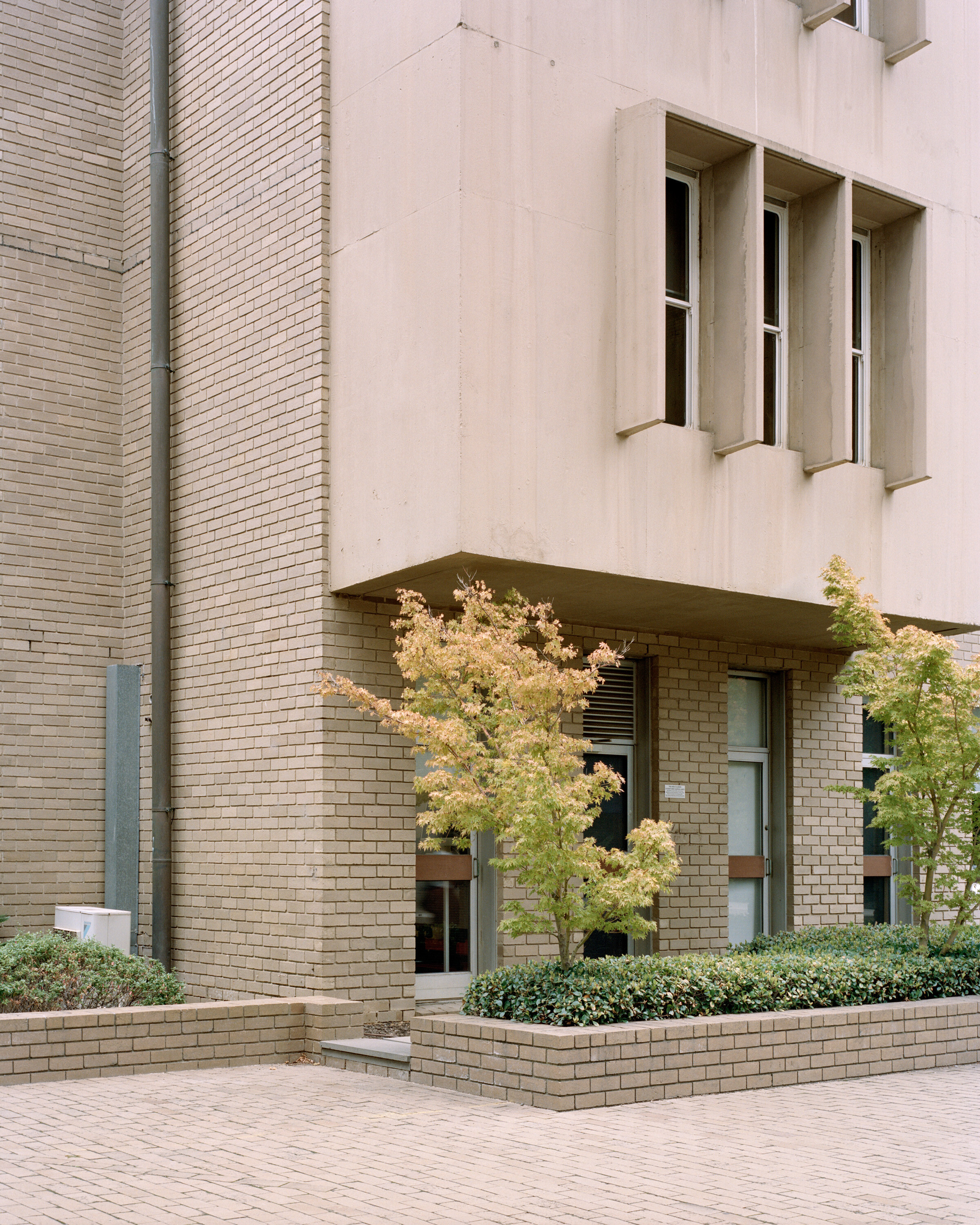
A second figure appears on the building’s north and south facades—a projecting bay of windows that introduces verticality at the ends of these long elevations. These towers serve to ground the scale of the roof, and, although tonally similar, are distinguished from the main volumes by their in-situ concrete, painted with Sandtex. Although of typical size, the windows are grouped in sets of three and five and are surrounded by precast concrete hoods. Their proportions and irregular arrangement give the building a medieval character, that of a Venetian Gothic palace, but closer inspection of the window surrounds directs us to a local source.

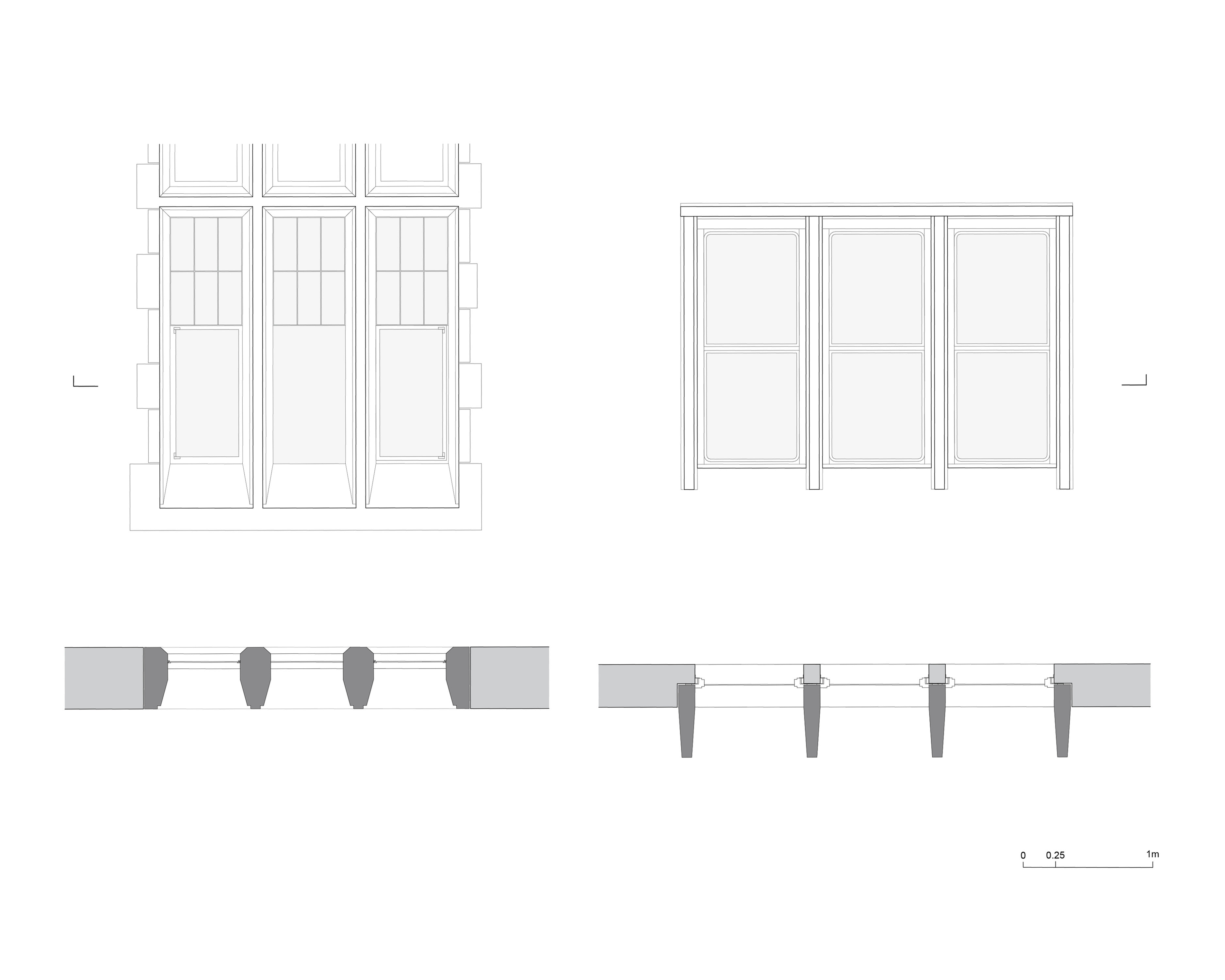
Plan and elevation detail of windows in Peter Hall Building (left) and John Medley Building (right), showing stone mullions in comparison with Grounds’ precast hoods. Drawing by the author.
A short walk away, the window walls of the Peter Hall Building (1919–1923), formerly Anatomy, resemble Gothic lancet windows, with their sandstone frames set in solid red brick, and belie the reality of their twentieth-century construction. In cross-section, the window frames and mullions are tapered towards the exterior, a Gothic motif that retains mass for structural bearing while achieving the effect of fineness in elevation akin to tracery. The window hoods on John Medley follow this principle. Now in pre-cast concrete, their profile is tapered, but the geometry is simplified for translation into a new material. More slender than the stone they reference, the hoods allude to the stacked assembly of stonework, but their extension beyond the facade and window sill indicates their service to expression, not structure.
This process of reinterpretation is key, and it is what distinguishes Grounds’ use of reference from the copy or imitation. It is also a practical necessity as building techniques change, which makes direct imitation impossible. The quality of this translation in Grounds’ work is one of abstraction. Abstraction not as a style, but as a process, a distillation to the essential. This process requires artistic and technical judgement of the degree of abstraction possible without a loss of meaning, as well as its synthesis with what makes sense in building. Whether this method of translation necessitates abstraction or whether it is a self-conscious stylistic language, I do not yet know. But if we call this figurative abstraction, it is a method of design that sits between analogy and first principles, ensuring both continuity and a response to the present. The result is a meaningful evolution of architectural elements.
Extrapolating a design method from a finished building will always lead to speculation. It doesn’t help that architects generally deny their influences. Like any good progressive, Grounds dismissed claims of stylistic quotation in his work. However, as Philip Goad notes in An Oriental Palazzo (1999), Grounds was an architect who “had faith in the figurative tradition of architecture as a language”—this much is clear. As colleagues like Graeme Gunn and Neil Clerehan have stressed, Grounds was interested in how things were put together. So too his pride in utilising builders’ skills and craftsmanship was certain to bring any of his international references back to the reality of the local.

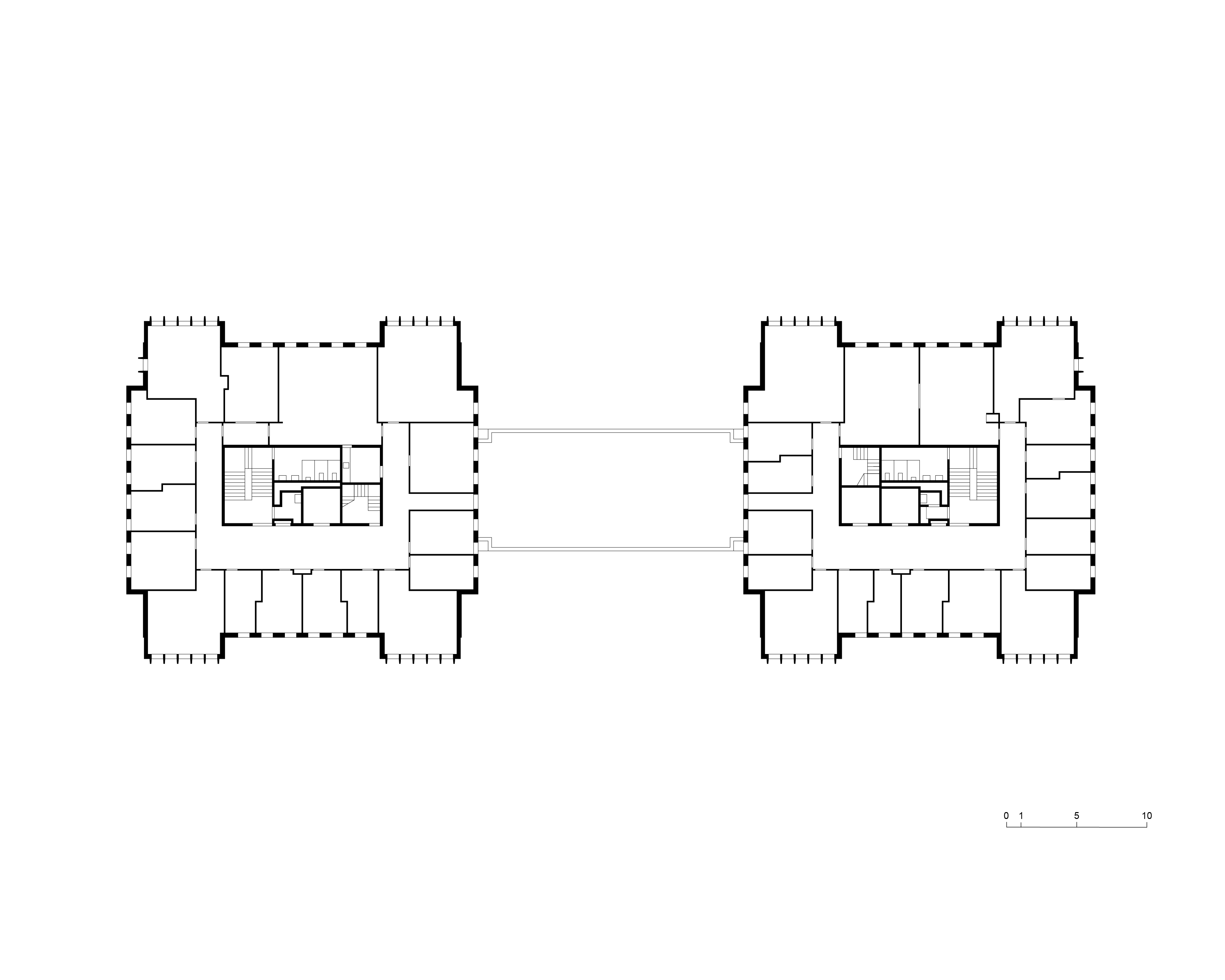
Level 5 plan. Based on Roy Grounds’ and John Scarborough’s original construction drawing set, 1969. Redrawn by the author.
Despite its banal program and dry functionalist floor plans, the John Medley Building reminds us that architecture’s expressive strength comes precisely from the material reality of buildings and expertise in their construction. In this rudimentary pair of administrative boxes on the Parkville campus’s southern edge, Grounds offers us an alternative to the use of architectural reference, one in which meaning can be found within limited means—in this case, through sheet metal and brick veneer.

View of the north facade of West Tower from the South Lawn. Photograph by Rory Gardiner with Colby Vexler.

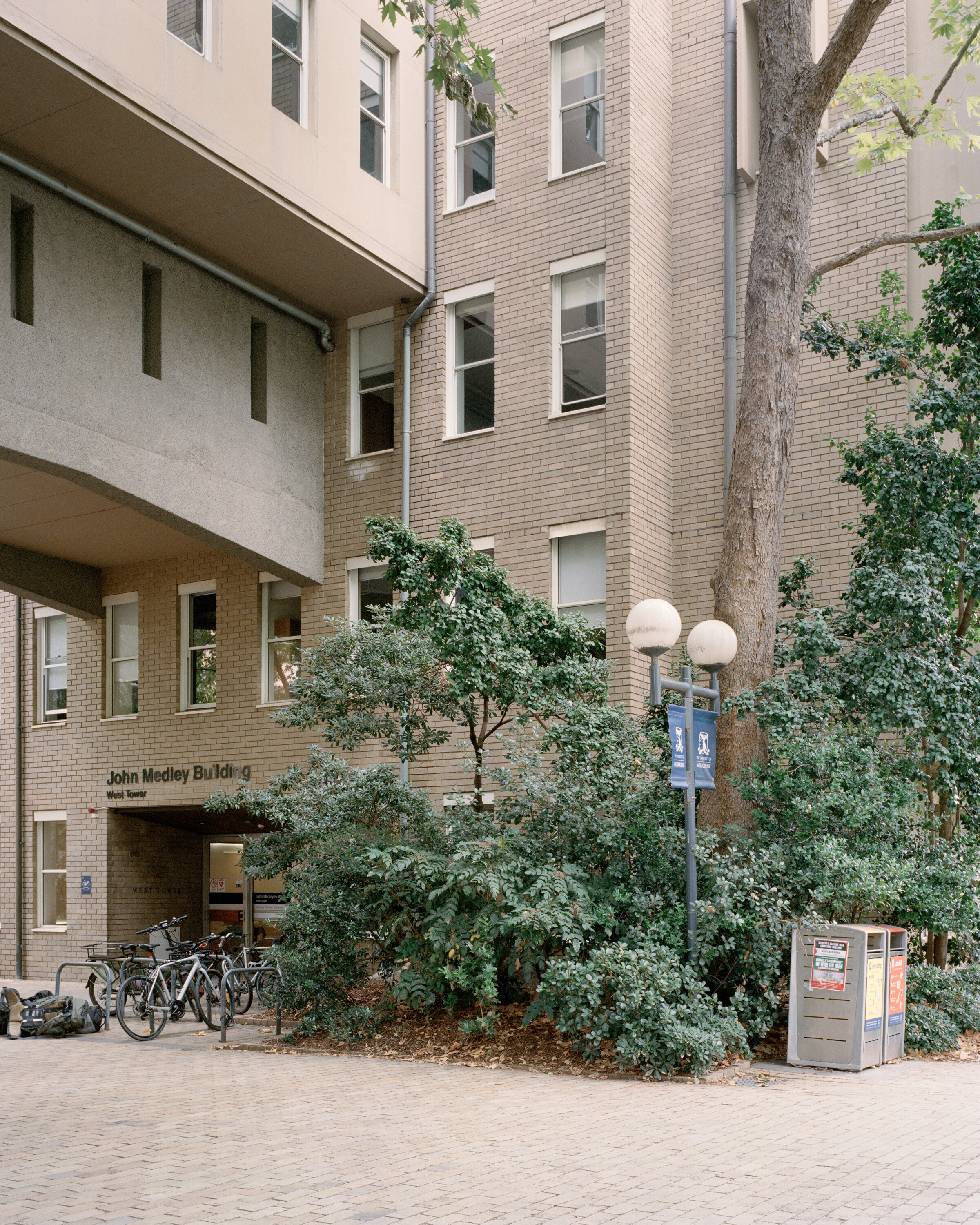
West Tower main entrance. Photograph by Rory Gardiner with Colby Vexler.

North facade of the East Tower with pre-cast concrete window hoods visible. Photograph by Rory Gardiner with Colby Vexler.

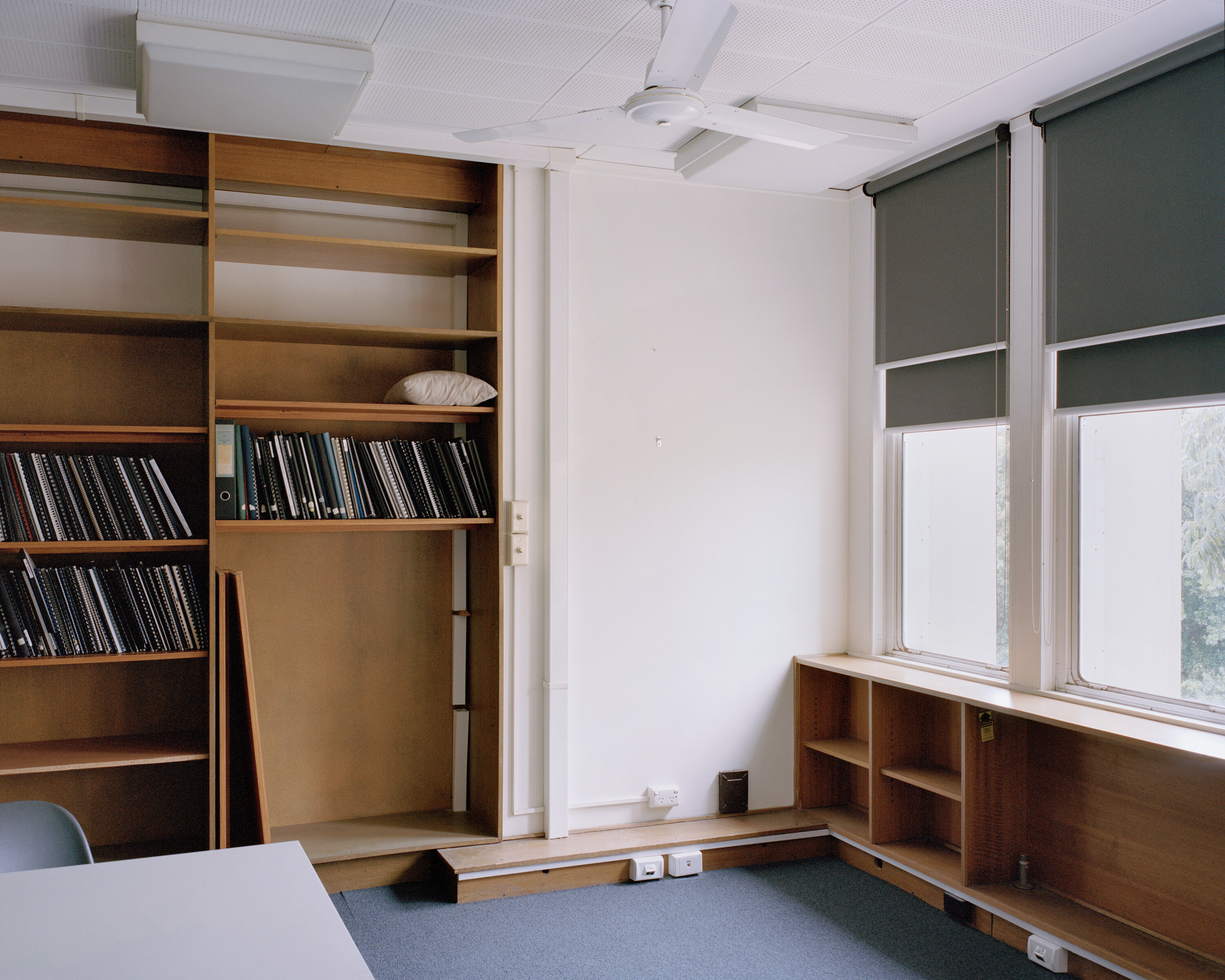
Level 5 interior with the window hoods visible out the window. Photograph by Rory Gardiner with Colby Vexler.
Gallery