Gian Manik, Fantasy Chamber
November 7, 2026
-
Gian Manik, Fantasy Chamber
Venue: Linden New Art
20 Aug 2026 – 20 Nov 2026
What does a curator do when faced with an expertly executed, realistic contemporary oil painting, one that leans into illustrative modes and graphic practices? To tacitly exclude such work from exhibition is a default position in contemporary curation: a realistic oil will most often trigger audiences to assume the exhibition advocates amateurism, conservatism, and the suppression of identity in favour of pure technique. Conversely, to include such a work operates according to the same metrics: the work will be pressured to speak to the positive or revisionist values of craft, skill, and realism. At least that’s my reading of the dynamics entailed in considering and positioning realistic oil painting in the contemporary sphere.

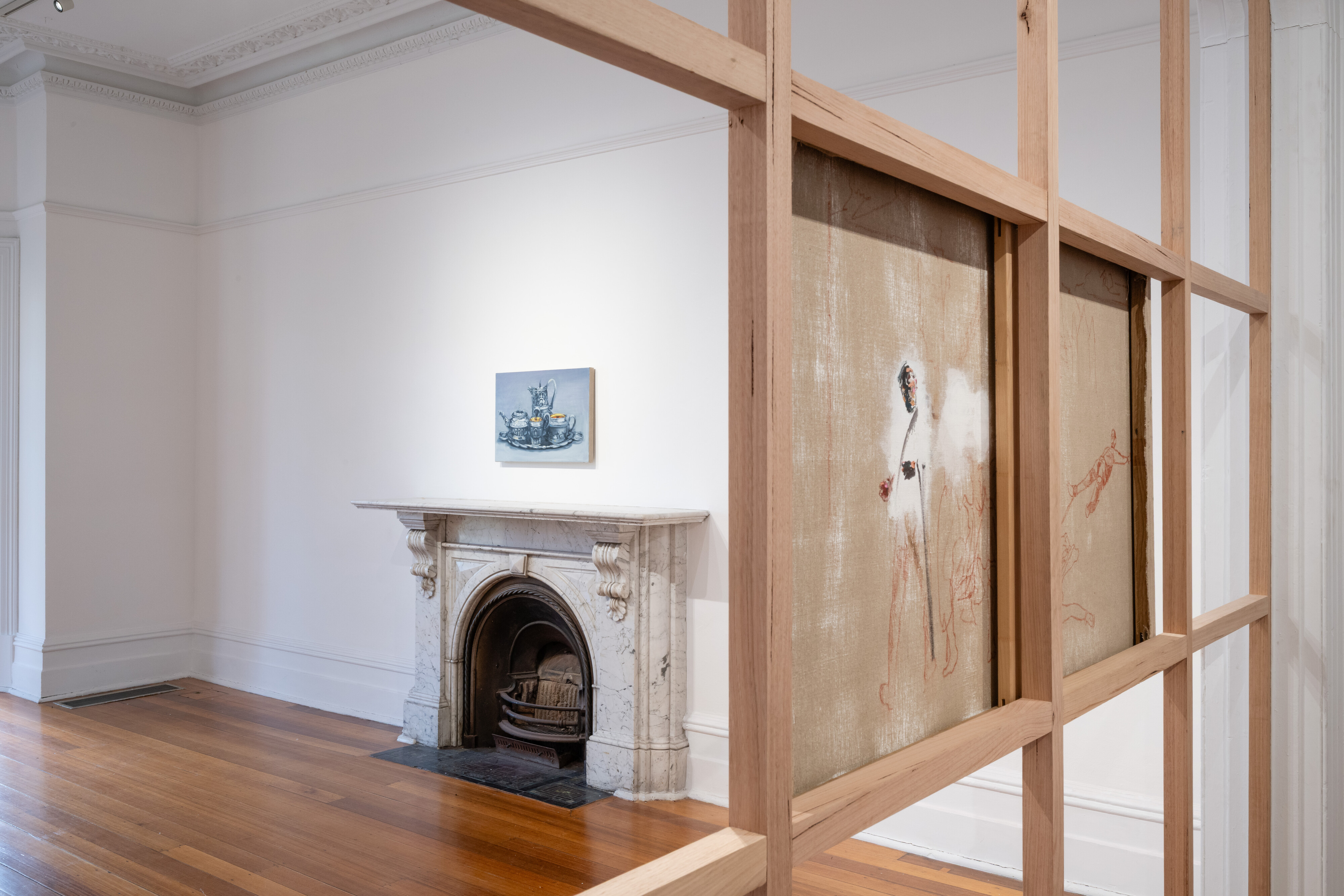
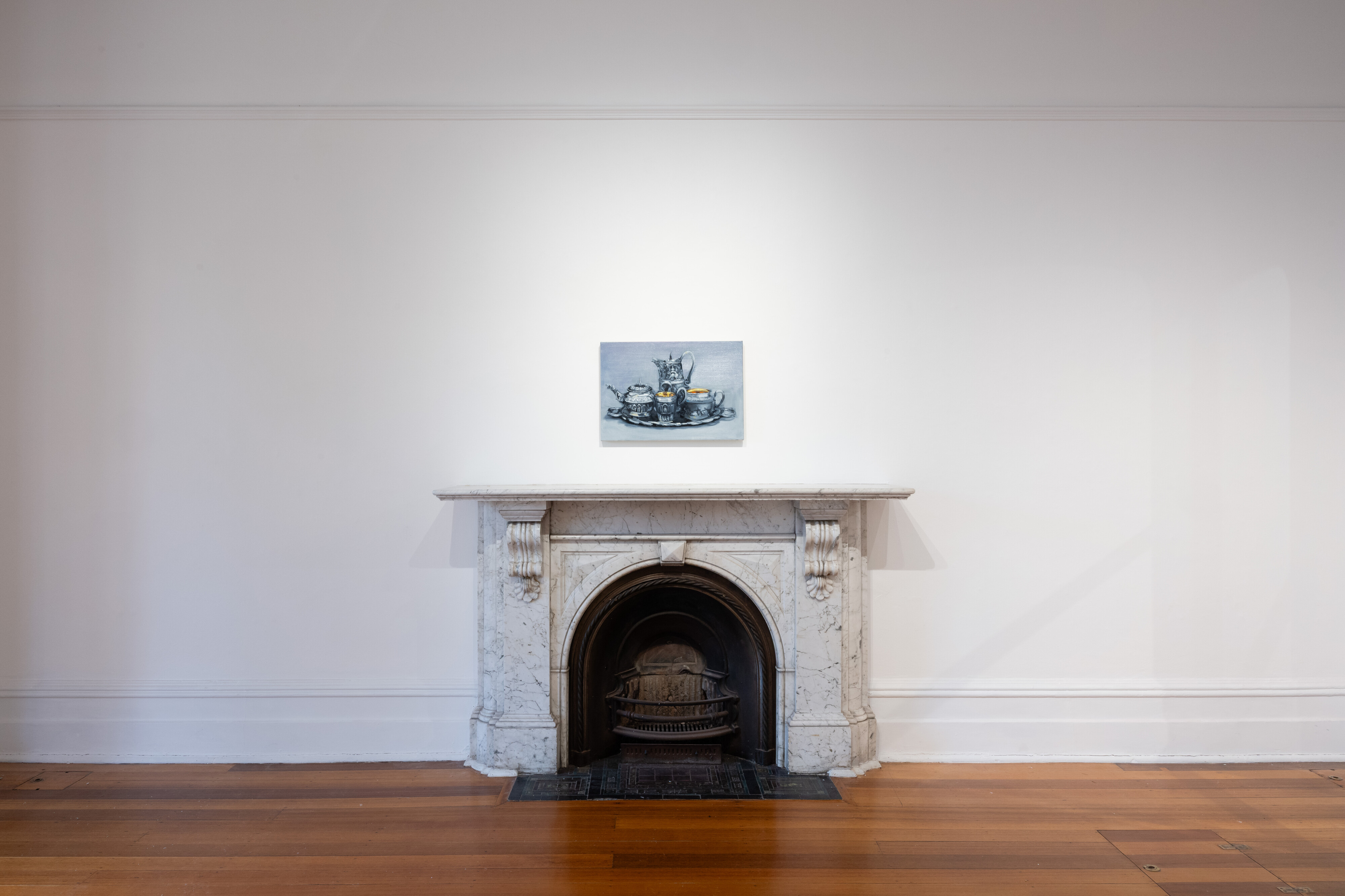
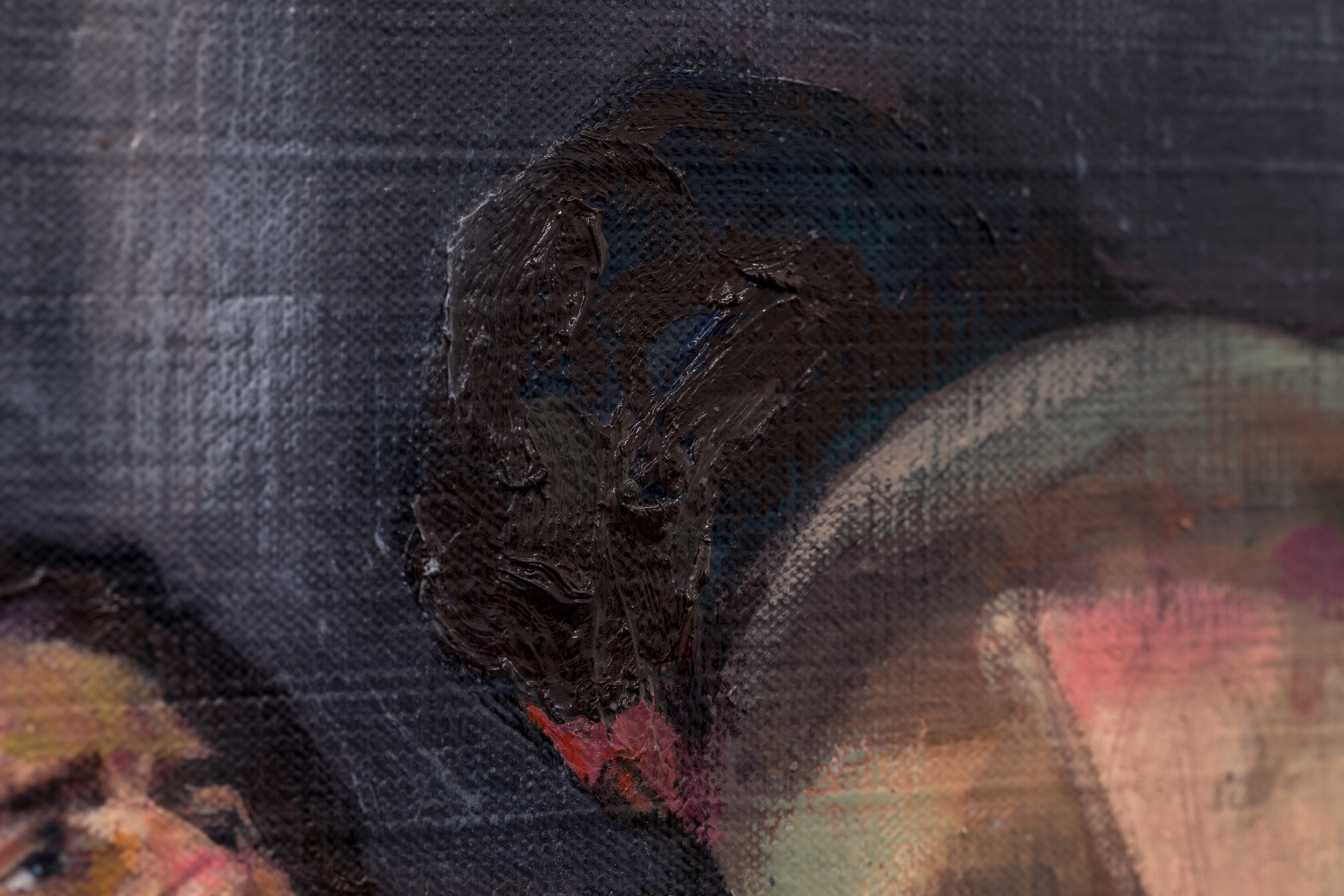
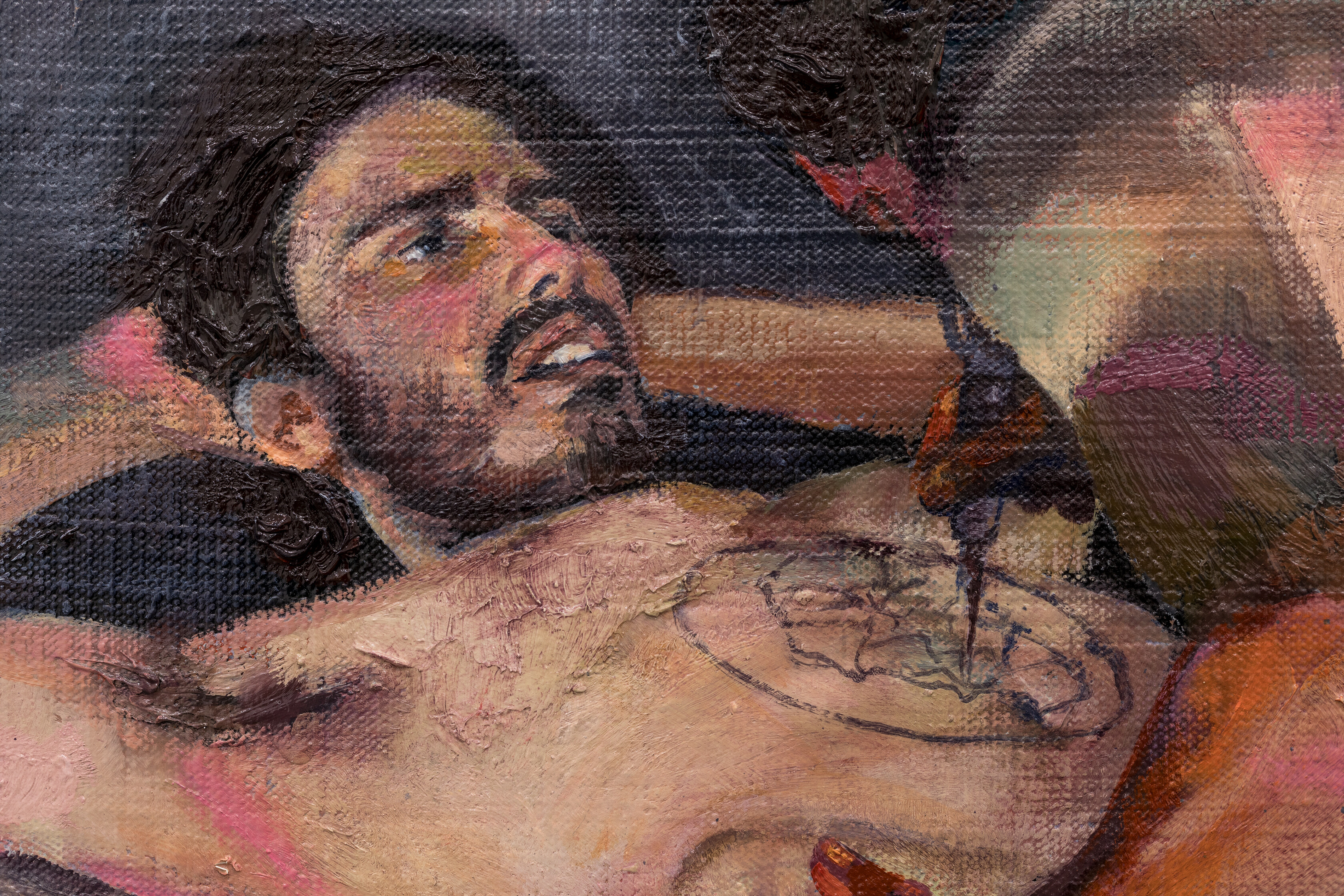
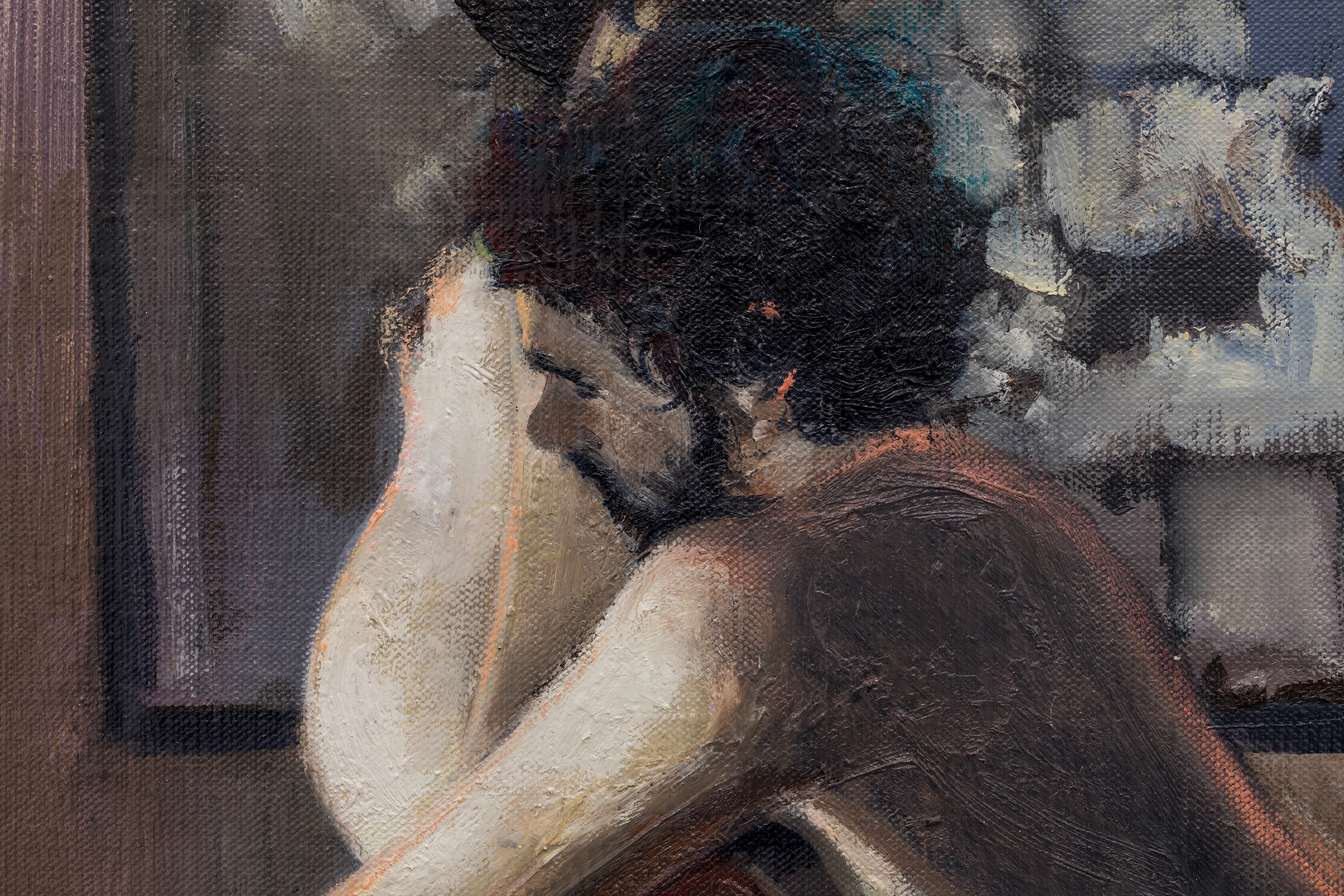
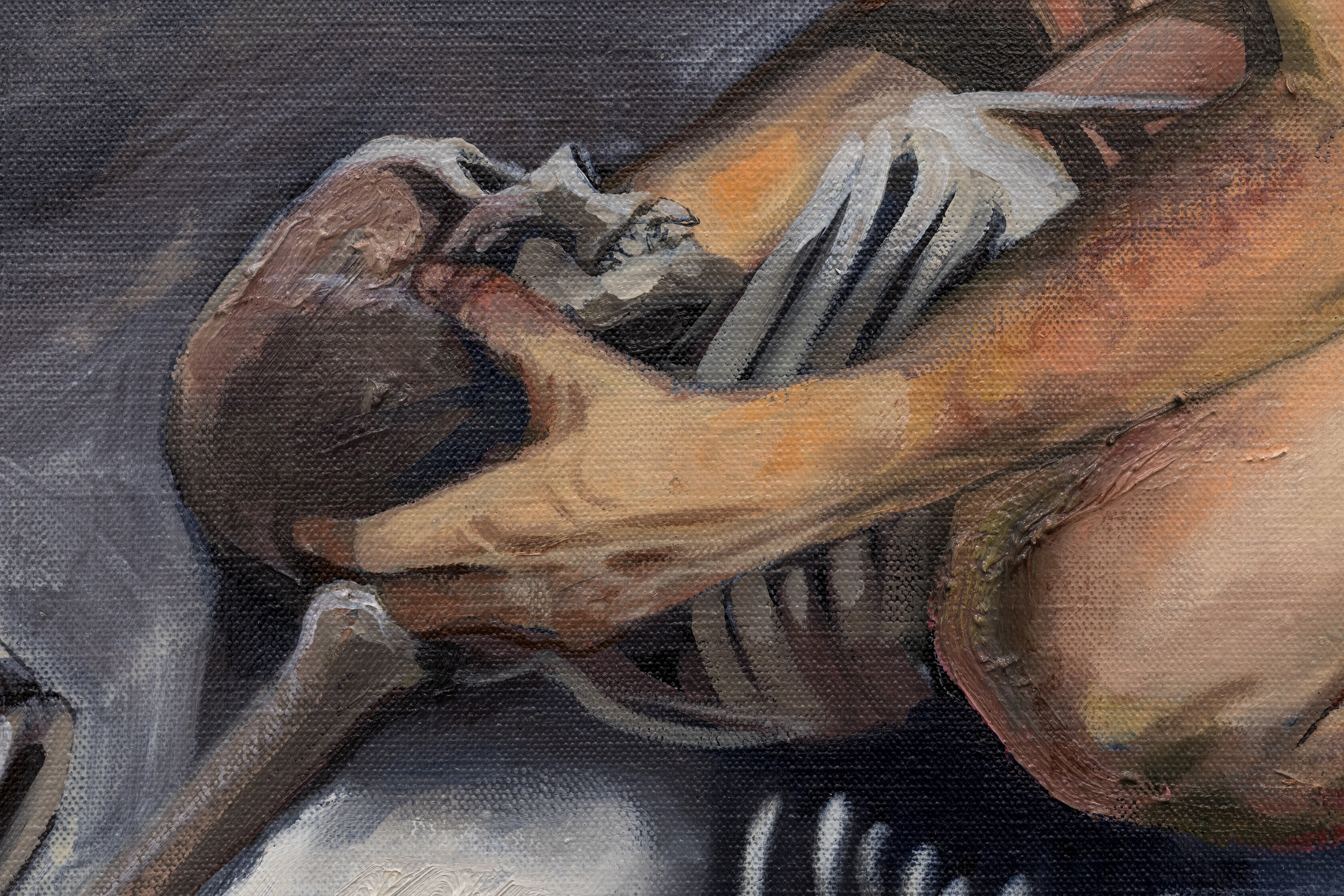
Detail of Gian Manik, Swami Silver, 2026, oil on linen, 46 × 66.5 cm. Courtesy of the artist and Sutton Gallery, Melbourne. Photo: Andrew Curtis.
Gian Manik’s exhibition Fantasy Chamber at Linden New Art gives pause to reflect on this situation, due to its selection of masterful oils that flaunt the artist’s talent for mimeticism, while mining critical value from realistic painting. I first encountered Manik’s work at Sutton Gallery in 2019. Whatever realist skills he harboured, they were covertly signalled through the works’ echoes of Futura 2000 and Cy Twombly. Abstracted sensations of painterliness were forwarded more than images, let alone pictures. His shift towards the pictorial occurred in a curious work one year later, Mum’s Rembrandt Paintings (2020). This canvas holds an ambiguously snide distance from its subject, typical of how artists grapple with the aesthetic sensibilities of their parents. The unstretched canvas’s mixed-media scribbling and rendering bears flashes of empathic studies of Rembrandt’s ragged faces and what look like faded family photos.

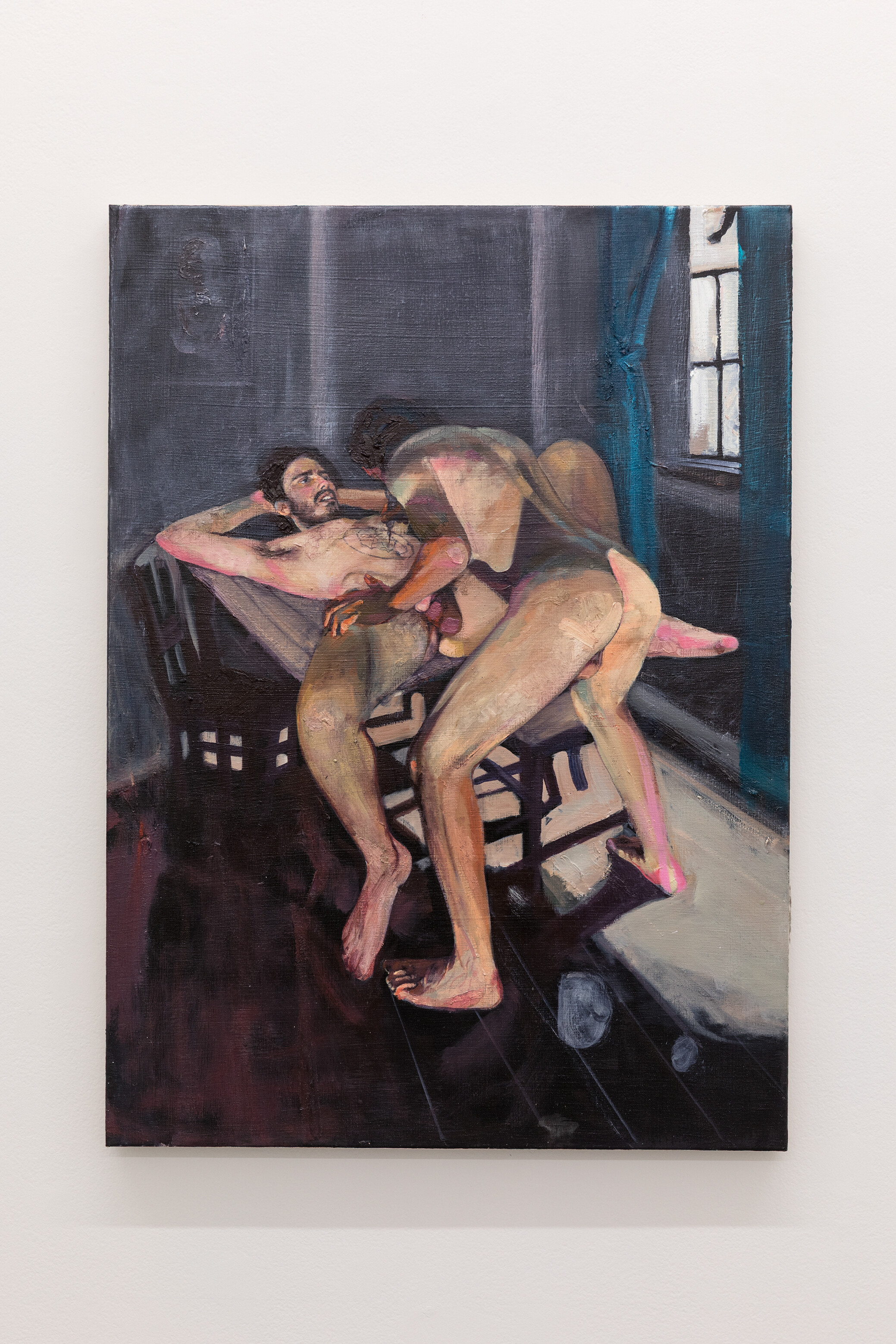
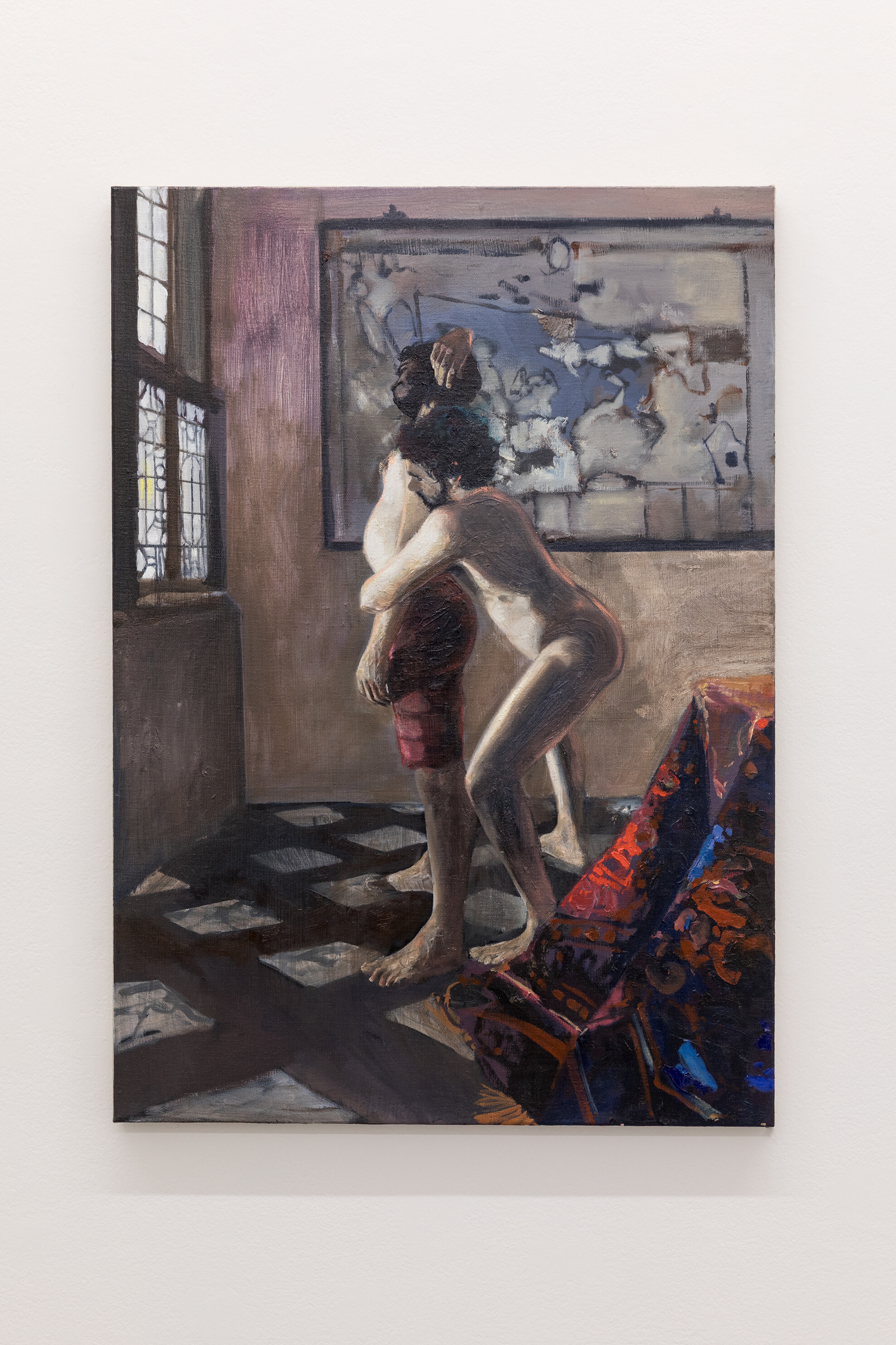
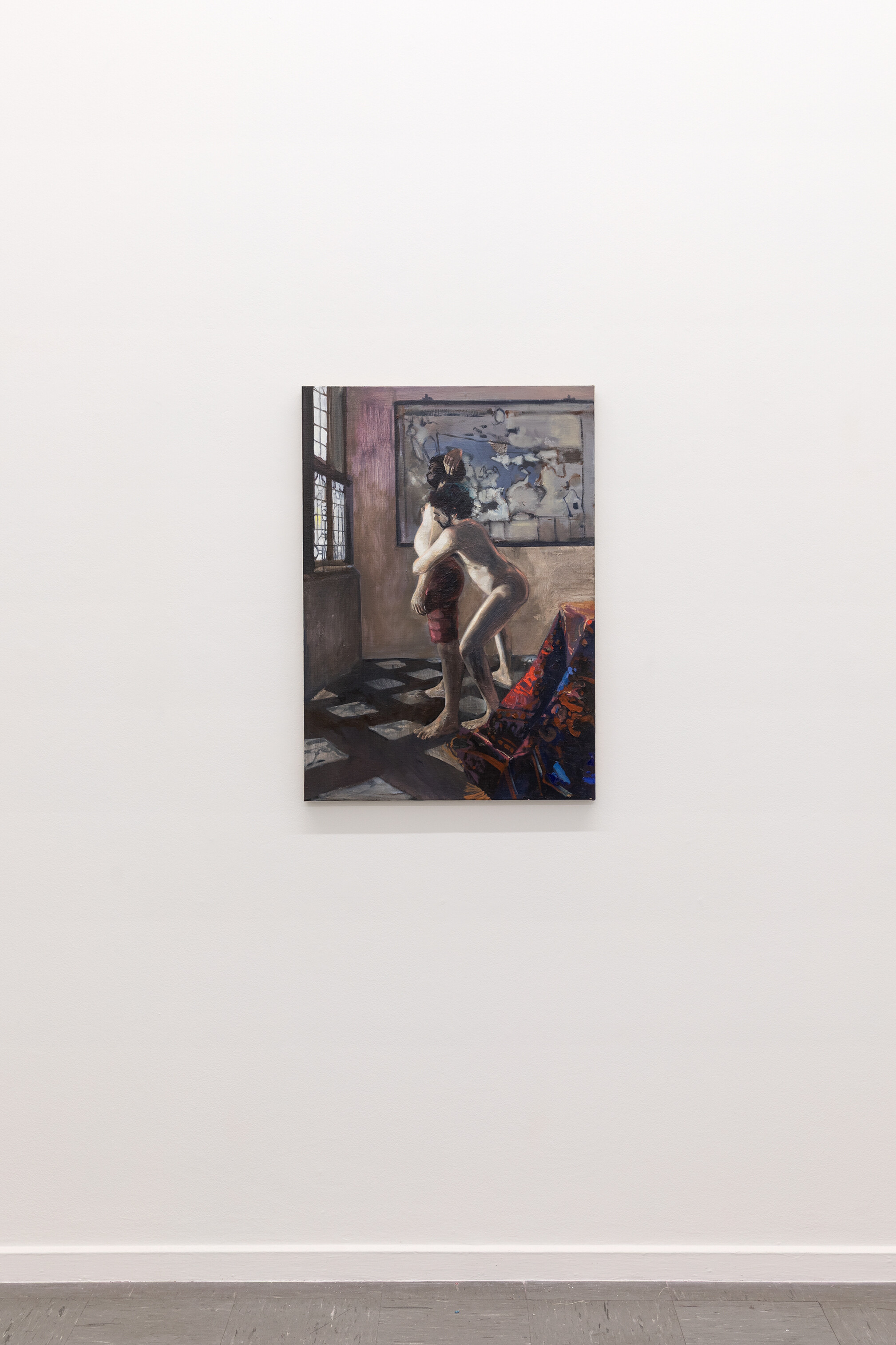
Gian Manik, Devotion Without Limits, 2026, oil on linen, 86.5 × 61 cm. Courtesy of the artist and Sutton Gallery, Melbourne. Photo: Andrew Curtis.
Stylistically, the malleable collage of figurative fragments found in Mum’s Rembrandt Painting was exploded one year later in a fantastic work, Contemporary Dancing (2021). Completed in oil, pen, and marker, it’s arguably more an illustration than a painting—which in my mind makes it better. Again, a splayed-out assemblage of faces and bodies: dancers practising, rehearsing, performing, reflecting, cursing, listening, observing. It captures dance as an industrious craft honed through repetition, much like how the practice of life drawing can allow one to gradually resolve hastily sketched impressions of limbs and movements into coherent forms. At stake is the mix of laboured, hurried, stylised, agitated, and splashed strokes: not one is truthful to the mystical mark-making viewers are led to believe makes a great work of art. Manik’s brushwork is disingenuous, fraudulent, performative—and all the better for it.
These notions of performative practice and collaged staging were centred in Manik’s work in Like a Wheel That Turns: The 2022 Macfarlane Commissions at ACCA. I experienced the mural-sized oil, polymer, and spray Victory and Conflict (2022) less as a work of art and more as an instance of discursive visuality: a wall plan for deconstructing images through painterly mark-making. Erratically and nervously scattered across the raw-ish canvas zone of this work are group clusters and individual stances of faces and figures engaged in various acts of social unrest, sexual union, and inscrutable relation. Most bodies are brimming with life, heightened by the urgent brushwork that dances the border between cursory sketching, impressionistic washing, and precision painting. A sodden arc of dead heads seems to have been collected along the bottom edge. The work’s aura is akin to the sense of capture that internet searches have created: a feeling of scooping and encapsulating a topic beyond one’s nominal research capabilities or sensibilities. I remain wary of artists who do “image searches,” but Victory and Conflict feels like a history painting assembled through the act of image searching, almost as if the large canvas is a screen rendered painterly.

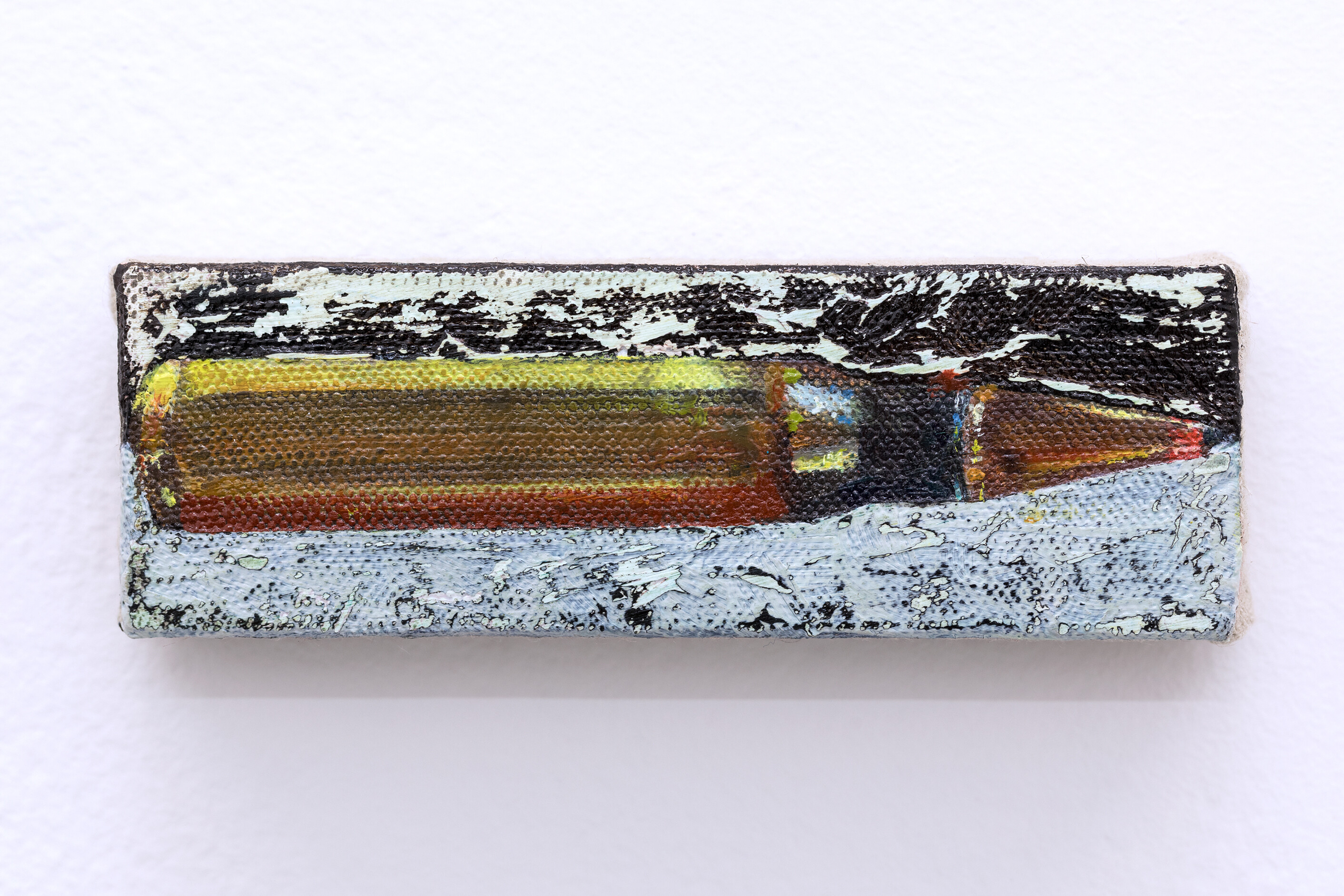
Gian Manik, Execution Without Judgement, 2026, oil on linen, 4.3 × 13.2 cm. Courtesy of the artist and Sutton Gallery, Melbourne. Photo: Andrew Curtis.
The multi-modal gayness of Victory and Conflict’s panorama of micro-stages is hard to miss: skinheads, prisoners, recruits, clubbers, all of whom are either in private ecstasy or public terror. The mural’s scenography of homoerotic icons recalls the kind of image fixation that characterises today’s online activism from both the extreme right and extreme left. The work’s innate illustrative modality—arranging evocative faces and palpable bodies into a virtual cosmology of being—brings these image fragments into an openly problematised communion, and Manik’s painterly skill and adopted techniques are crucial to the work’s formation. If one bypasses the restrictive references to the history of art (which also dog Manik’s didactic panel texts, assumedly not drafted by him directly), Victory and Conflict irises onto a much broader visual culture: the work is part Maze Prison shit-smear, part courtroom pastel, part community mural, and part set design for a movie set in a realist oil painter’s messy studio. Perceived through a fine art lens, Victory and Conflict can be positioned within Australian postmodernism: Juan Davila’s skilled critical oils, Maria Kozic’s surface-driven water colours, Matthys Gerber’s simulated black velvet bedroom paintings. Indeed, these key artists—each openly “stupid painters” in their own way—are relevant here for the purpose of contextualising the strategy of high-level skill that is central to Manik’s project.
But Manik’s pictorial canvases (in contrast to the various abstract experiments he has conducted over the years) are primarily familiar because of the cultural terrain of illustration from which their visual culture passport has been issued. Manik’s clearest precursors are populist illustrations from the first few post-war decades of accelerated image production and reproduction worldwide. Think 1940s American crime novel covers; 1950s Italian locandina movie posters; 1960s Indian movie theatre hoardings; 1970s corporate annuals, scientific manuals, and educational textbooks. Manik probably isn’t familiar with Heaven 17’s first three LPs—Penthouse and Pavement (1981), The Luxury Gap (1983), and How Men Are (1984)—which all feature realist paintings by Ray Smith. Drafted in a post-punk ethos, they are detached, meretricious, ironic, and self-deprecating (in line with the group’s cynical regard for British entrepreneurial industries and their self-congratulatory media proclamations in the era). My point is that, by the 1980s, populist illustration and postmodern art were doing the same thing—with illustration possibly doing it better, given its exclusion from fine art evaluation. Manik’s adoption of illustrative techniques I feel is aligned with this critical drive.

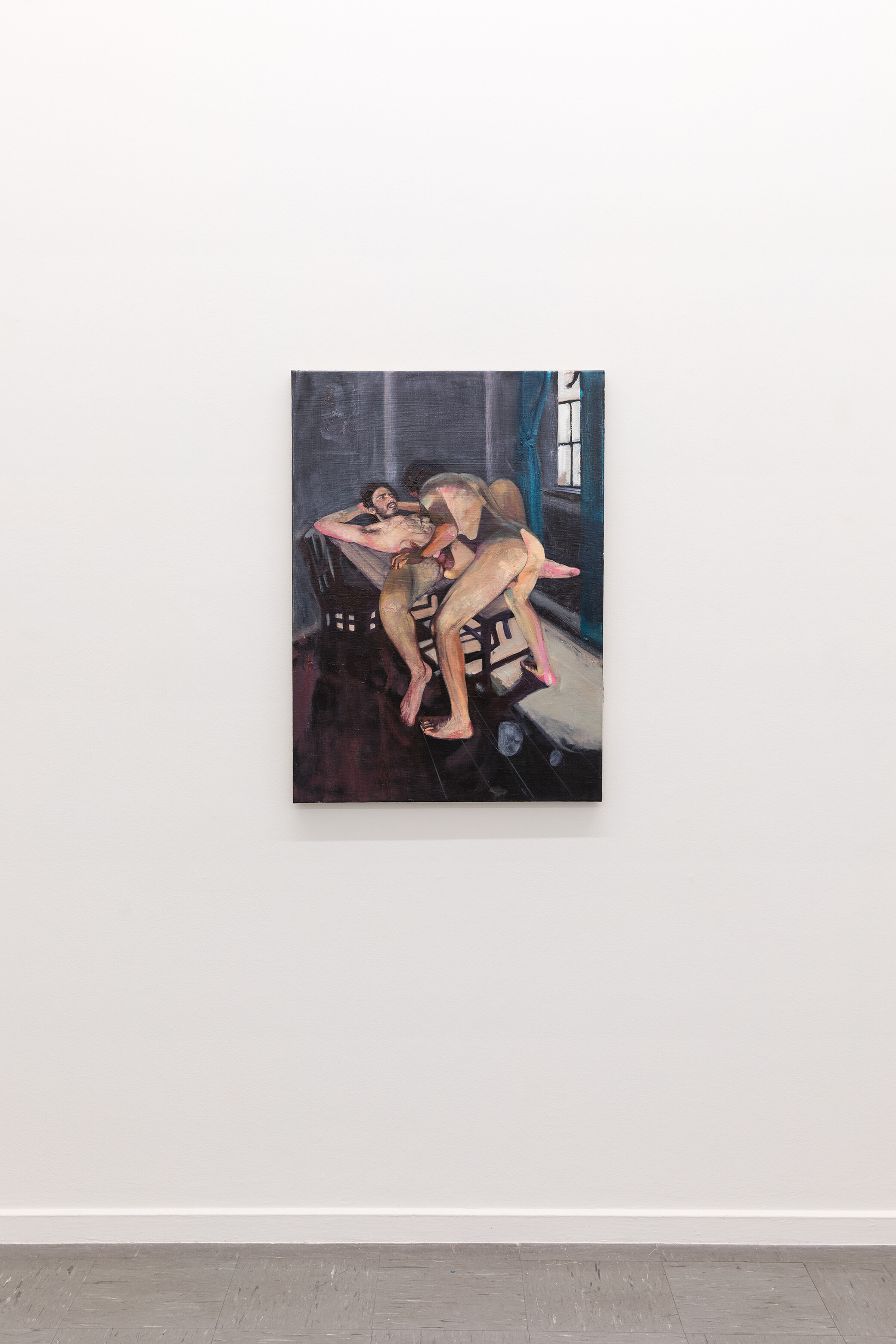
Gian Manik, Swami Silver, 2026, oil on linen, 46 × 66.5 cm. Courtesy of the artist and Sutton Gallery, Melbourne. Photo: Andrew Curtis.
All this returns us to Manik’s latest exhibition, Fantasy Chamber at Linden New Art. The works are carefully installed, begging the question: were they painted for Linden’s heritage listed Victorian interiors, or have they been installed to spotlight the paintings’ collective address of Victorian and Romantic aesthetics? For whatever reason, this show concentrates on holistic, singular paintings, each presented with all the gravitas of an oil on show at Paris’s Musée de la Vie Romantique. (That’s a compliment.) Dare I say, they reek of gayness: all oils, with layers approaching impasto, and an incredible obsidian shine on the sweaty black hair of their male nudes.
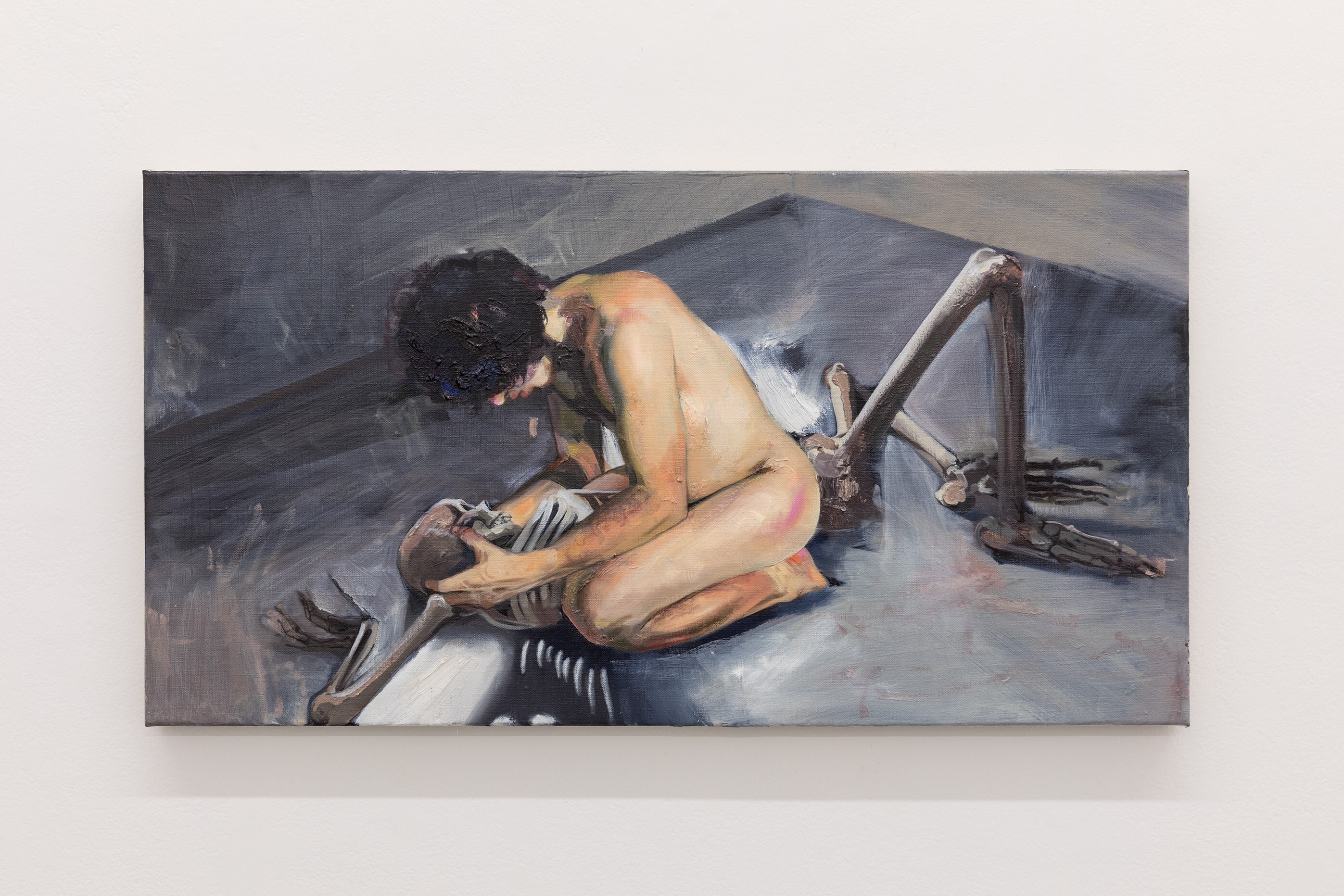
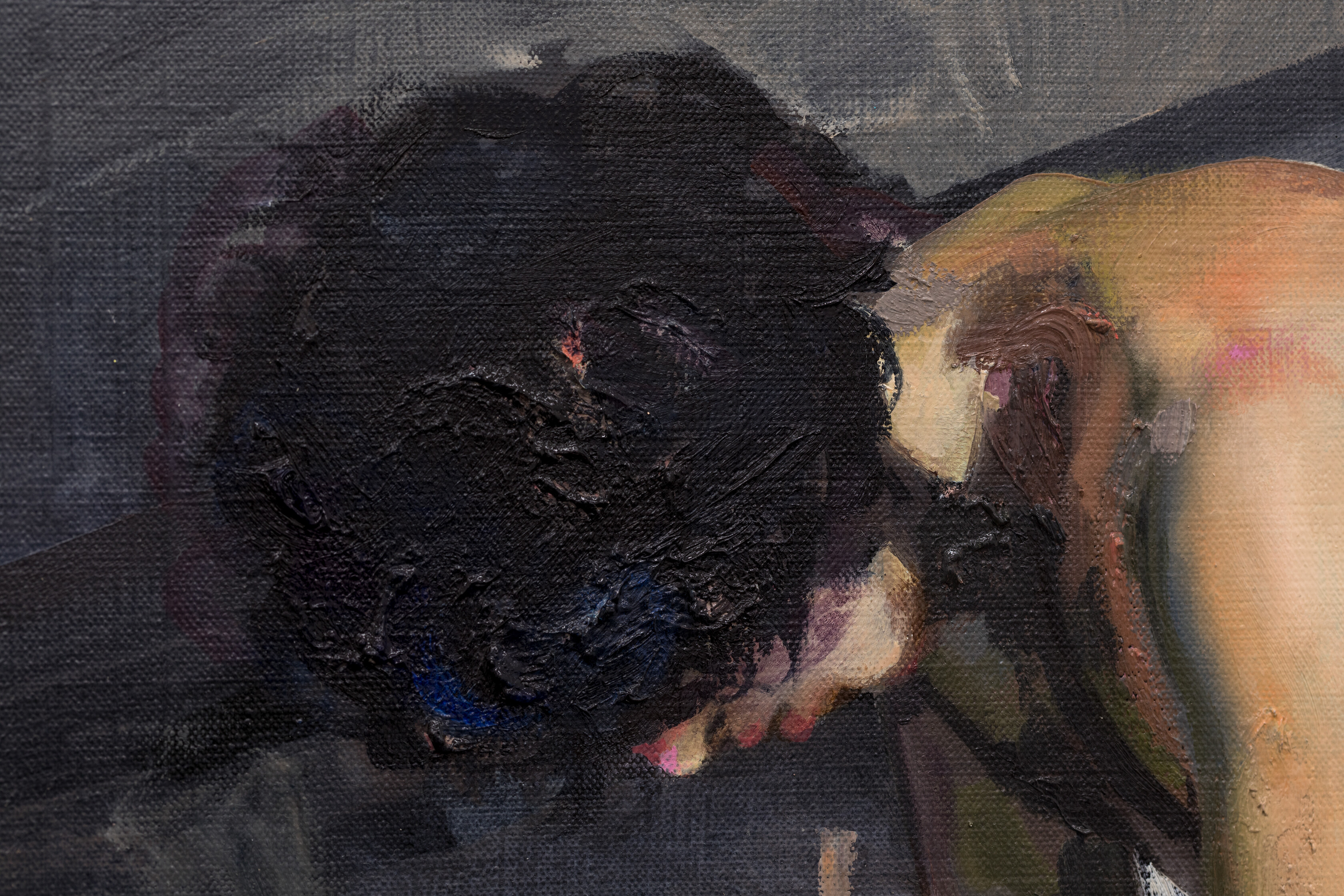
The first painting encountered is Knowledge doesn’t make us better than others (2026), which restages Magrenus Enkell’s Boy With Skull (1892)—a muted para-paedophilic/para-necrophilic ode to homosexual desire, corralled into brown and tan oil by the Finnish artist’s sensual desires. But it’s not Manik’s subject matter that primarily attracts my ideological lens: I’m more turned on by the Gen-X’s glob of black curly hair, animated by gallery light glints as I move around the canvas. The strongest and most arresting figurative paintings will have just such a locus of intense abstraction, often hiding in the light yet left as secretive code to state the painting’s complex semiotic substance. Here, the youth’s hair is closest to the viewer’s perspective due to the scene’s angle, and its thick brushwork appears moist, creating the sensation of a pornographic thrust through the scene’s fourth wall. Formalist separatists—let’s call them hetero historiographers—usually can’t see this queering aberration. Manik’s oeuvre seems to operate in this netherland of displaced erotics of corporeality, figuration, and a type of “phantom tactility.”

Gian Manik, Knowledge Doesn’t Make Us Better Than Others, 2026, oil on linen, 46 × 86.5 cm. Courtesy of the artist and Sutton Gallery, Melbourne. Photo: Andrew Curtis.
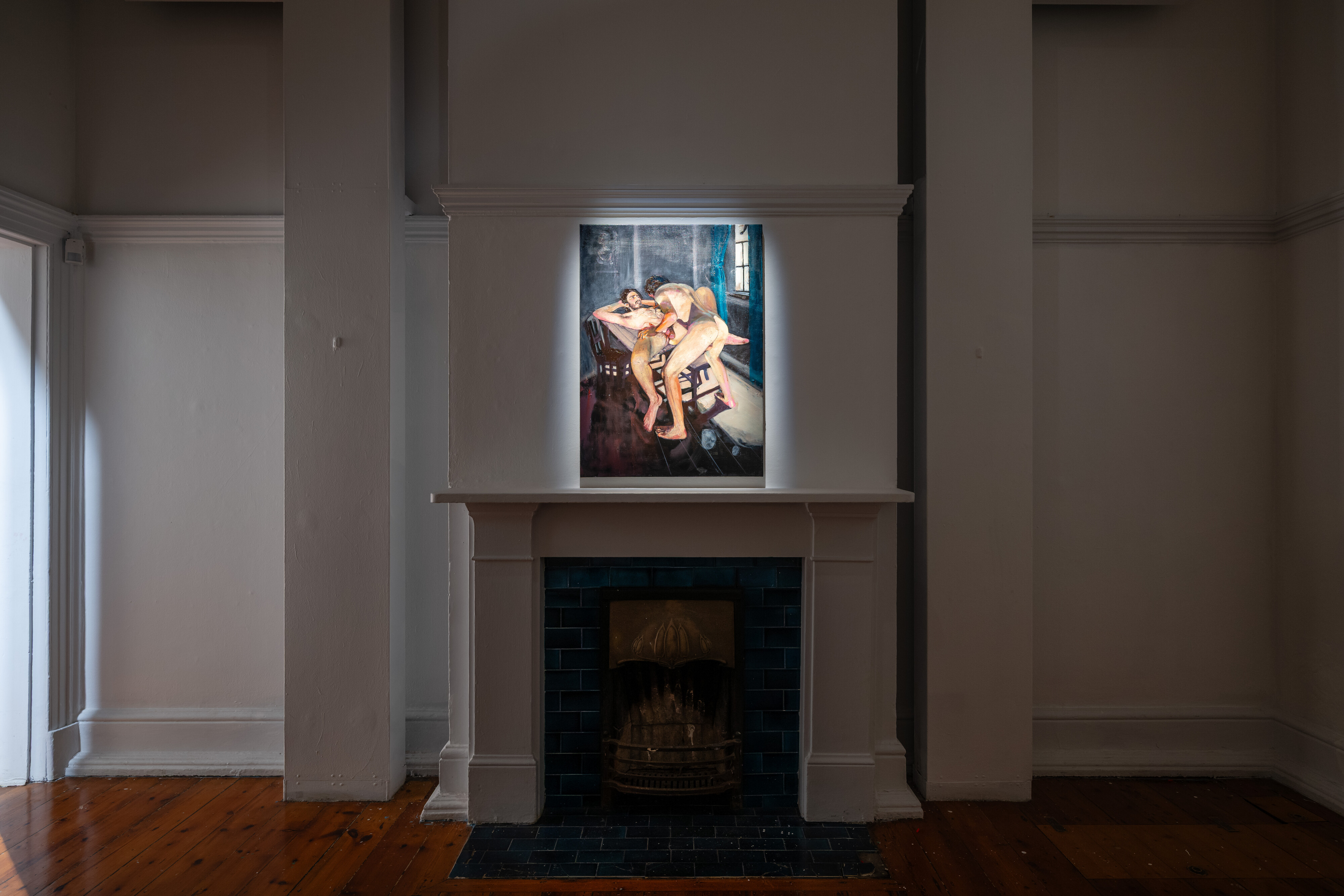
This effect is theatrically stated in the install of Campaigns of Assimilation (2026), a slightly vertical canvas hung over a fireplace in a darkened room, with a rectangular gobo framing the painting to make it radiate unnaturally. The work depicts a feverish physical act that possibly combines mano-a-mano sex and tattooing, formally reverberating with the awkward musculature of Gustave Caillebotte’s male nudes, as one lithe figure lies on his back while another bears down on him inking a map of Pangea. (The didactic told me that last detail, plus a pile of museographic references that I felt hardened the painting’s flexibility.)

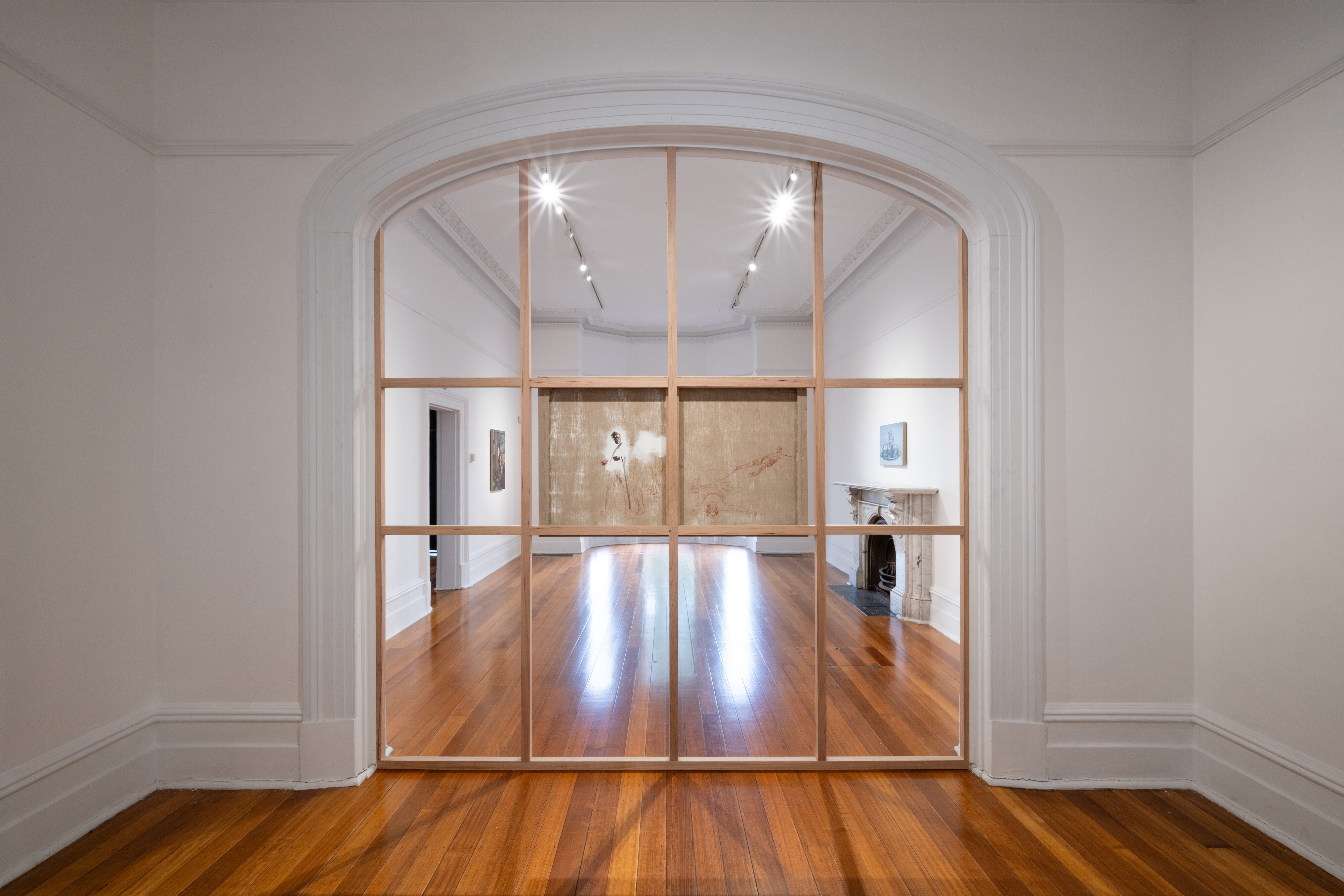
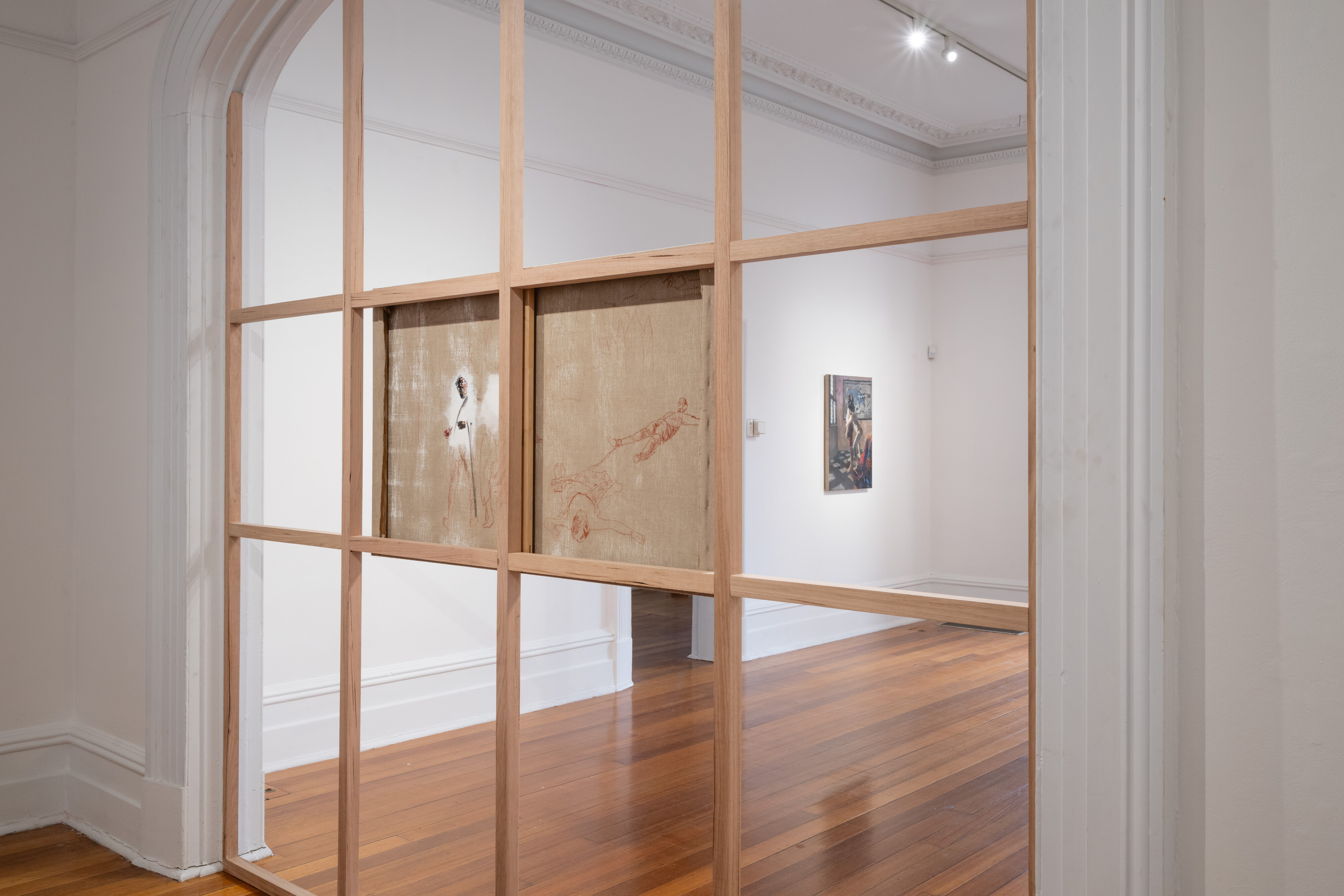
Installation view of Gian Manik, Fantasy Chamber, 2026. Linden New Art. Photo: Simon Strong.
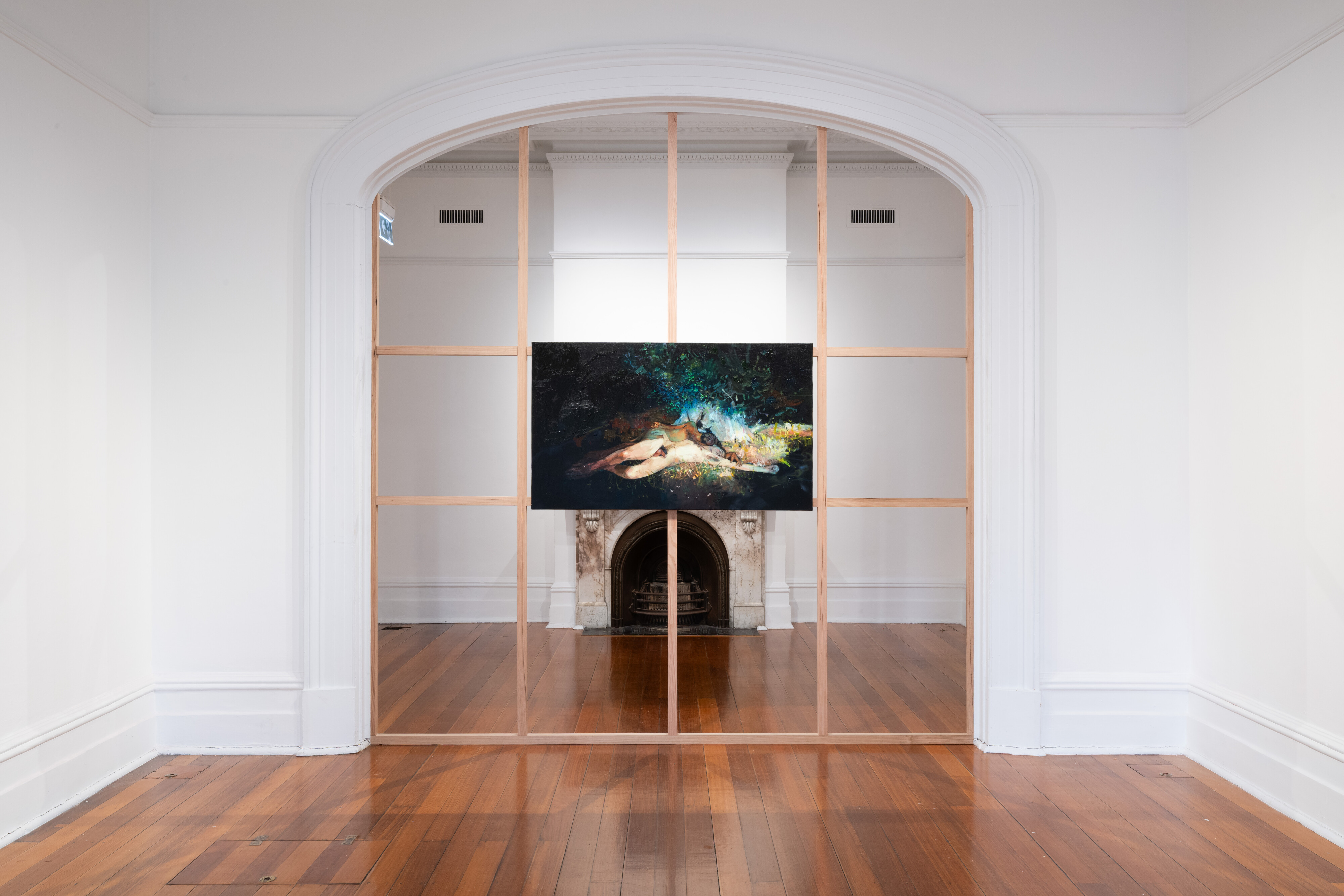
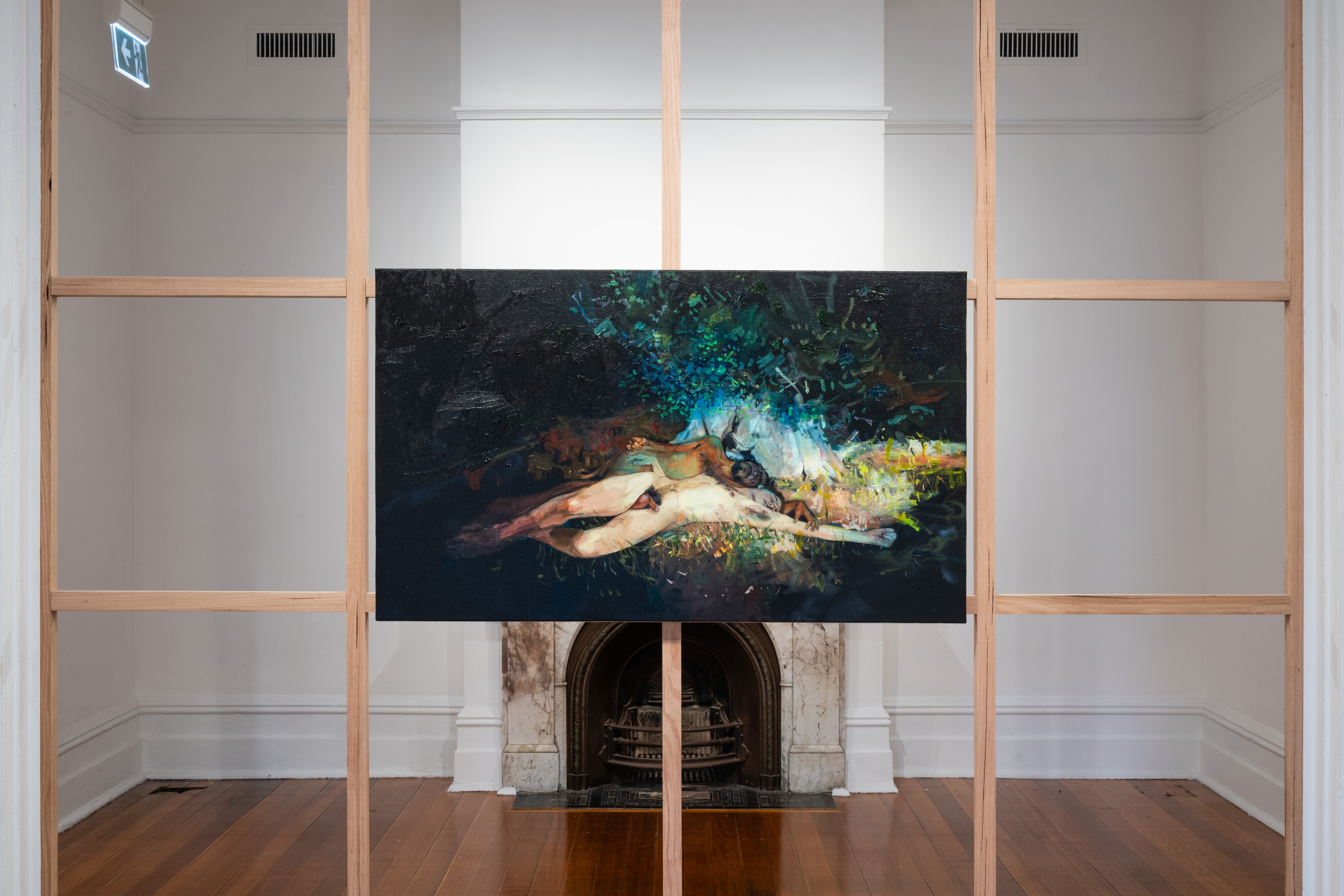
Equally theatrical was the install of Manik’s reworking of Saint George Hare’s The Victory of Faith (1891). The canvas was positioned on the wooden studs of a non-existent or invisible wall, constructed in the archway between two adjoining rooms. Interestingly, both the Hare and Enkell’s works cited are golden and warm; Manik pushes his quotations into darker Symbolist territory. His Victory of Faith (2026) swaps out the original’s prison floor straw for an orgiastic forest of brilliant flora. I was reminded of Louis Ricardo Falero’s Reclining Nude series (1880–1893). Falero and Hare, of course, were all about the female nude (though I regard the painterly epoch of accelerated nudism as polyasexual), and Manik, with a modicum of overdetermination, supplants his sensual male bodies to erase any feminine fragrance.
I’ve avoided addressing the sexual politics of these works, despite them being important to Manik’s concerns cited in the introductory wall text: his “long-standing interest in self-portraiture, (folded) into a broader enquiry into the mediation of his queer and Eastern identity.” With such statements in hand, one can readily frame Fantasy Chamber through the modish filters of ethnographic, queer, post-colonial, and quotative picturing. The gauzy Arts-Hub type of argument would be that by realistically painting images from histories where realism was either valorised or weaponised, one is disarming traditional codes of restricted representation, and liberating suppressed nodes to activate new sociocultural representation.

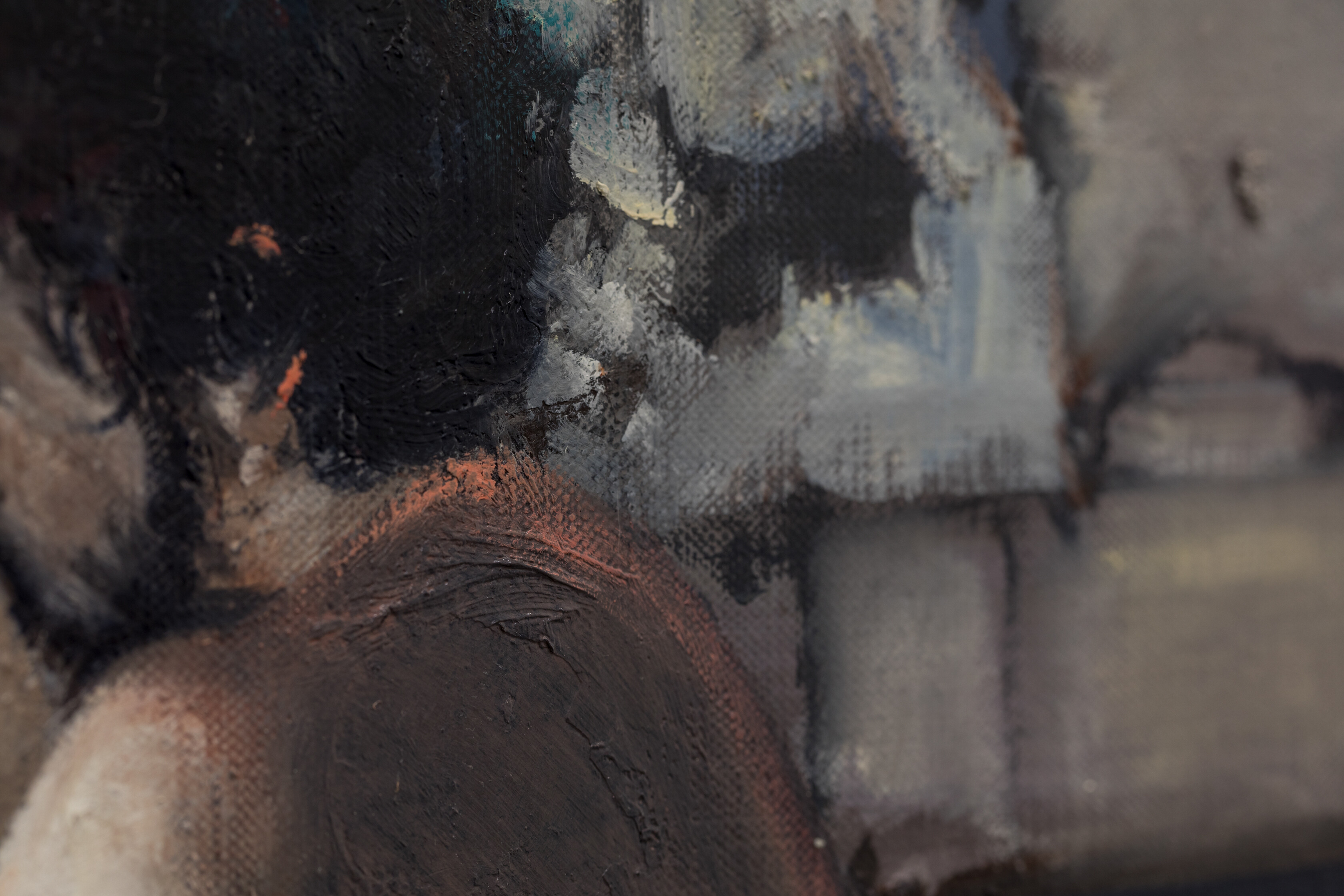
Detail of Gian Manik, Victory of Faith, 2026, oil on linen, 82 × 137 cm. Courtesy of the artist and Sutton Gallery, Melbourne. Photo: Andrew Curtis.
I get it, but this kind of reading of Manik’s work favours the artist more than the art. Celebrating the artist’s identity syncs with the humanist agenda of most art practices and their presentation, but it mostly leads to numbing endgames. What impresses me most about Manik’s painting is how they throb beyond such endgames, and how they materially problematise acts of figural depiction. While building new spaces of representation for marginalised identities is commendable, there is much to explore through dissolving declarative identities in the whirlpool of painting’s textual energies. To do so through expertly executed realistic oil painting would be perverse, exciting, and invigorating. Just like Manik’s paintings.
Gallery