Dusting Mint 7: Music for Invented Instruments Lamenting Imprisoned Historical Avant-garde Artists, Musicians and Poets (New Songs Deranged)
April 25, 2026
-
Dusting Mint 7: Music for Invented Instruments Lamenting Imprisoned Historical Avant-garde Artists, Musicians and Poets (New Songs Deranged)
Venue: NATURESTRIP
02 Apr 2026 – 26 Apr 2026
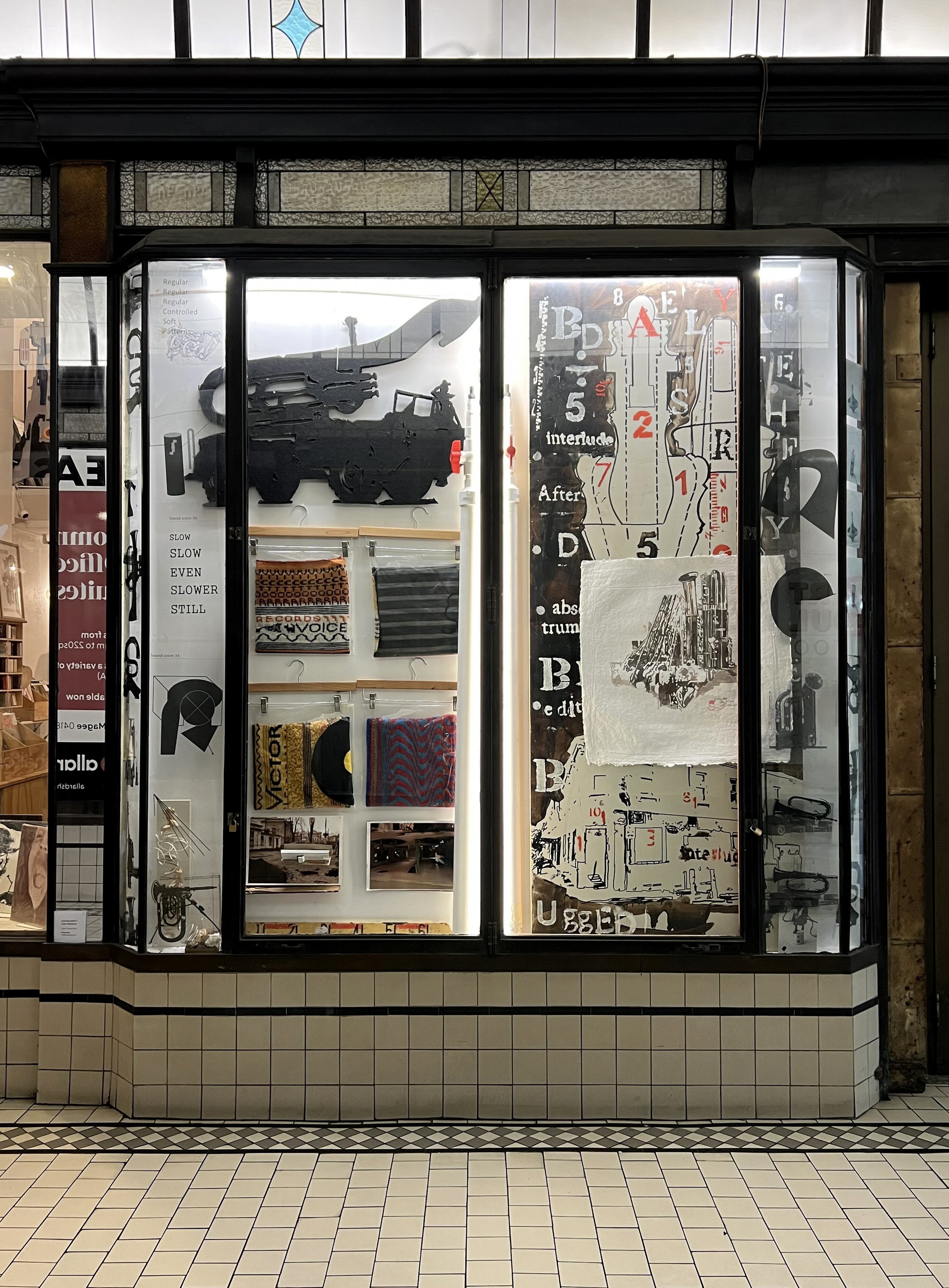
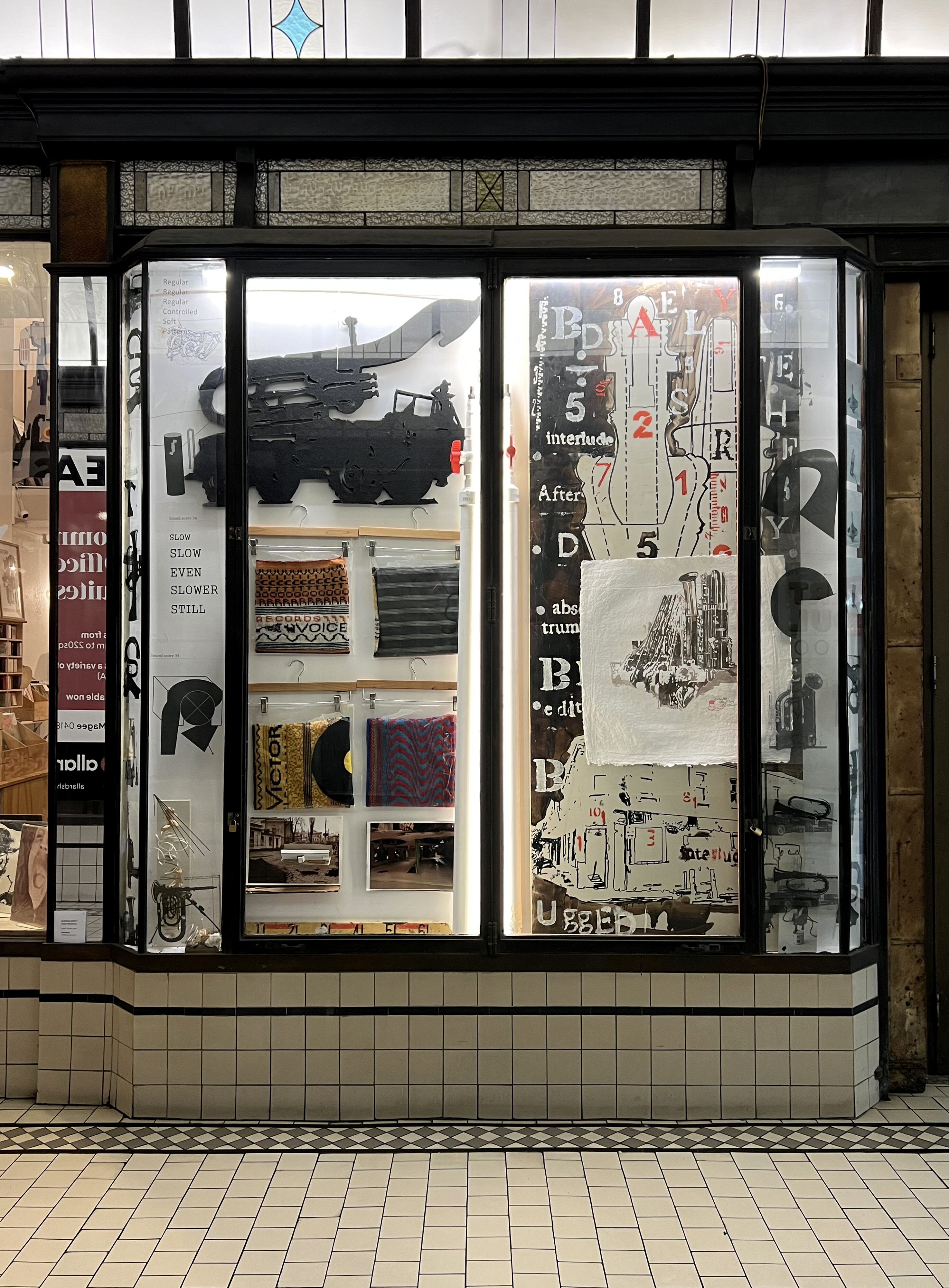
A selection of works by Dutch-Australian artist Victor Meertens is currently installed in the window of Naturestrip records. Music for Invented Instruments Lamenting Imprisoned Historical Avant-garde Artists, Musicians and Poets (New Songs Deranged) (2026) is the seventh edition of the Dusting Mint series organised by artists Mary MacDougall and Edward Beaver. These shows are limited to the space of a standing vitrine positioned out the front of the record store.
This is my first introduction to Meertens’s work outside of the three-person, decidedly unrehearsed Yarraville-native music project, The Charles Ives Singers (1992-). This group are strict adherents to an ethics of the untrained, the automatic, and the improvised. Their music, evidently like Meertens’s art, is sinthomatic in that it’s uninterpretable, a playground, and an event of the body.

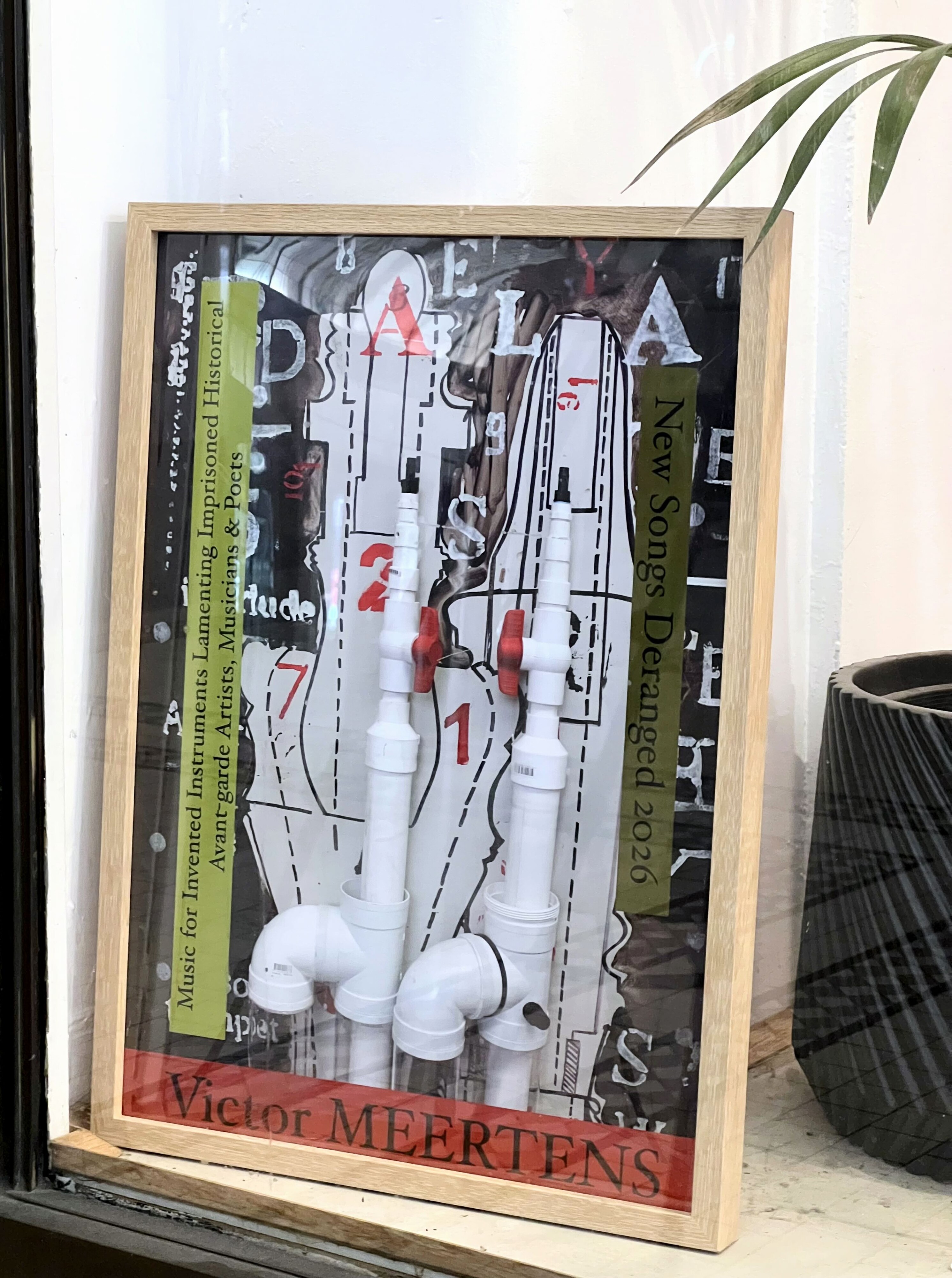
Victor Meertens, Music for Invented Instruments Lamenting Imprisoned Historical Avant-garde Artists, Musicians and Poets (New Songs Deranged), 2026, exhibition poster. Photo: Yasmin Heisler.
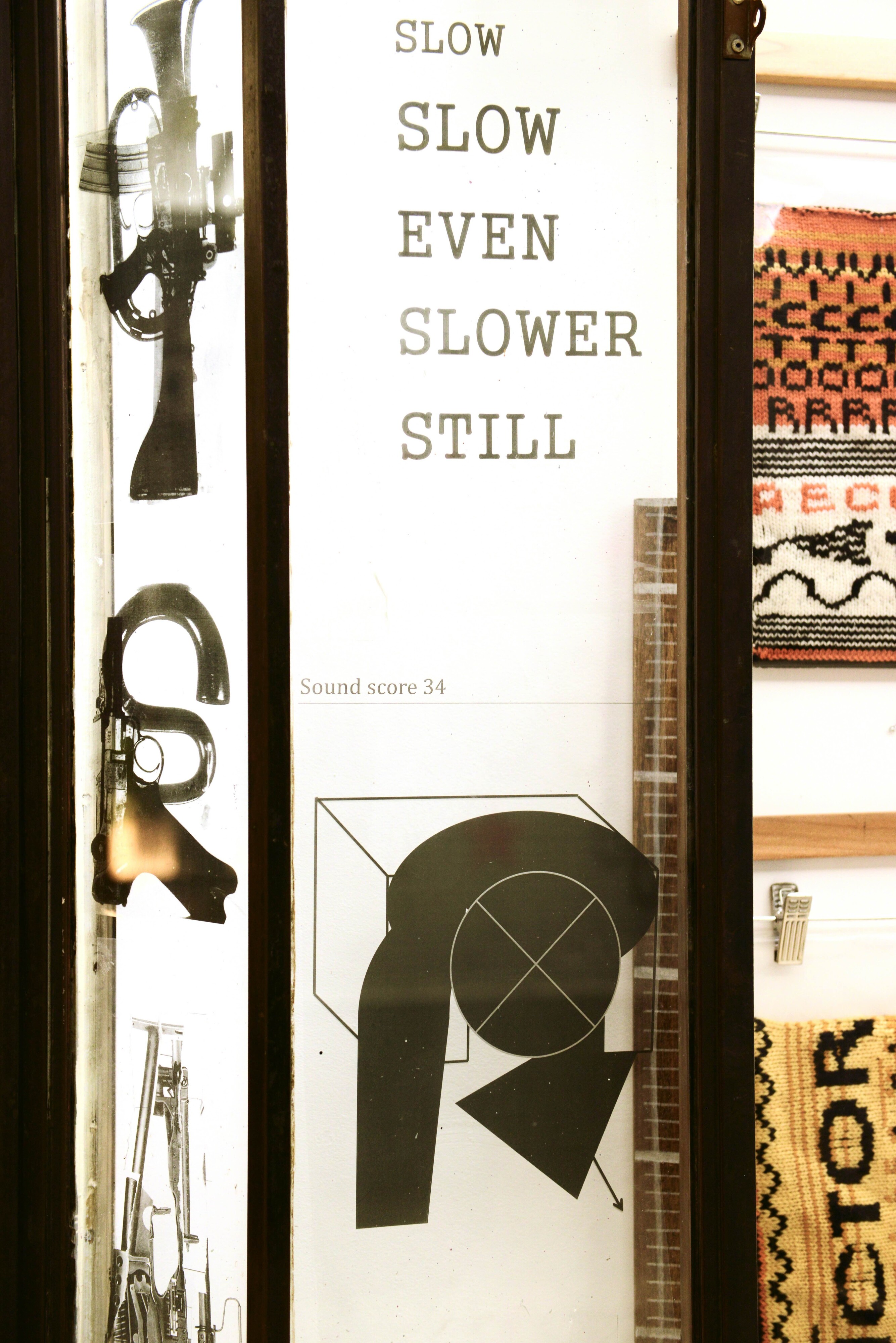
Along to the far left and right of Meerten’s display, forming a kind of frame, is Transparencies (2026), a series of fourteen black prints on acetate sheets, each a solitary form derived from a mixture of brass instruments, violin necks, military firearms, and abstract line work that suggests movement. Behind these is a larger work—Propaganda Wagon (2024)—which continues the militia-silhouette motif, but differs in that its image is rendered in sound-absorbing foam.
These assemblages share a graphic vocabulary with Weimar-period photomontage in their fixation on density and industry, but the threat of violence is a subtext through their pluriform rifles. This all makes for an ambience steeped in the romance of interwar aesthetics, the type one finds in the work by Douglas P., for example, a contemporary of Meertens with a similarly dual-expatriate relation to Australia. The overall morphology in these silhouettes—the heaviness of the horns and the repeating, elongated, and bending barrels of the guns—moves me, however, to think of Lee Lozano’s pencil drawings of the early 1960s with the near constant presence of a real phallus.

Installation view of Victor Meertens, Dusting Mint 7, 2026, Naturestrip. Photo: Yasmin Heisler.
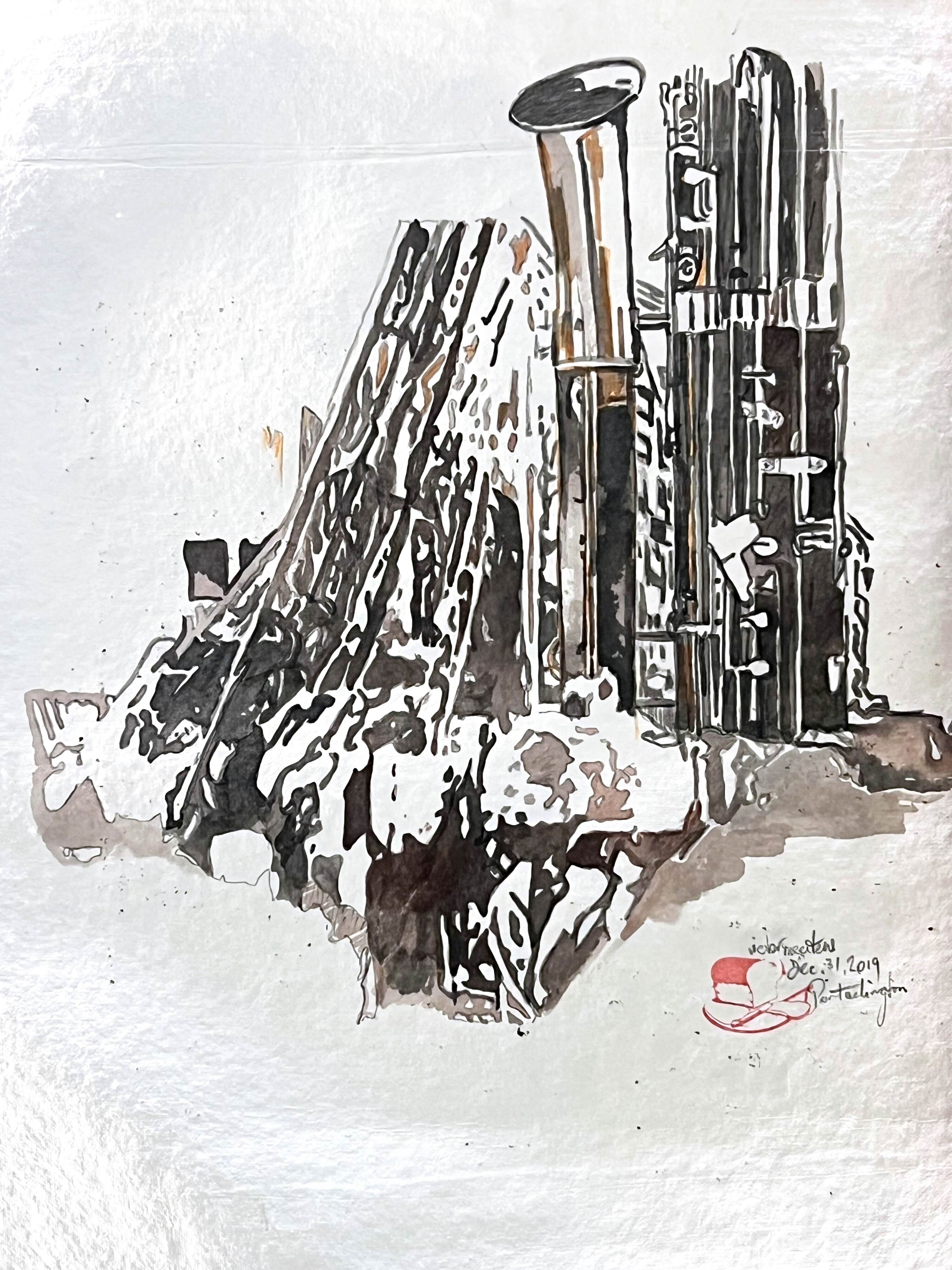
Though there is a playful sense of cacophony and experimentalism in Meerten’s vitrine installation, one of the more prominent works is a quiet and traditional still life ink drawing, Berlin 1929 (2019). The right side of the picture is a disassembled clarinet; the left side is less certain, but it replicates and stutters the details of the clarinets’ form through vaguely architectural or Braque-like line drawing.

Victor Meertens, Berlin (1922), 2019, ink on watercolour paper. Photo: Yasmin Heisler.
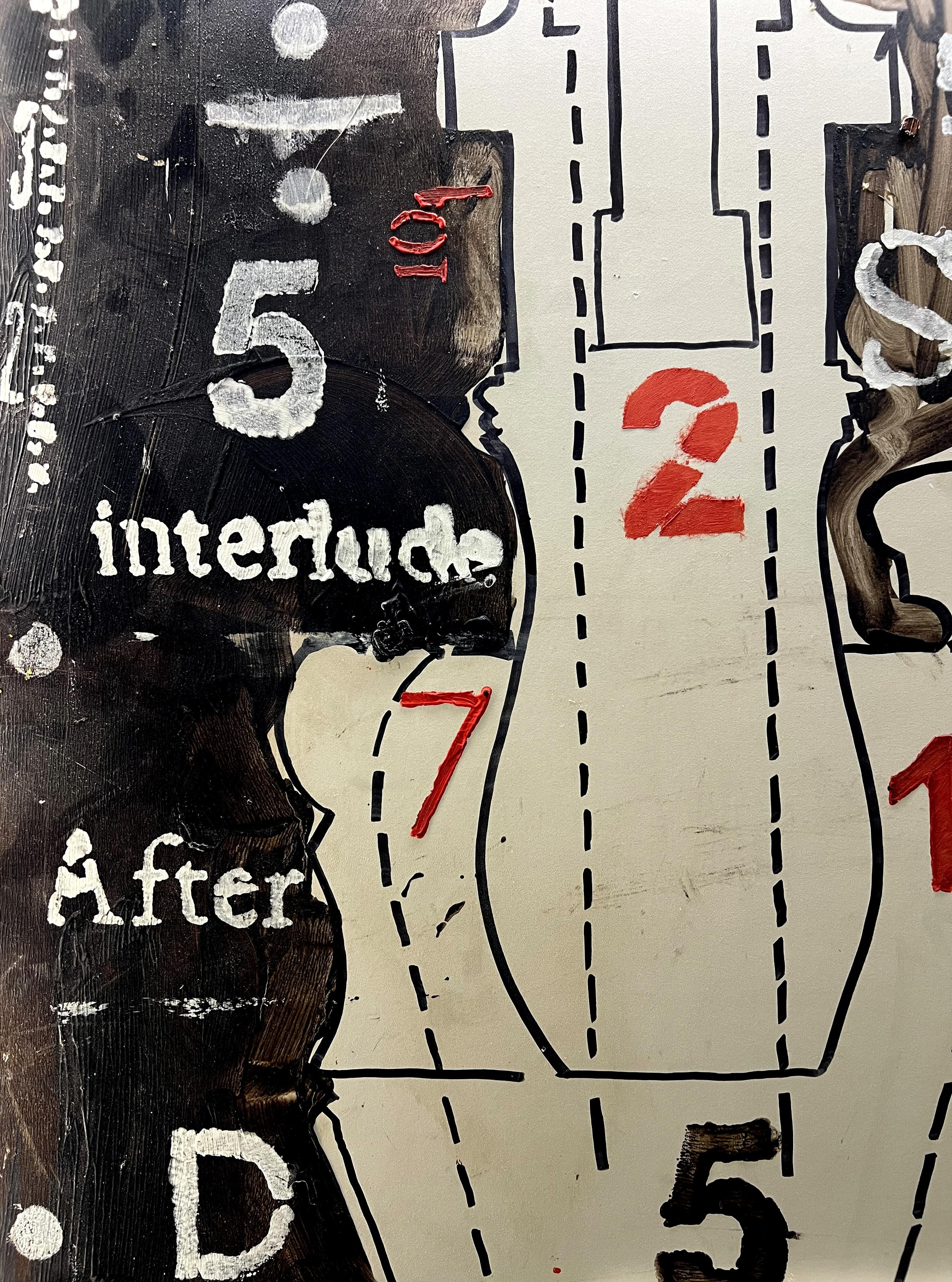
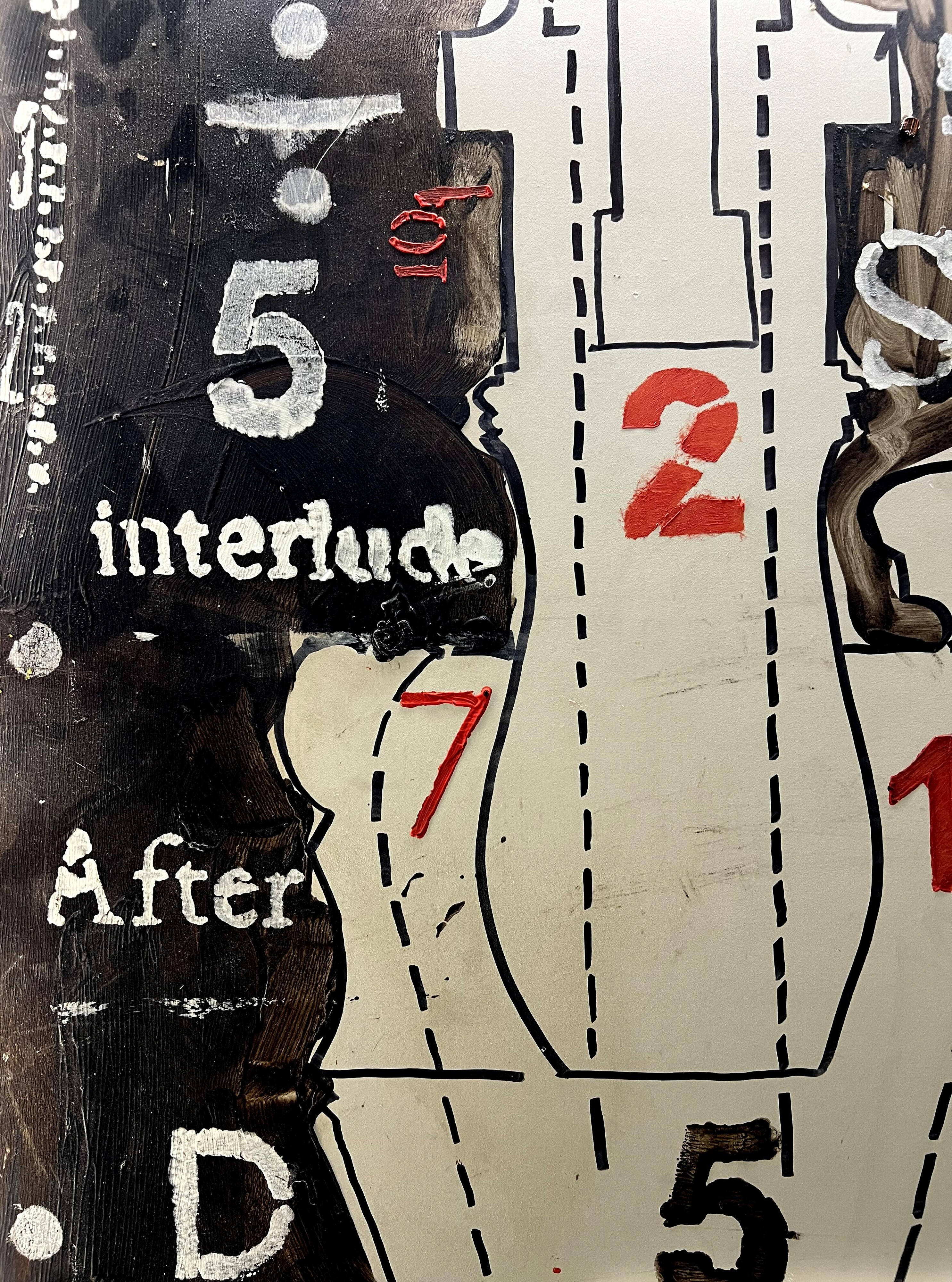
Smith St. C’wood Building Score (1991) is the largest piece in the exhibition, nearly two metres tall. The upper section of the picture is a schematic drawing. Its details are distinct, but it echoes, formally, with a wind instrument made of clear and opaque pipes that is leaning against the painting. For me, the wind instrument further consolidates the interwar-ness of Meerten’s work, through its material and formal likeness with the historically anomalous, also hyper-phallic, Dadaist pipework readymade God (1917) by ‘The Baroness’ Elsa von Freytag-Loringhoven. Across the surface of this painting are stencils of seemingly random numbers and letters, yet the title suggests musical notation.

Victor Meertens and Eugene Carchesio, Smith St. C’wood Building Score, 1991, acrylic on linen. Photo: Yasmin Heisler.
In the freneticism of many of the works’ surfaces, I recognise aspects of Gary Willis’s art, particularly his practice over the 1970s and 1980s and its heavy use of text, metallics, and electrical tape, spoken of and documented beautifully in his memoir Diary of a Dead Beat Modern Art Type (2000). In terms of the iconography, I can also recognise aspects of Liam Osborne’s work through their shared use of the stencil as a painting device and their paranoid allusions to the types of military soft-powers that overdetermine counter-cultural spheres—an attentive punk-infused fervour belays a surprisingly exact field of signifiers.

Victor Meertens, Score Transparencies, 2016-2023, inkjet print on transparency. Photo: Yasmin Heisler.
Inside the record store itself, there is a smaller collection of discrete artworks, mostly posters, that rework the same visual reference material. There are also some cartoonishly depicted guitars made of acoustic foam and a white hazmat suit with “ОНА/ЕЁ” written on it, which is Russian for “SHE/HER”. The scale and whimsy of the guitars recall, to me, Vivienne Tétaz’s 2024 surprisingly affecting music note sculptures made in cardboard.
While these works can be seen individually, there is a strong sense of it all being one thing. The instinct to distinguish one work from another would be a fool’s errand, if it wasn’t a structural impossibility endemic to the way, I imagine, the artist practices.
Returning to the window installation, the unguidedness of my own eye’s movements compounds this feeling of indistinction and makes me doubt any work’s singularity. This sense is seen through the formal repetitions, both suggested and direct, across works, but is emphasised further by the layering effect Meertens makes by installing works on both the back wall of the vitrine and directly on the glass plane that demarcates it. When you peer from the side, toward the charming knitted record sleeves Frieda’s Knits (2025), for instance, you’re viewing them through a floating screen of transparency sheets printed with graphic sound-scores or poetry stating “Regular Regular Regular Controlled Soft Patterns”, or intricate vector drawings of some non-descript mechanical apparatus.
This interlacing quality, which acts like a wall of sound or a visual drone, of the installation is much like those by artists Debris Facility or Christopher L G Hill—both artists who, like Merteens, work somewhere along the continuum of noise music to contemporary art.
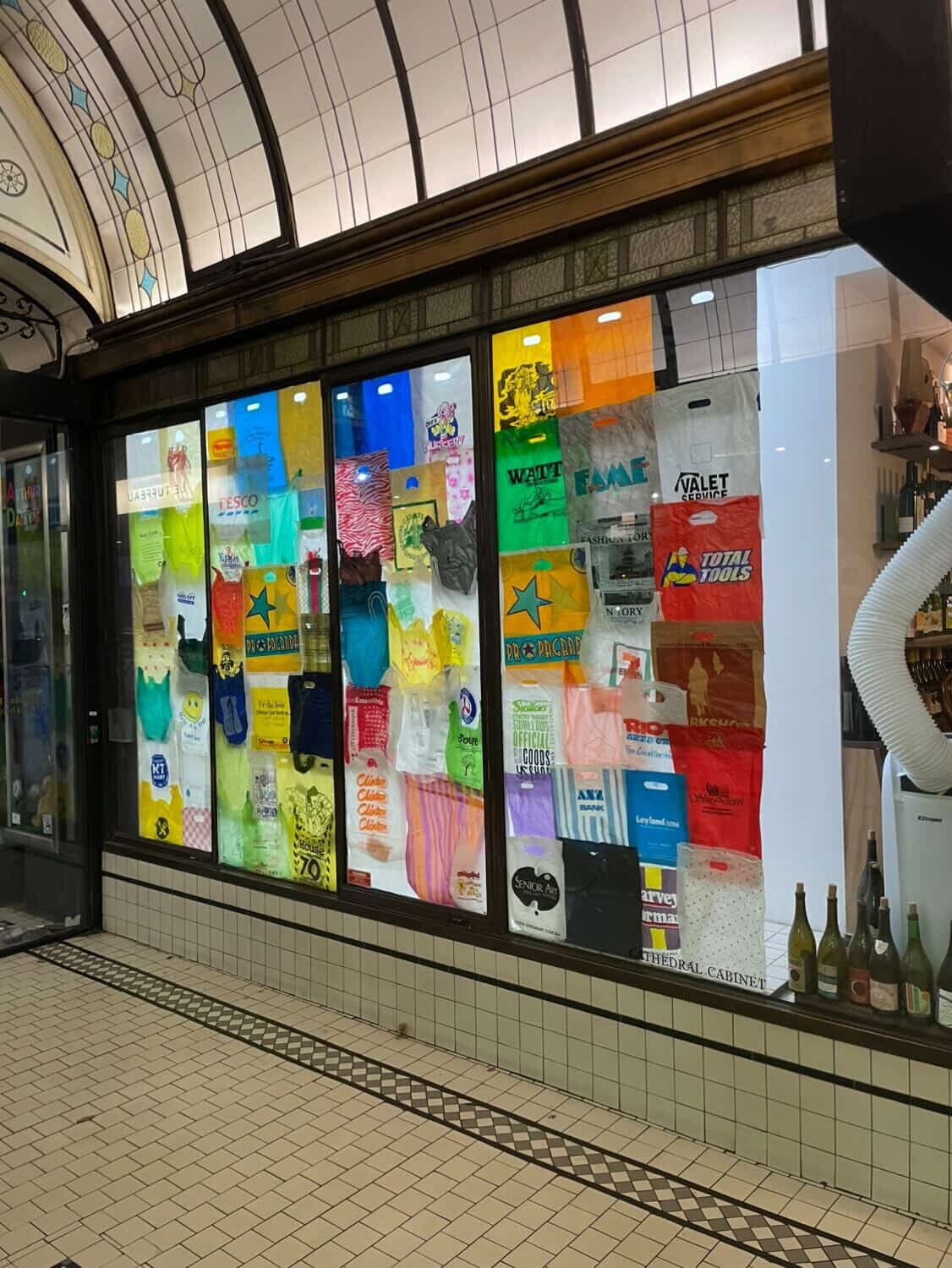
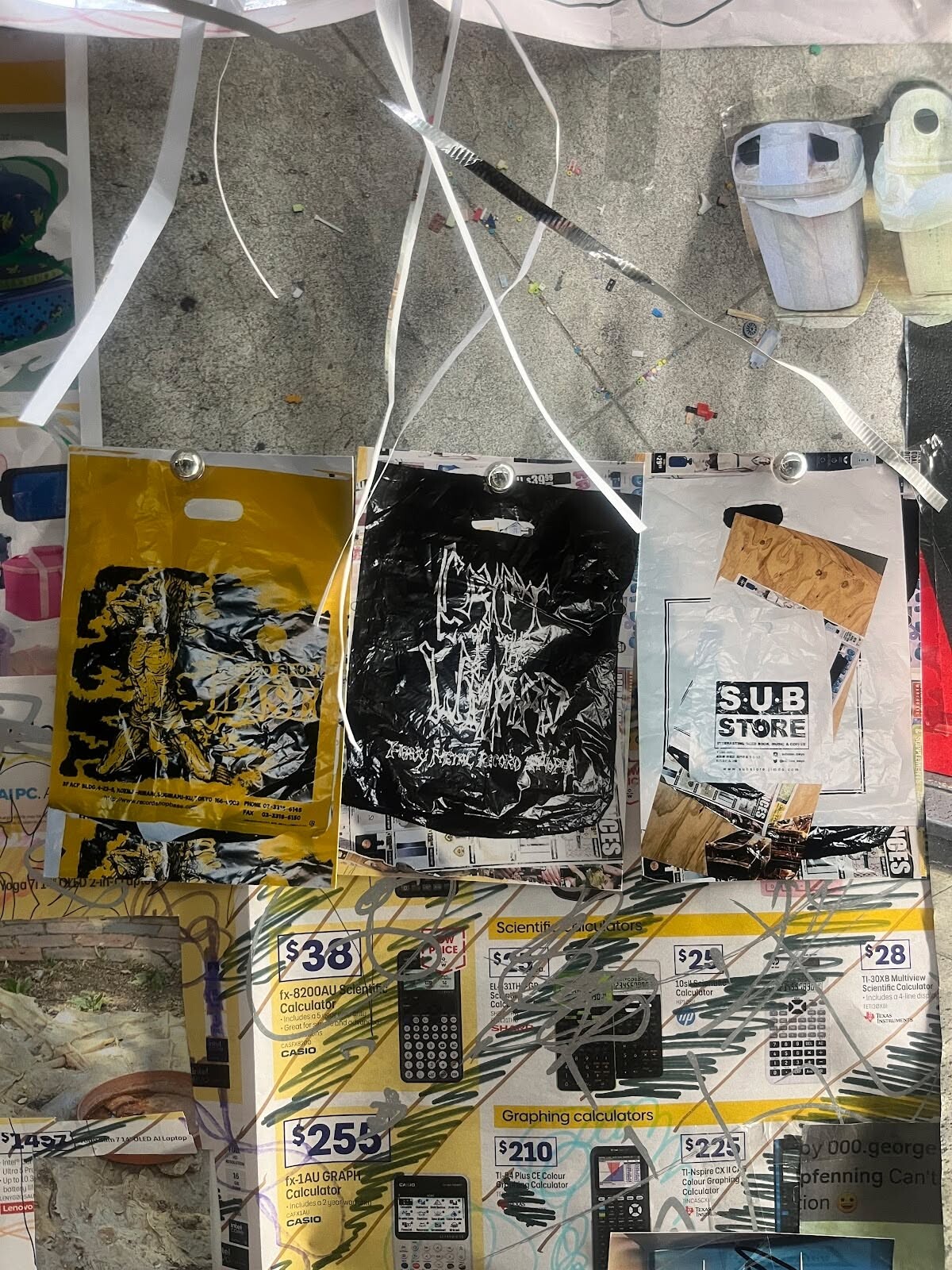
For the early part of March this year, Hill held a temporary monopoly on the Nicholas Building Arcade window galleries, showing simultaneously at Naturestrip and Cathedral Cabinet.

Installation view of Christoper L G Hill, Dusting Mint 5, 2026, collage, Naturestrip. Photo: Christoper L G Hill.

Installation view of Christoper L G Hill, BAG, 1996-2026, found plastic bags, Cathedral Cabinet. Photo: Christoper L G Hill.
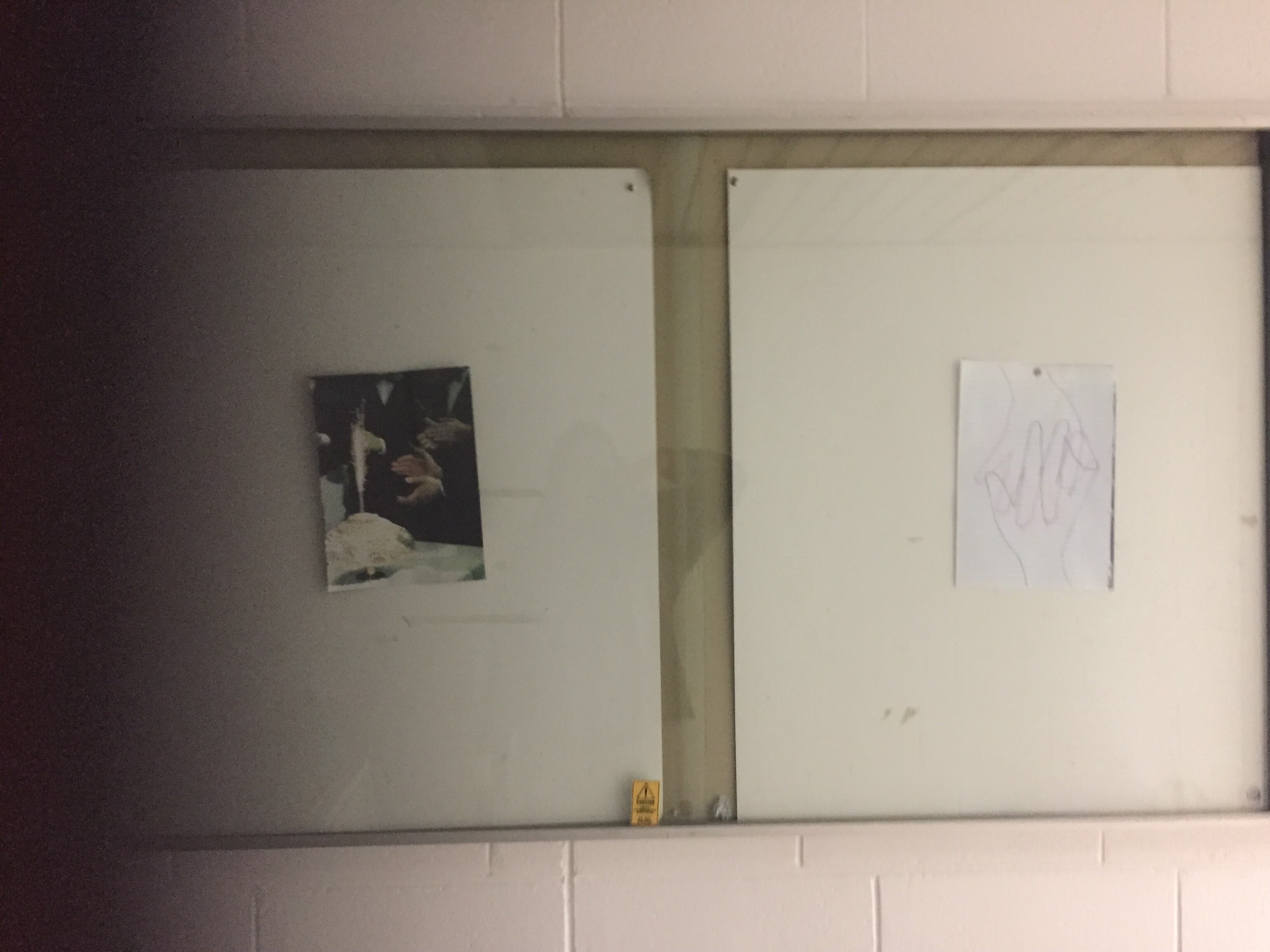
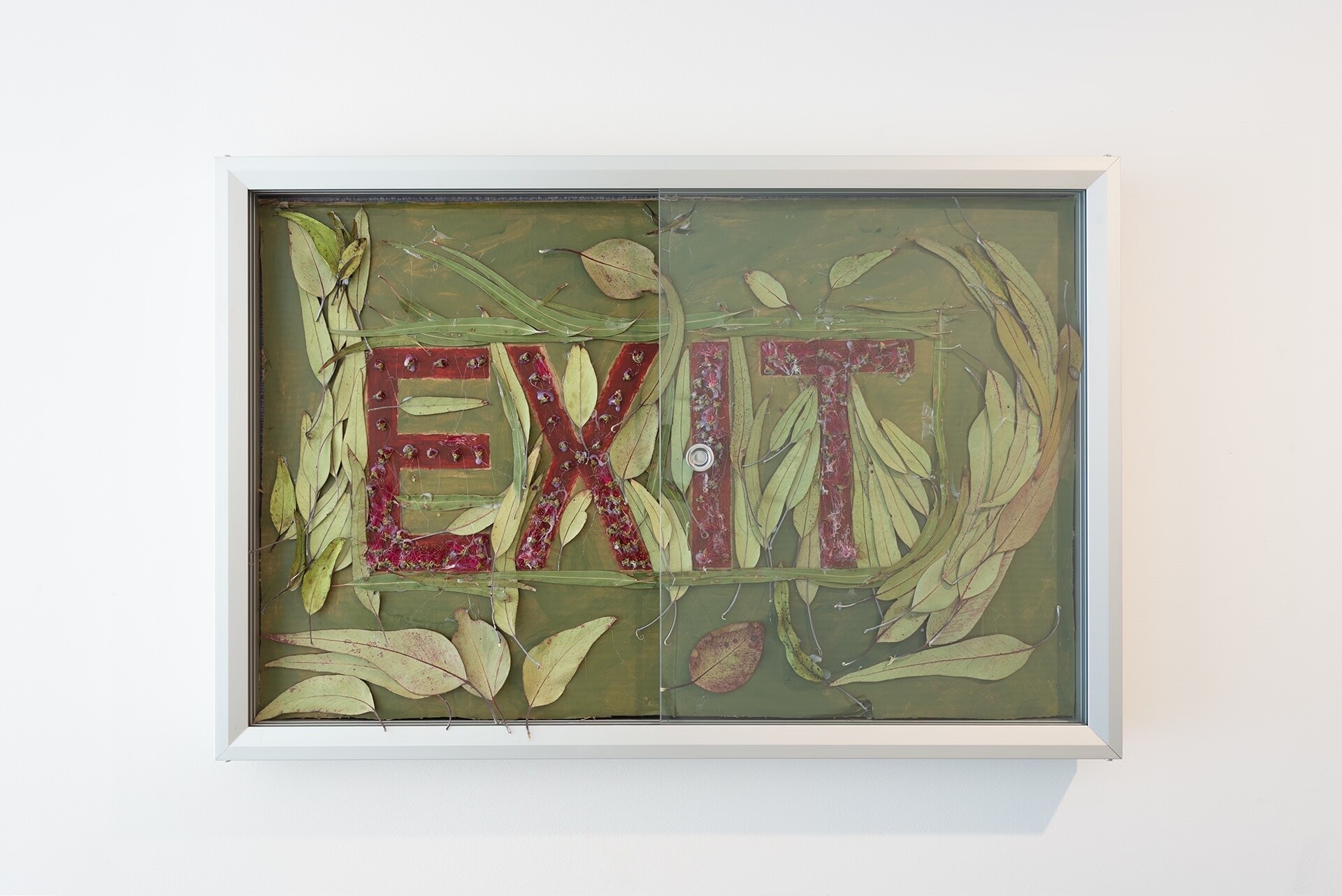
The window-gallery premise was most formally taken up by Platform (1990-2010) and Chapter House Lane (2011-2018) and more recently also by 211-215 (2022-2023), a short-lived exhibition program organised by artists Alexis Kanatsios and Aden Miller inside the elevator lobby notice board of a South Melbourne apartment building. Katherine Botten similarly worked with this format in a string of self-authorised “beautifying” installations inside various vitrines at Monash’s Caulfield campus over 2021. She also showed her gum leaf painting Exit Sign (Australia) (2022) at 211-215.

Installation view of Katherine Botten, Exit Sign (Australia), 2022, eucalyptus leaves, gumnut blossoms, acrylic paint and cardboard, 211-215 Gallery. Photo: Aden Miller.

Katherine Botten, Untitled, 2021, inkjet print, pencil on paper. Monash University Caulfield campus. Photo: Katherine Botten.
This severe limitation of space ordinarily leads to the presentation of single artworks or limited selections. Meertens, however, has included a large volume of works, generating a minor feeling of claustrophobia. For me, this feeling is most present in the strangeness of the work New Music for Corridors and Passageways (2026), a hard-to-read photograph of what looks like a tight interior space inside of a cardboard maquette. Installed immediately next to it is another photograph of a similarly hard-to-interpret cardboard structure, Bucharest Cardboard Intervention (2025). Their positioning next to each other led me to assume that these are the interior and exterior views of the same object, but their dates challenge this assumption. There’s something in these, their strange or awkward position relative to both function and architecture perhaps, which bring to my mind Helio Oiticica’s “bólides” series (1963-1969)—among my favourite works of art ever made—or his architecture maquettes Projeto cães de caça (1961) or PN15 Penetrable (1971).
Installed along the far right-hand side are two photographs—Collaborative PC’s (1991), two photographs, made in collaboration with artist Eugene Carchesio—of loose speaker diaphragms turned upside down and affixed with the three- barred Christian cross, which transforms them into miniature church cupolas.
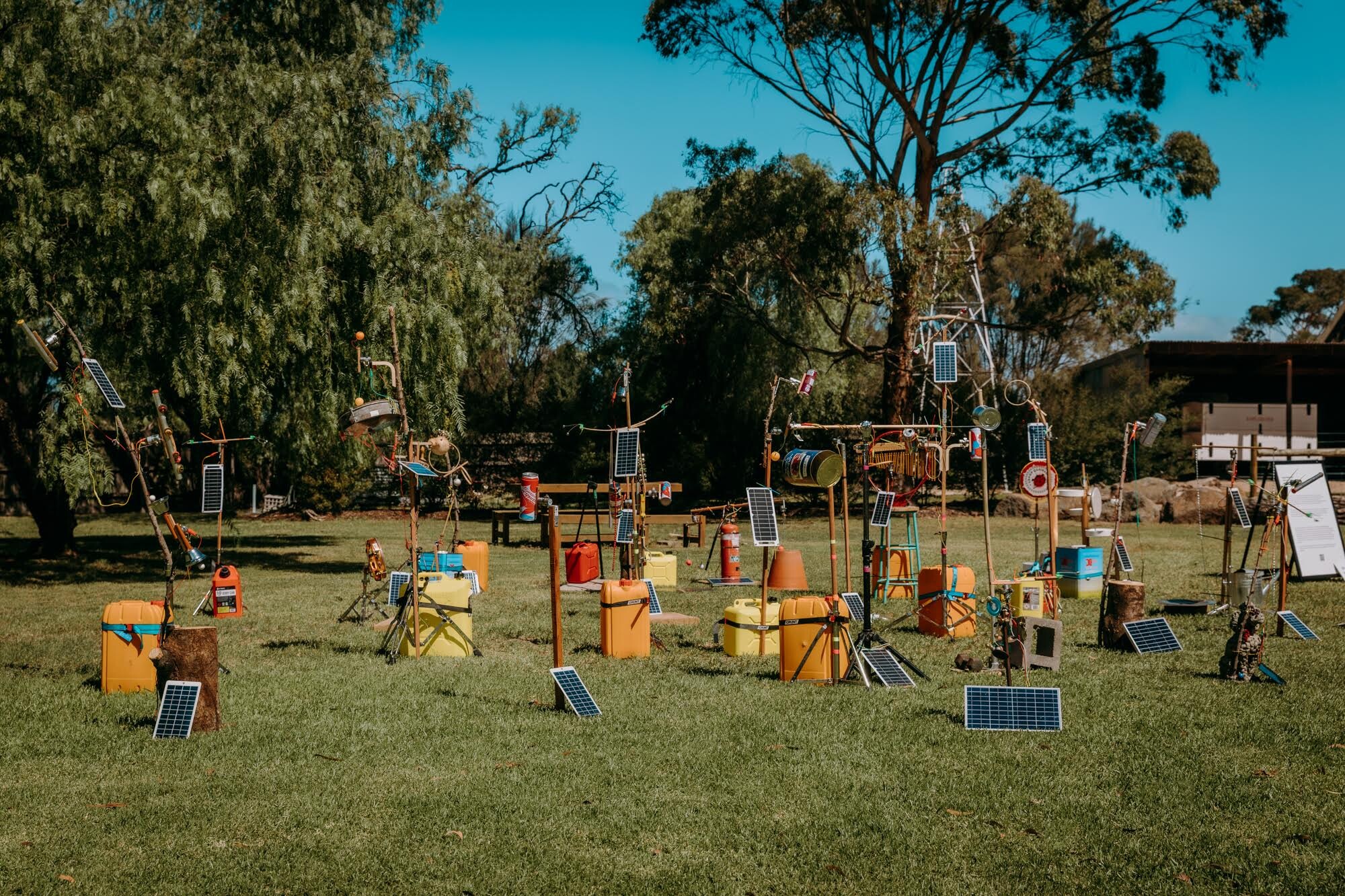
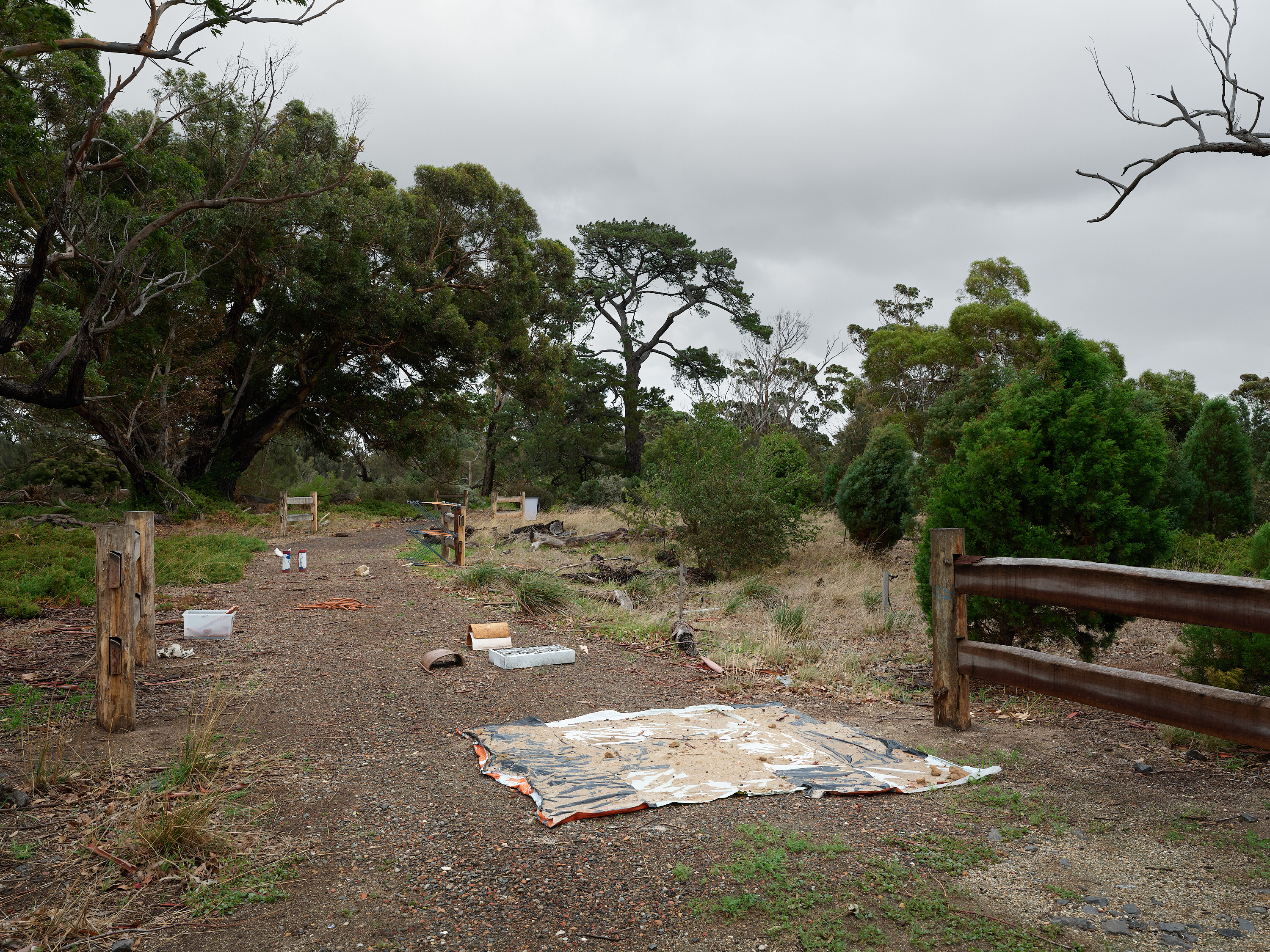
Technically, Meertens is not the only artist in this presentation. One aspect which characterises the Dusting Mint series is that each new vitrine is inaugurated with a music performance. This edition opened with a performance by Dylan Martorell. I missed this, but I did see Martorell’s work Sonic Solar Field (2026) a few weeks ago as part of the exhibition Dear Agnes at the defunct Truganina Explosives Reserve. Martorell’s work was a field of upcycled autopercussive found object sculptures. They lent the exhibition a constant churn of polyrhythm.

Dylan Martorell, Sonic Solar Field, 2026, solar panels, motors and found materials. Photo: Matto Lucas.
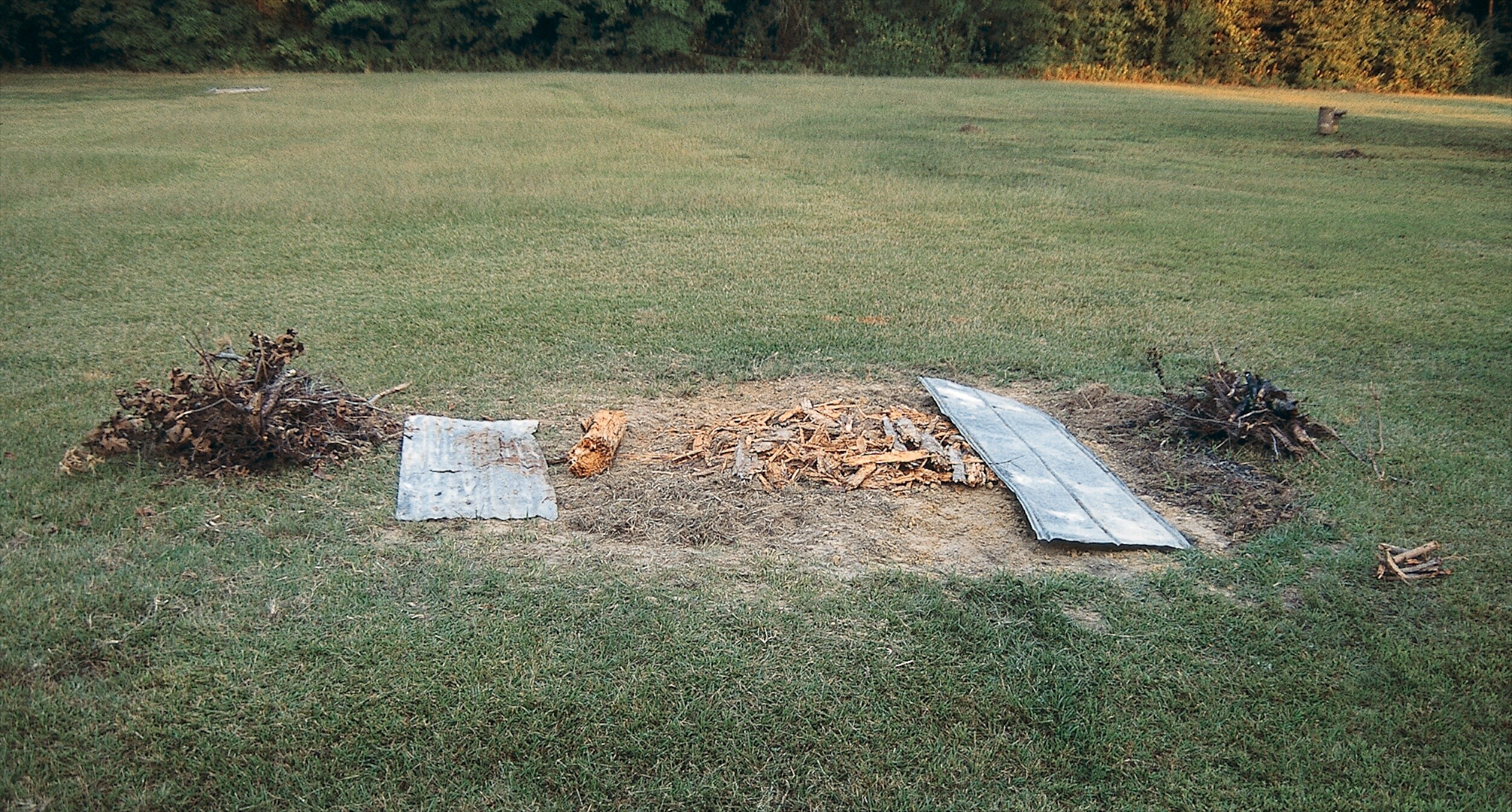
Before moving away from the Dear Agnes exhibition, I want to note Hot Mulch’s—the collaboration of artists Kate Hill and Isadora Vaughan—remarkable installation Tunnels, Combustion, Contamination (2026). The work was a vivid material survey of the site with its trash and its toxic soil. The artist’s language of burrowing and the desolate “make-do” formation of the sculptures produced a strange and feverish quality, akin in some ways to Tom Philips’s mesmerising Waikato campsite. The work, for me, has a close dialogue with Meerten’s general privileging of junkyard material and waste, made explicit in his Improvised Builder’s Rubbish Score (2026) and his consistent allusion to and use of offcuts, as in his poster work Shipengineoffcut (2021).

Installation view of Hot Mulch (Isadora Vaughan and Kate Hill), Tunnels, combustion, contamination, 2026, found materials, Truganina Explosives Reserve: Matto Lucas.
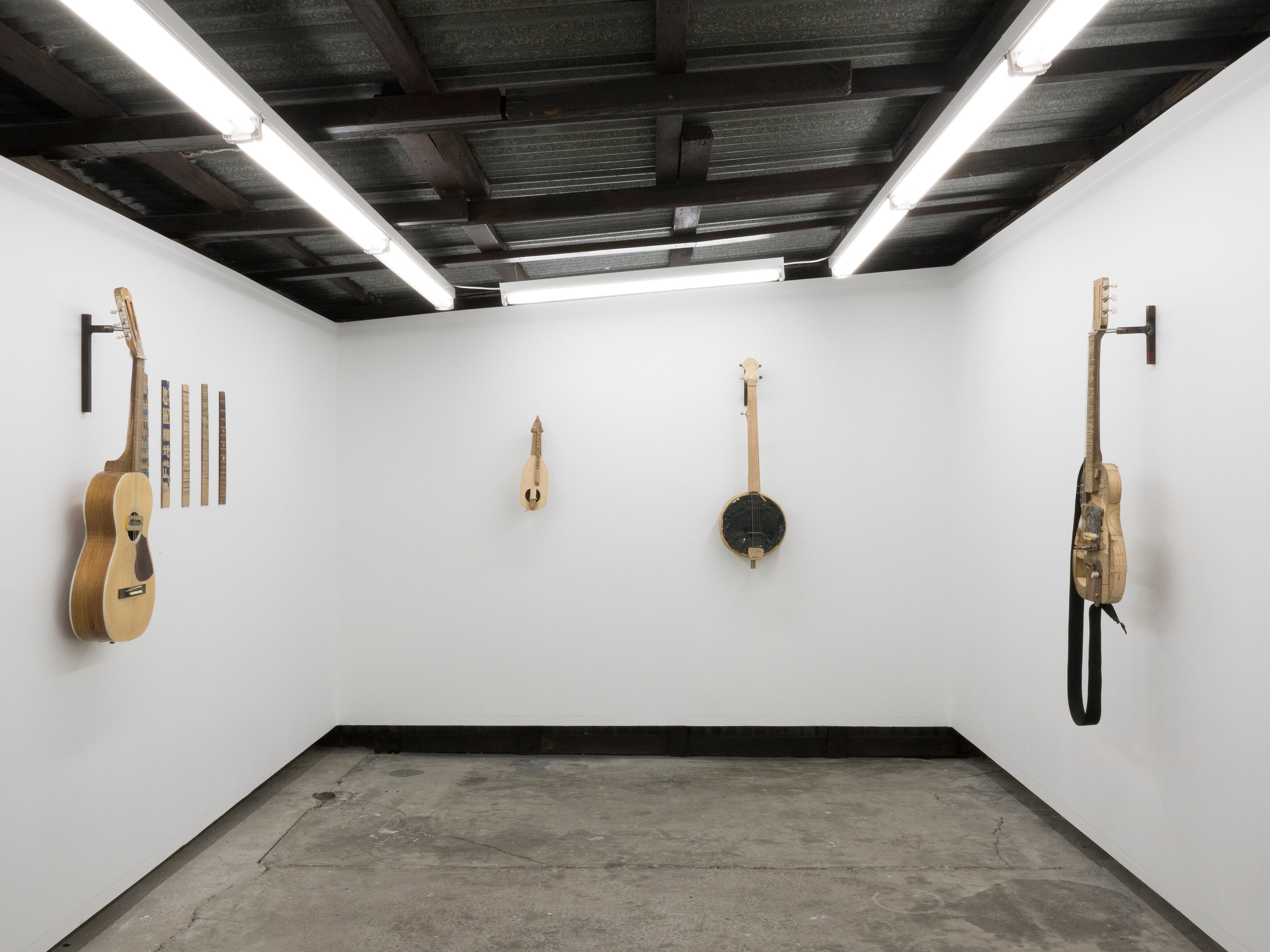
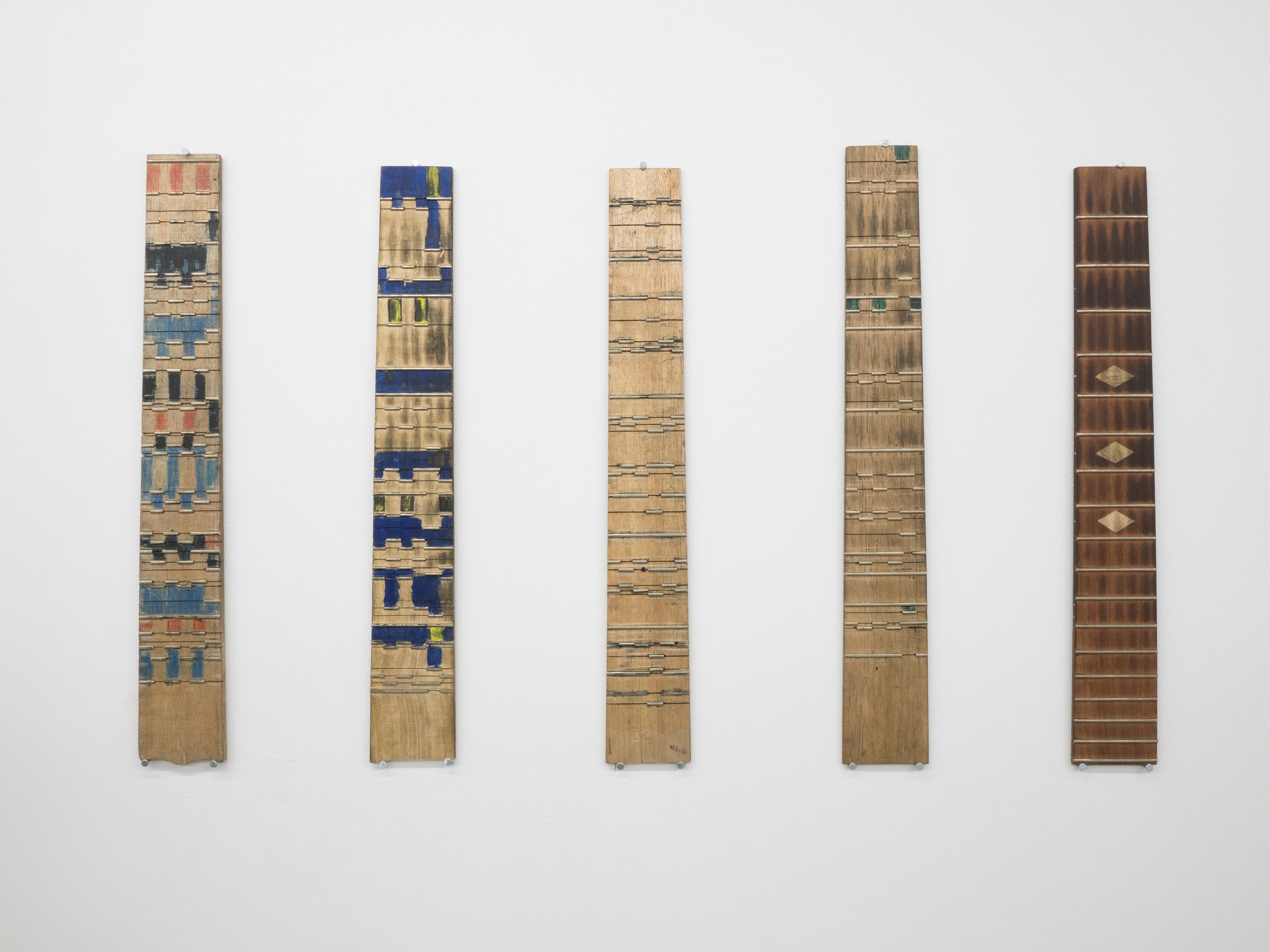
Meertens’s basis in music is present throughout the show, but there are fewer of his handmade instruments than I would have liked to have seen. The instruments by him that I have encountered make for distinct and curious works of sculpture. To me, what’s often so compelling about artist-made instruments is their unique confluence of know-how and function underscored by a driving formal experimentalism, as there was, for example, in Darcy Wedd’s Jive Deceleration (2024) at Asbestos, which was maybe their best show. Wedd made a small collection of string instruments and stand-alone fretboards, which assumed, in a unique way, a kind of formalism inspired by a simultaneous interest in painting. In Meerten’s show there is a hand -painted fretboard, but it doesn’t depart from the conventions of the fretboard in the way Wedd’s did.
For it being equally applicable to Merteen’s work, I’ll repeat Douglas Maxted’s Jive Deceleration exhibition text, which began by quoting Dan Graham and his advice to artists, which is that “unconsciously… you should pursue art as a passionate hobby,” not more, not less.

Darcy Wedd, Third Harmonic, Blue Sky, Wine and Roses, 2023-2024, spruce, tasmanian blackwood, tasmanian oak, bone, fretwire, acrylic paint, nickel silver, coloured pencil. Photo: Aden Miller.

Installation view of Darcy Wedd, Jive Deceleration, 2024, various materials, including: magnets, seatbelts, copper, olive wood, Tasmanian oak, silver, nails, coloured pencils etc, Asbestos. Photo: Aden Miller.
Dusting Mint’s organisers are careful in their online communications to use neither the word “art’’ nor “exhibition” to describe their project. I don’t want to overstate the significance of this, but I do wish to acknowledge it. Intuitively, I share their aversion. There is something palpable behind Meerten’s work and his decisions that has a part of me not wanting to affix whatever he’s doing to an art discourse.
This is wishful though. The reality is, Meertens has performed at TarraWarra Museum of Art, collaborated with well-established players like Marco Fusinato, in one instance, and repeatedly with John Nixon through his participation (2010-2020) in The Donkey’s Tail (est. 2007-). Meertens also has a history—over the mid 1980s and early 1990s—working in a more conventional studio and gallery paradigm. Meertens had solo exhibitions with Anna Schwartz at City Gallery; he was also represented in both the Third Australian Sculpture Triennial (1987) and the Australian Biennale: From the Southern Cross (1988). Calling him an “outsider” doesn’t really apply in principle, but nevertheless there is an outsideness to what he does.
Letting go of the total confidence that what I am looking at is art at all makes room for a wish for it to be something else less burdened by particular inheritances, patterns of mind or habituated judgments. I sympathise with Dusting Mint’s precise choice of wording. It’s not a diminishing of what’s there so much as it is a recognition of its rare sense of life-presence not often come by in a normative Melbourne exhibition field.
I recall a published email dialogue between art historian Rhea Anastas and writer Fred Moten on Dinah Young’s amazing constructions, which are entirely singular. Anastas sent Moten some images seeking his commentary:
I think that what one might call her work is amazing, though I don’t know if either the word “her” or the word “work” is appropriate. (…) It’s partly that the deep way she thinks about her life, and the place of what we might call art inside that life, seems antithetical to the way we tend to separate art from life, however desperate, then, our attempts to reintegrate them…. She’s into something deep, which I wouldn’t want to disturb…

Dinah Young, Flora Grave, 1997, dog bones, tin sheets and wood. Photo: William Arnett.
I had a brief email exchange with Meertens in preparation for this review. I was looking for a discourse and a sense of how he thinks of what he does. There’s always a risk in writing about an artist unknown to you and you to them. I received little in way of instruction, clarification or guidance. Instead, he offered a wonderful stream of Dada-ish poems, life updates, and memories sans sufficient context. Among other things, he said:
A Sound Vexation Machine! Signed off by Erik Satie… Baa, baba bum baa baa baa baaaa! Over & over until the landlord breaks the lease! I was thinking, we can hear music from the neighbour, the apartment block as we ride by, or it sounds across the field through the copse… or from afar through time… from the past or the future… a distant music we can put a name to… an image… that is worth living for.
I did not get the sense that this was Meertens being self-obfuscatory or playing tricks, but rather that this is just how things are in his life-practice. Born in 1955 in the Goulburn Valley, Victoria and currently based along the Bellarine Peninsula, Victoria, he is an older artist with something of an elusive history. He’s eccentric and remote.
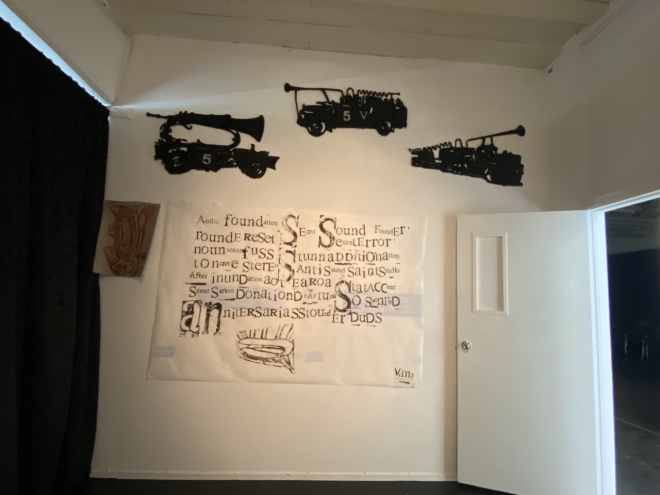
There was a recent exhibition of Meerten’s work at Audio Foundation in Auckland, New Zealand. One of the paper works had a string of anagrams on it that he hurriedly made with stencils as quickly as his hands could move. I think what’s clear in Meertens’s work, in general but it’s very direct here, is that the making and the conceiving happens simultaneously. Decisions are without pause and associate freely. The everydayness of his own second-order speech possesses something, to me, uncastrated and beautiful.

Installation view of Victor Meertens, Anagramma, 2025, acoustic foam, ink on paper. Photo: Victor Meertens.
Gallery