DIVA
March 14, 2026
-
DIVA
Venue: Australian Museum of Performing Arts
11 Dec 2025 – 26 Apr 2026
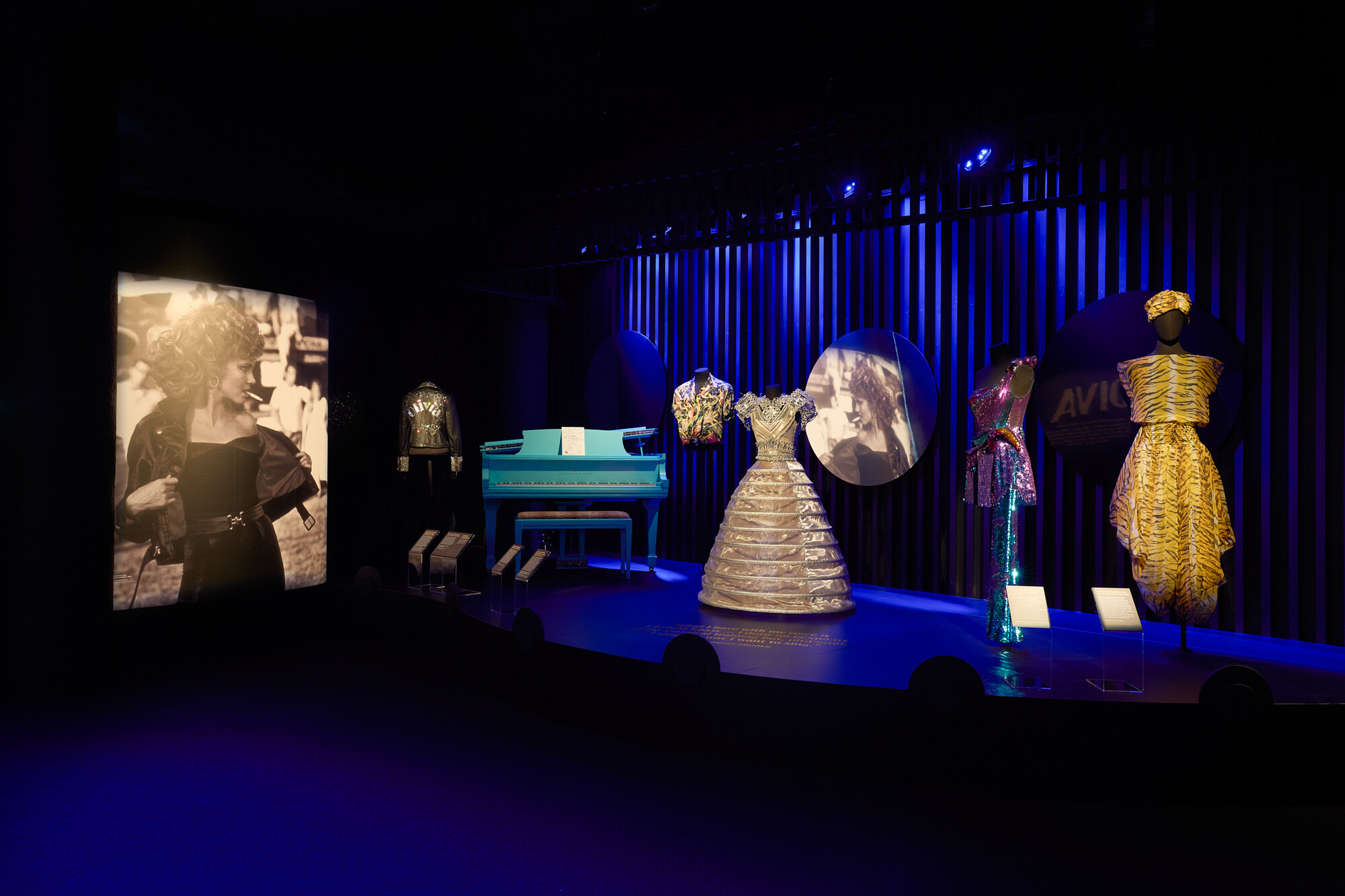
DIVA launches the new Australian Museum of Performing Arts with a celebration of great voices in opera and popular music (and some actors), primarily through fashion. As a balding art history academic with a functional approach to dress and a lifelong obsession with weird music, I am probably not entirely representative of the target audience of this “riot of theatre and famous looks” (to quote a review in Tatler). But the populism of a populist show like this one is surely defined in part by its opening to all kinds of different responses. (I too am of le peuple!). Like most human beings who have lived in the twentieth and twenty-first centuries, I have been moved (sometimes embarrassingly), infuriated, inspired, distracted, perked up, and a hundred other things by pop music and its great personalities, which hopefully licenses me to say something about DIVA, even if I can’t tell Mugler from Miyake.
Following the trend of the travelling fashion exhibition, DIVA restages a show from the Victoria & Albert Museum, with some local additions. The opening galleries, drawn from the Art Centre’s own collection, are dedicated to the “Australian Diva,” establishing the modus operandi of much of what follows: outrageously impractical garments under dim lighting that doubles as protection for the fabrics and cinematic ambience for a backdrop of music videos and concert footage. It all seems a bit dreary to begin with, though I did appreciate the use of true-to-size mannequins (tiny Kylie Minogue, hulking Dame Edna) for each performer’s outfits. It has an unsettling quality, like something Mike Kelley might have been into when he was curating The Uncanny: mimicking closely a specific body and its physical presence, while at the same time being utterly lifeless. Kylie’s petite stature runs through the exhibition like a unifying motif or mascot, with the princess of pop’s dummy cropping up again three times again in the international galleries.
Oddly, the exhibition didactics don’t attempt to explain the inclusion of a Hawaiian shirt worn by Peter Allen, describing him simply as a “charismatic showman.” This garment—somewhat out of place next to Olivia Newton-John’s rhinestone-studded leather jacket and Eurovision costumes—introduces an important (if under-played) theme in the exhibition: the queer male “diva,” exemplified later by Elton John and Prince. The main purpose of these opening galleries seems to be the recycling of a national cliché about the uniquely “down to earth”’ quality of Australian celebrities, without giving us much of a sense of how Olivia Newton-John or Marcia Hines might actually embody this.

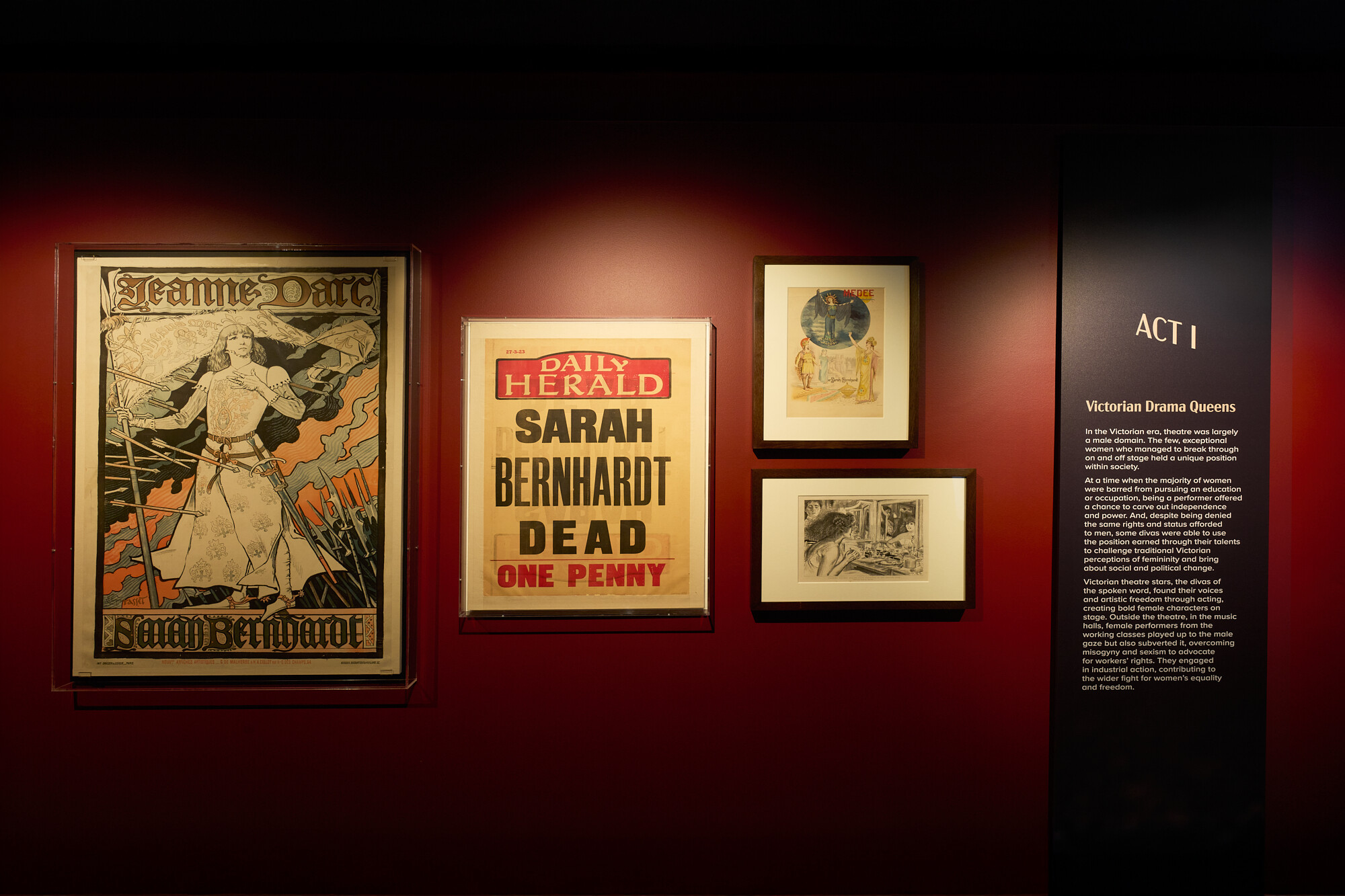
Installation view of DIVA at Australian Museum of Performing Arts, Arts Centre Melbourne. Photo: Astrid Mulder
The tone shifts dramatically when we leave the exclusive focus on Australia behind and enter the first space curated from the V&A collection, a thoughtfully assembled selection of relics from the dawn of modern female celebrity. Here we meet the Spanish-Italian soprano Adelina Patti, the first celebrity singer to be described as a “diva”, the feminine form of the Latin for “god” or “divinity”, depicted on the cover of sheet music for a quadrille called ‘La Diva’ in the 1860s. There are some striking objects here, each giving us a different view of the material culture that sustained celebrity in this period: a blue china jug commemorating an 1847 Glasgow concert by the “Swedish nightingale” Jenny Lind; diamanté-encrusted shoes worn by Adelina Patti in productions of Verdi; the wonderfully stark Daily Herald poster that announces “Sarah Bernhardt Dead,” 27 March 1923.
For the viewer grounded in modern art, there are interesting reminders of how important interactions between the avant-garde and entertainment were in the early twentieth century. A lithograph advertises the debut of the innovative dancer Loië Fuller at the Folies-Bergère in 1893, the same cabaret where Manet’s barmaid stood staring out a decade before. A section on Isadora Duncan, pioneer of modern dance and inspiration to such unlikely figures as F.T. Marinetti, the wildly misogynist founder of Futurism, reminds us of how important the cult of the natural body was in the early twentieth century. Most surprising is a text accompanying objects related to music hall star Marie Lloyd, which tells us that T.S. Eliot—for many the personification of elite high modernism—called her death “a significant moment in English history”.

Installation view of DIVA at Australian Museum of Performing Arts, Arts Centre Melbourne. Photo: Astrid Mulder
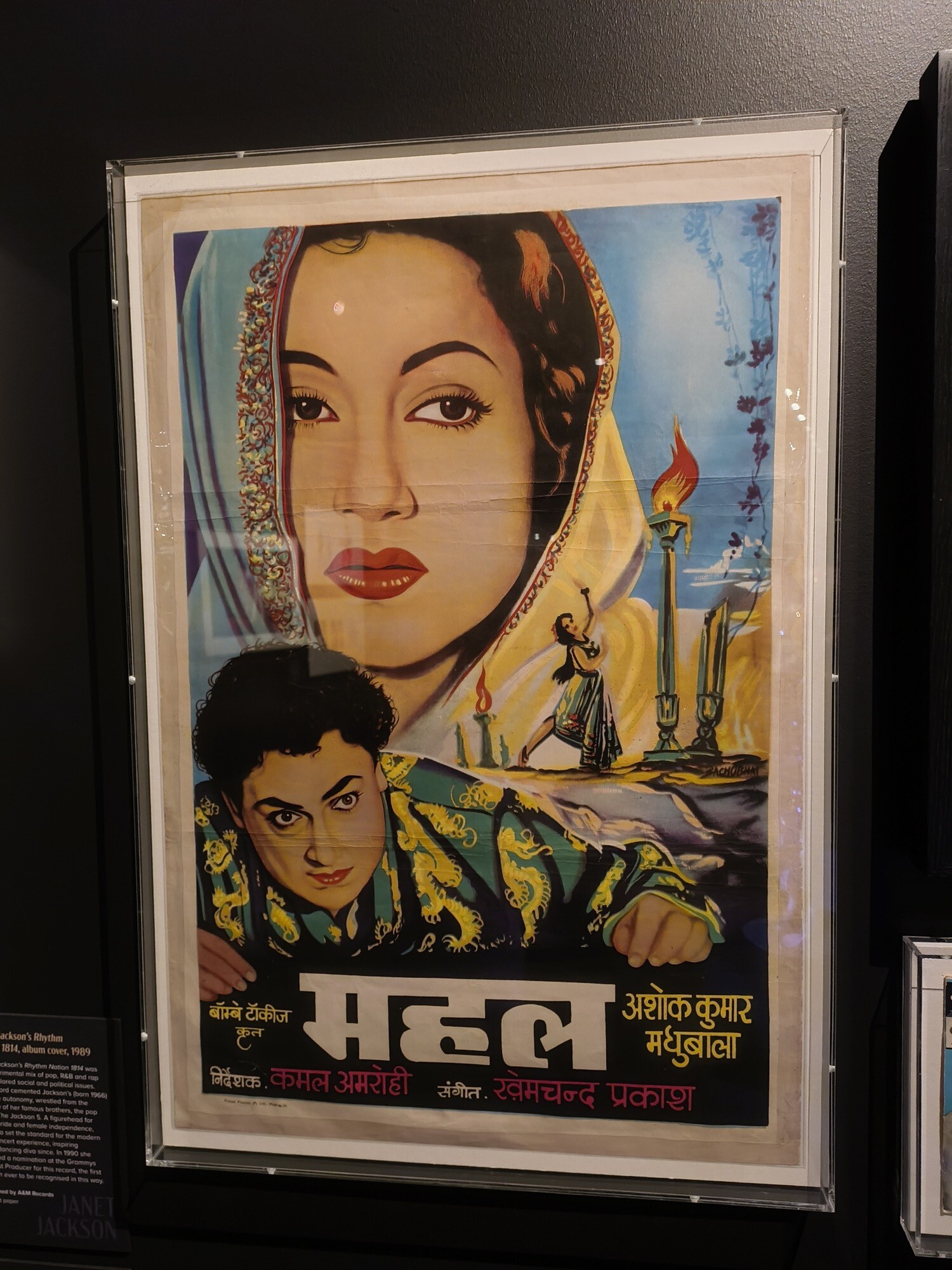
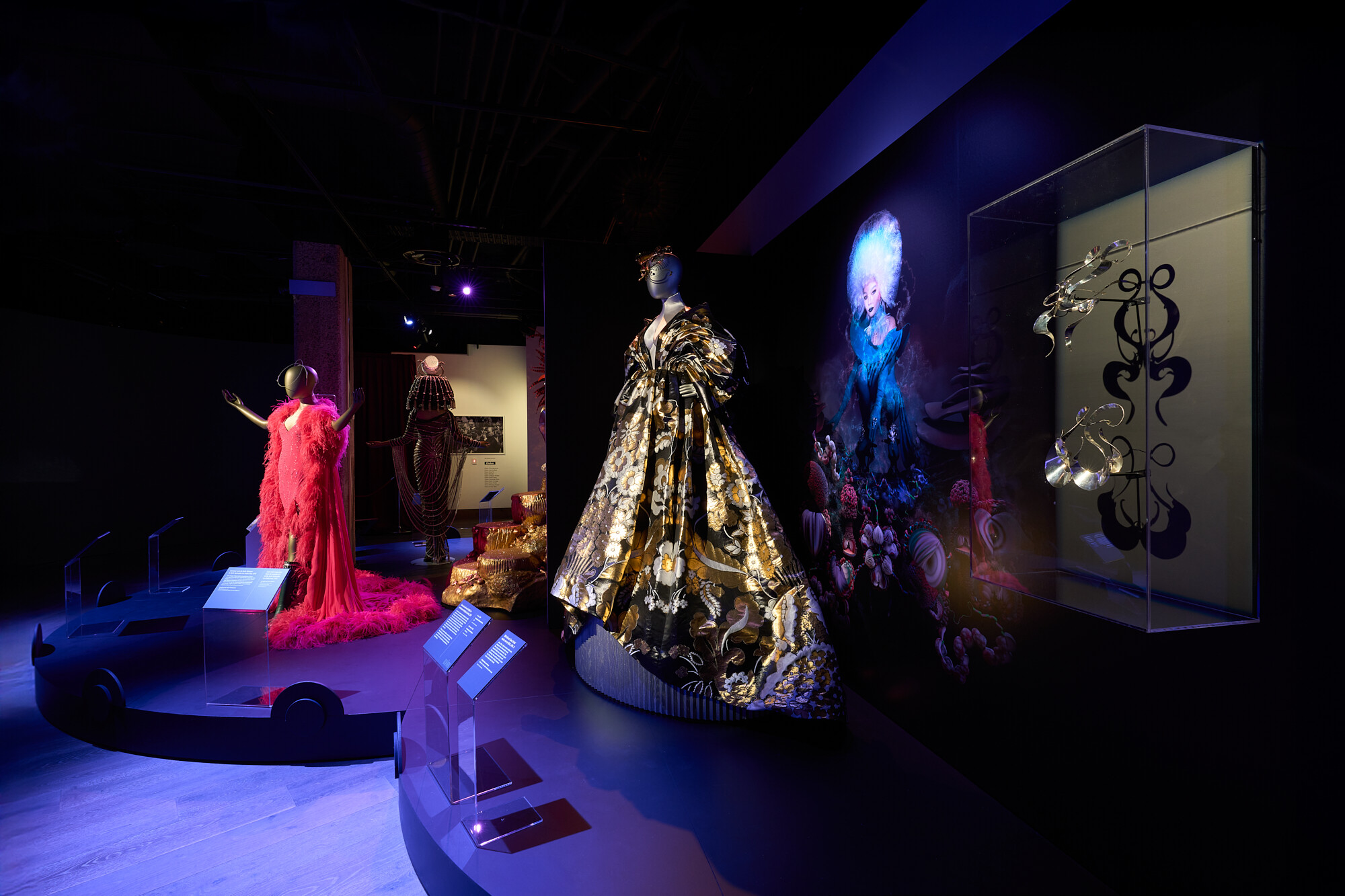
For many viewers, the heart of the exhibition will be the final galleries, highlighting spectacular outfits worn by stars from Tina Turner to Björk. The selection is predominantly Anglo-American. This is unavoidable and understandable, in one way, given the massive influence of British and North American popular culture on Australia and much of the rest of globe in the post-WWII world. But some of the most interesting material in the exhibition comes from outside this pop cultural centre. A selection of record covers and posters introduces the figure of Lata Mangeshkar, the great Bollywood “playback” or “ghost” singer, who recorded the vocal tracks to which film idols lip-synced on-screen. The degree of celebrity status given to playback singers is unique to Bollywood, suggesting how rich a more global approach might be for uncovering different models of celebrity. Imagine what DIVA might have gained by including the tragic stories of sixties Cambodian stars Ros Sereysothea and Pen Ran, or the strange intersection between soft-core porn and sophisticated Europhile pop in the careers of Japanese idols like Reiko Ike and Yukiko Kuwabara.

Installation view of DIVA at Australian Museum of Performing Arts, Arts Centre Melbourne. Photo: Francis Plagne
Along with a nice photo of Dusty Springfield in a London studio, the Mangeshkar posters and record covers are some of the few moments where the exhibition moves away from the live spectacle and the fashion gala to touch on the importance of recording. In an essay from the late 1990s, the composer Robert Ashley suggested that the invention of the microphone and recording technology had opened up an “imaginary space unique to our time that has changed music forever”. Studio sound has become “the standard by which we appreciate music”. Live performance—in some cases, at least—becomes merely “an illustration or re-enactment of the recordings that the audience already knows” (hence the very term “live”). The voice in the twentieth and twenty-first centuries is, to a significant extent, a recorded voice, captured, amplified, and transformed by the microphone, recording technology and production techniques. The great voices of pop music depend as much on microphone technique as on vocal cords, and this technique is often about closeness: João Gilberto murmuring the bossa nova revolution, the breathy whisper of Jane Birkin with Serge Gainsbourg or Madonna in “Justify My Love,” the demonic cookie monster growl in death metal. A more inventive show on the modern pop diva could take as its staring point her creative use of technology, which has as its correlate the ever more “intimate” space of listening mediated by technological advances: the immersive space of stereo, the dominance of headphone listening since the invention of the Walkman, and so on.
But this is not what DIVA is about. As the stylisation in all caps is perhaps meant to tell us, it’s all about the glamour and power of the celebrity image: eyes, not ears; fashion, not sound. The exhibition’s narrative is affirmative: at its heart, V&A curator Kate Bailey tells us, “it is a story of performers who have challenged the status quo”. There are powerful examples here of how female performers used their celebrity status to achieve social prominence in male-dominated societies and advocate for progressive issues. We learn how the music hall star Marie Lloyd used the celebrity she established through risqué musical theatre to campaign for better working conditions for performing artists, including a 1907 Music Hall Strike. Closer to our own day, a trading card from a set of AIDS Awareness cards produced in 1993 highlights Madonna’s political activism. Perhaps it’s a bit perverse, but this part of the exhibition made me wonder about divas who have used their fame to advocate for reactionary causes.
Early on, the exhibition tells us that modern celebrities are “free to be themselves, creating self-determined personas”. This desire to affirm the performer’s personal agency misses out on an opportunity to think about the careful construction of the star image. The missteps of overbearing image management have made for some of the most characteristic and sometimes hilarious plot points of pop music careers; think, for instance, of EMI’s initial attempt to reduce the young Kate Bush to a pink Lycra clad pinup. Another infamous example is the failed campaign of Malcolm McLaren and Vivienne Westwood—predating their successfully heavy-handed image management of the Sex Pistols—to revitalise the fading career of junkie rockers the New York Dolls by dressing them in Maoist red leather emblazoned with hammers and sickles. Personal agency is the story we want to hear now, but it can’t entirely capture the dialectic of creativity and commerce (sometimes of the crudest forms) that made pop music one of most vibrant art forms of the twentieth century.

Installation view of DIVA at Australian Museum of Performing Arts, Arts Centre Melbourne. Photo: Francis Plagne
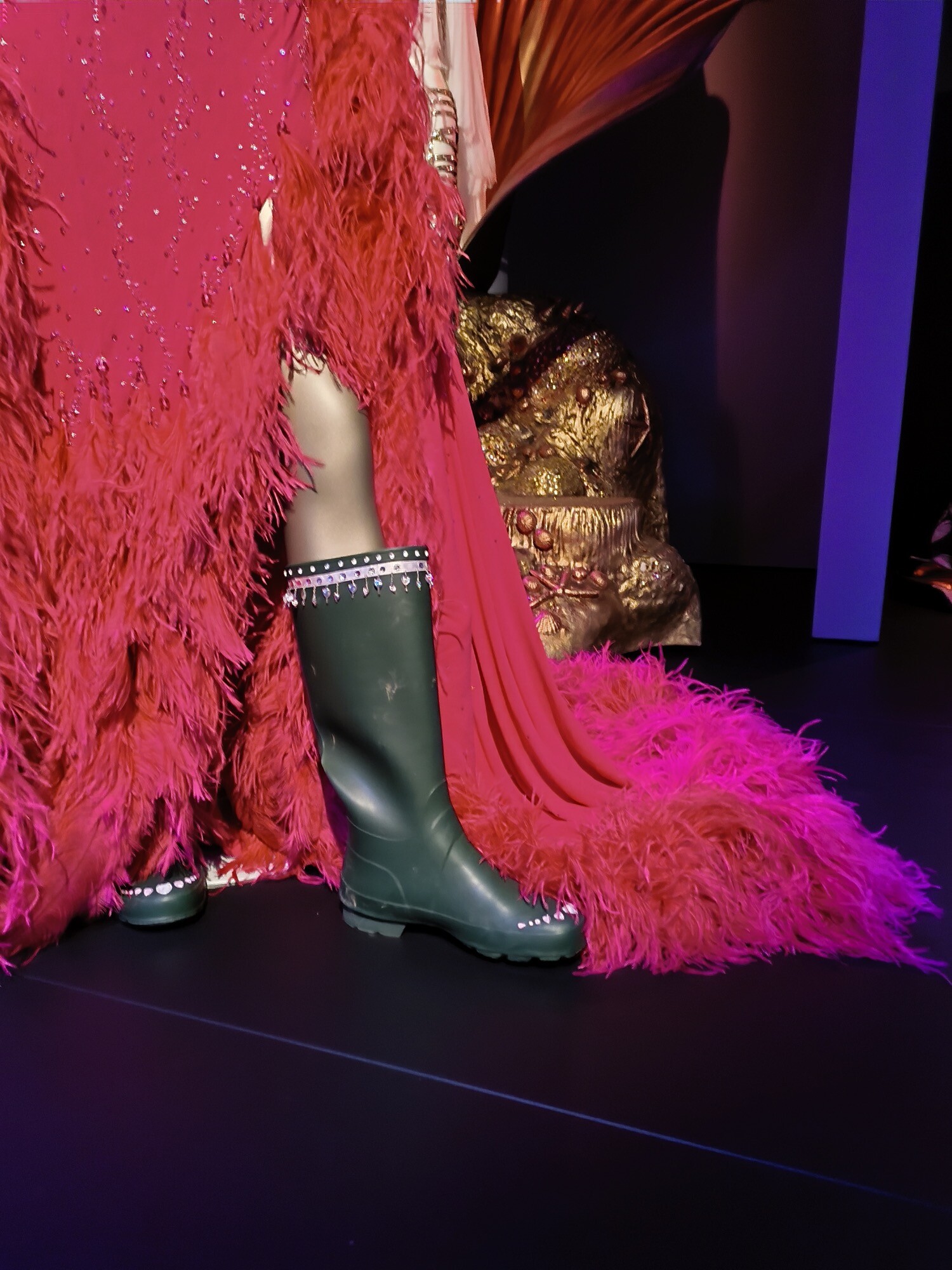
Like greatest hits collections always nitpicked by music nerds like me, DIVA’s selection of chart toppers can seem arbitrary and a bit shallow. But because the exhibition is so deeply embedded in the common culture we share—even if we sometimes wish we didn’t—these objects have a kind of aura, independent from how we might feel about their former owners. I’m not sure I would believe someone who claimed they didn’t find something compelling in an encounter with Kylie’s tiny frame, Grace Jones’s green fibreglass bustier, or Shirley Bassey’s crystal-encrusted gumboots.
Gallery