Helena Tan, Ajar
March 21, 2026
-
Helena Tan, Ajar
Venue: Animal House Fine Arts
27 Feb 2026 – 21 Mar 2026
In the classic eighties family horror Gremlins, we quickly learn of three rules that must never be broken when caring for the mogwai: no bright light, no water, and no food after midnight. The final rule has a real piece of string vibe. Like when can the mogwai be fed again? Technically, all times are after midnight. None of the characters dwell upon this, despite the great risk that breaking the rules poses—early in the film, water is spilled on Gizmo, the original lovable family mogwai, and five new malevolent clones spawn from him. As the movie is set in a white picket fence suburb of Pennsylvania, it is easy to forget that the film’s first scenes take place in a mythologised Chinatown—smoky and brimming with mysticism. A sailor walks by with his arm around a lady. This is a seedy part of town! The protagonist’s father, a kooky inventor, stumbles into an antiques store where he discovers Gizmo—lit exclusively by candles—owned by an all-knowing elderly Chinese man of few words. He has long white hair, one blue eye, and is smoking an old-timey Chinese pipe.

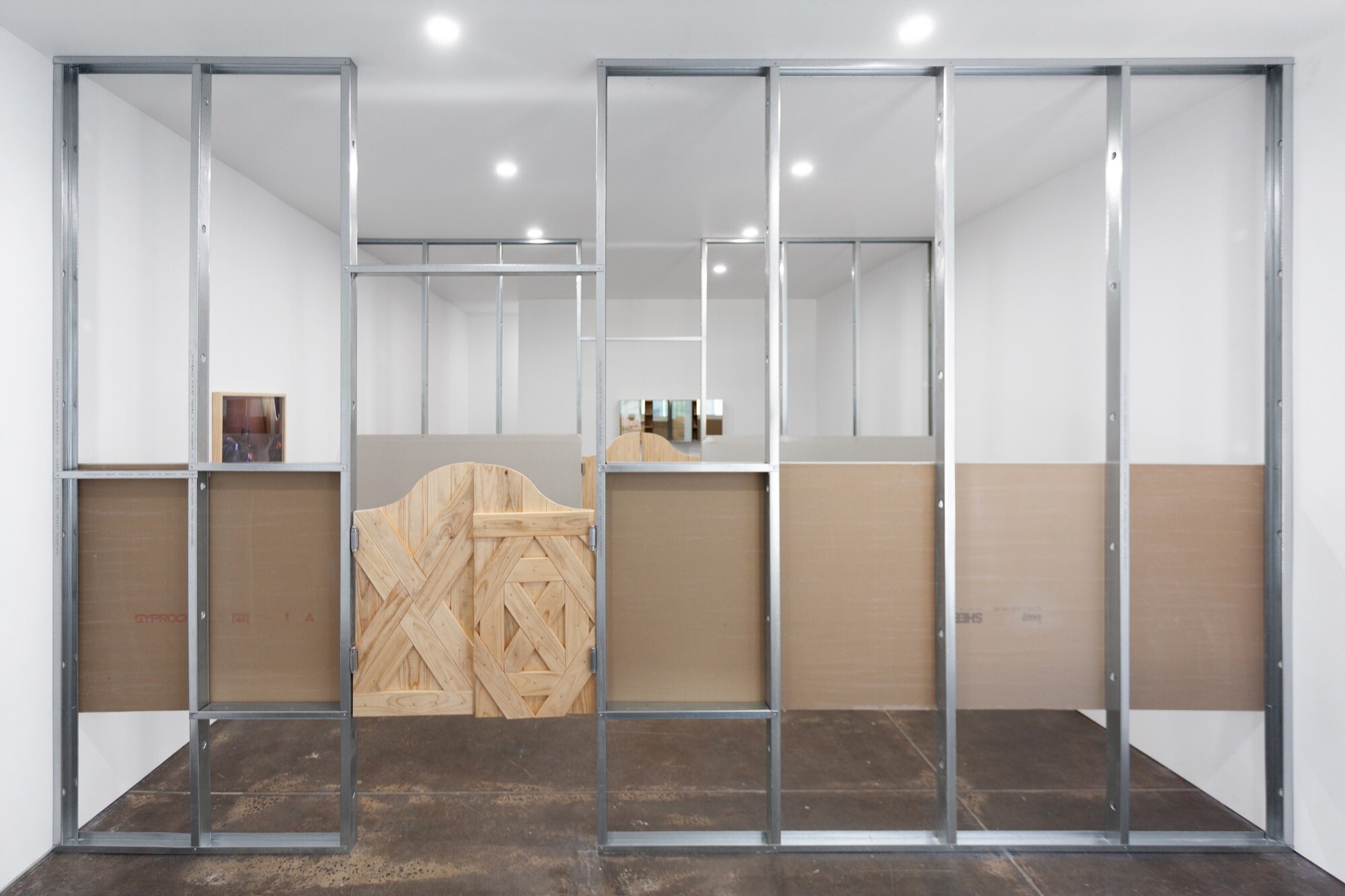
Install shot of Helena Tan Ajar, Animal House Fine Arts, Melbourne. Photo courtesy of the artist and Animal House Fine Arts.

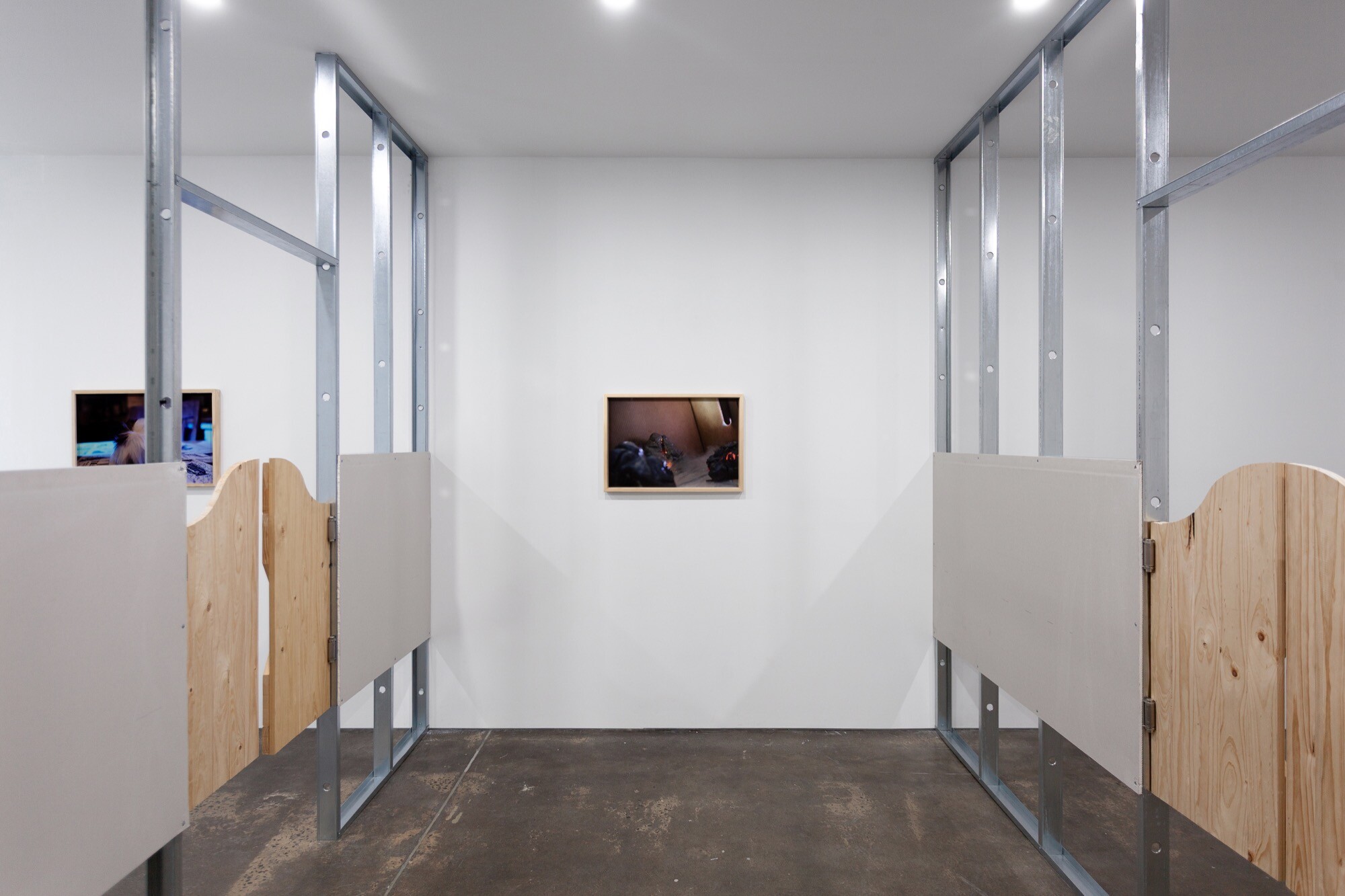
Install shot of Helena Tan Ajar, Animal House Fine Arts, Melbourne. Photo courtesy of the artist and Animal House Fine Arts.
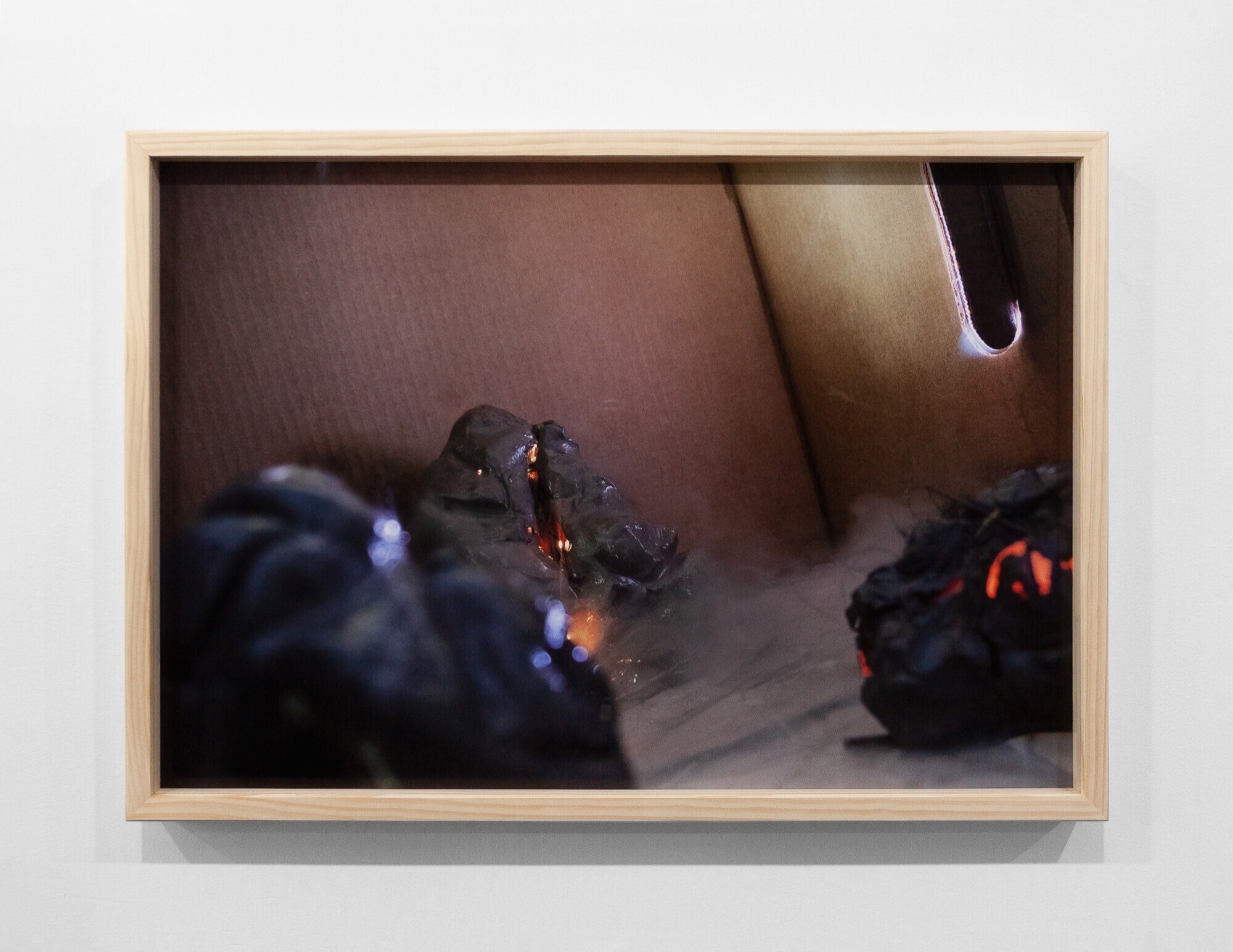
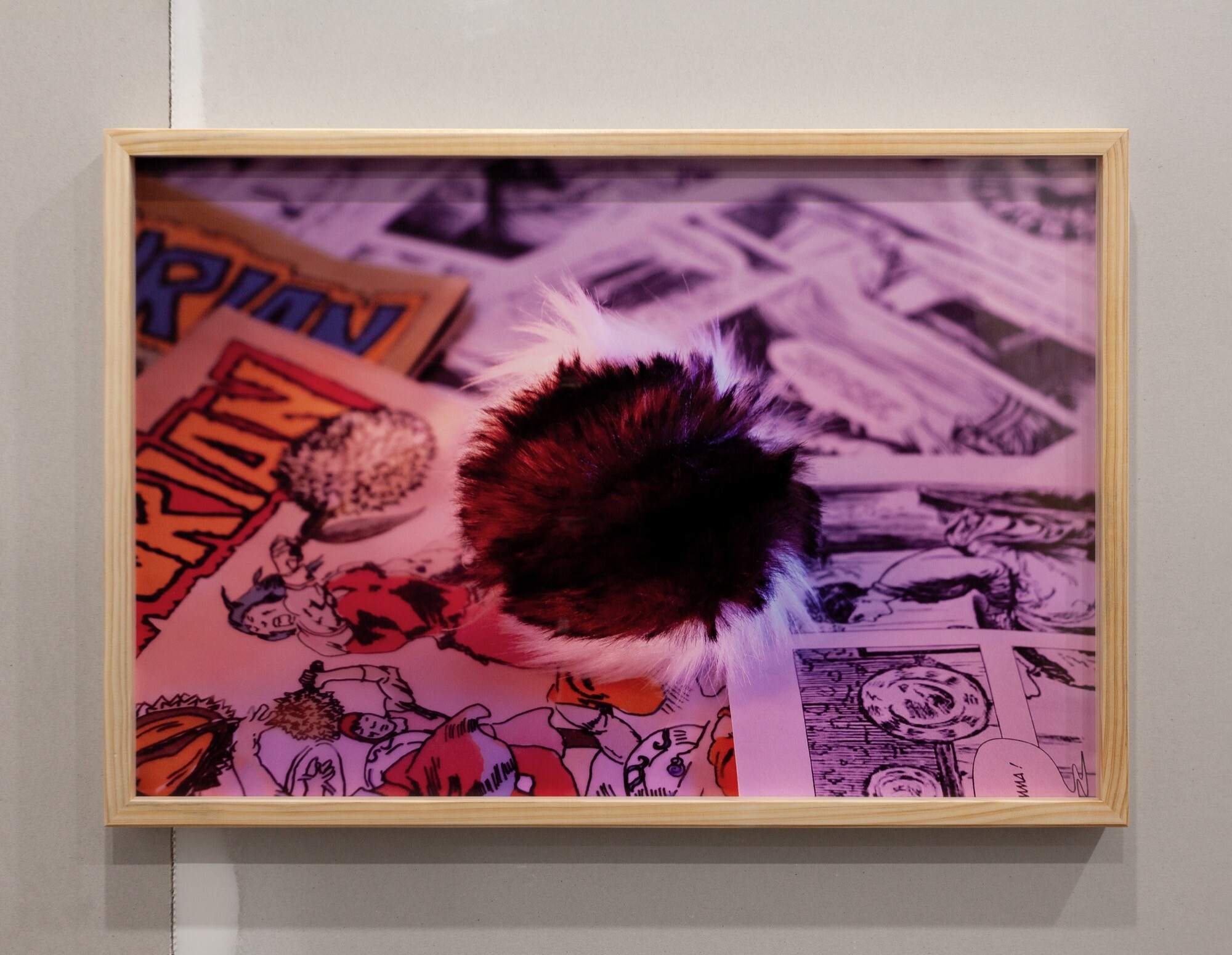
I rewatched Gremlins as part of my research into Helena Tan’s Ajar, which concludes today at Animal House Fine Arts in Brunswick. This is because one element of exhibition is a series of photographs where Tan has reimagined moments from the film. The images represent the mogwai spawn as fluffy balls right before they metamorphose into evil creatures. The photos really lean into the kitsch theatrics of Gremlins. Tan built her sets from scratch (it’s giving Darren Sylvester) and lit them harshly as though to mimic the HMI lighting favoured by eighties filmmakers. Her use of red and blue filters complete the vibe. One photo, Fluff but it’s still life (ii) (2026), reimagines the climactic moment before metamorphosis—the fluffy balls, nestled in a cardboard box, glow like hot coals and spew smoke. A beam of light streams through a hole in the box. In real life, the smoke came courtesy of Tan’s friend who vaped into frame, while Tan held her breath and shot the image.
Tan comes from a sculpture background and her skill with space is evidenced in Ajar. Here, the small Animal House gallery has been segmented off into three sections, which are to be traversed via swinging saloon doors (Midriff, 2026) built by Tan herself. It’s easy to get gassed up on the theatre that the doors create. Cowboy fantasies are momentarily satiated. This humour is perhaps at odds with the neighbourhood Animal House is set in, which is at the edge of the Nightingale Village—a cluster of architecturally designed apartments focused on affordability and sustainability. In recent years, the Nightingale project has become shorthand for what is easy to mock about Brunswick: privilege masquerading as social activism. On the D&D moral alignment, Animal House is the chaotic good to Nightingale’s lawful evil. Director Matthew Ware loves to bust out the baby Weber on weekends, the smoke from which I’m sure sets off the Nightingale group WhatsApp chat. I imagine earnest members of the Merri-Bek community pearl clutching, wondering what is set up behind the swinging saloon doors. Alas, it is in fact an understated interrogation of imperialism—a theme dear to the Nightingale dweller’s heart—albeit perhaps too subtle to draw the admiration of the Nightingale life-drawing class.

Helena Tan, Fluff but it’s still life (ii), 2026. Archival pigment print, wood, glass. 75 x 95 x 4 cm, ed 1/3 +1 ap. Photo courtesy of the artist and Animal House Fine Arts.
In case the reference to Gremlins didn’t make it obvious enough, the fantasy of the Oriental is a central theme in Ajar. Like the wizened Asian mystic who sold him, it is implied that Gimzo is Chinese. But the yellow peril narrative kicks in after Gizmo spawns evil clones, who wreak havoc on the sleepy Pennsylvania town the film is set in. In the fateful scene where our young protagonist Billy accidentally feeds the mogwai spawn fried chicken after midnight, he is watching Invasion of the Body Snatchers (1956), a film made at the height of the Cold War that represented aliens from outer space as a metaphor for Soviet takeover. Xenophobia is invariably the other side of the Orientalism coin. But let’s be clear, Ajar is not a tired lamentation about the exploitative injustices of cultural appropriation. Rather, Ajar speaks to the abstraction that globalism accelerates.
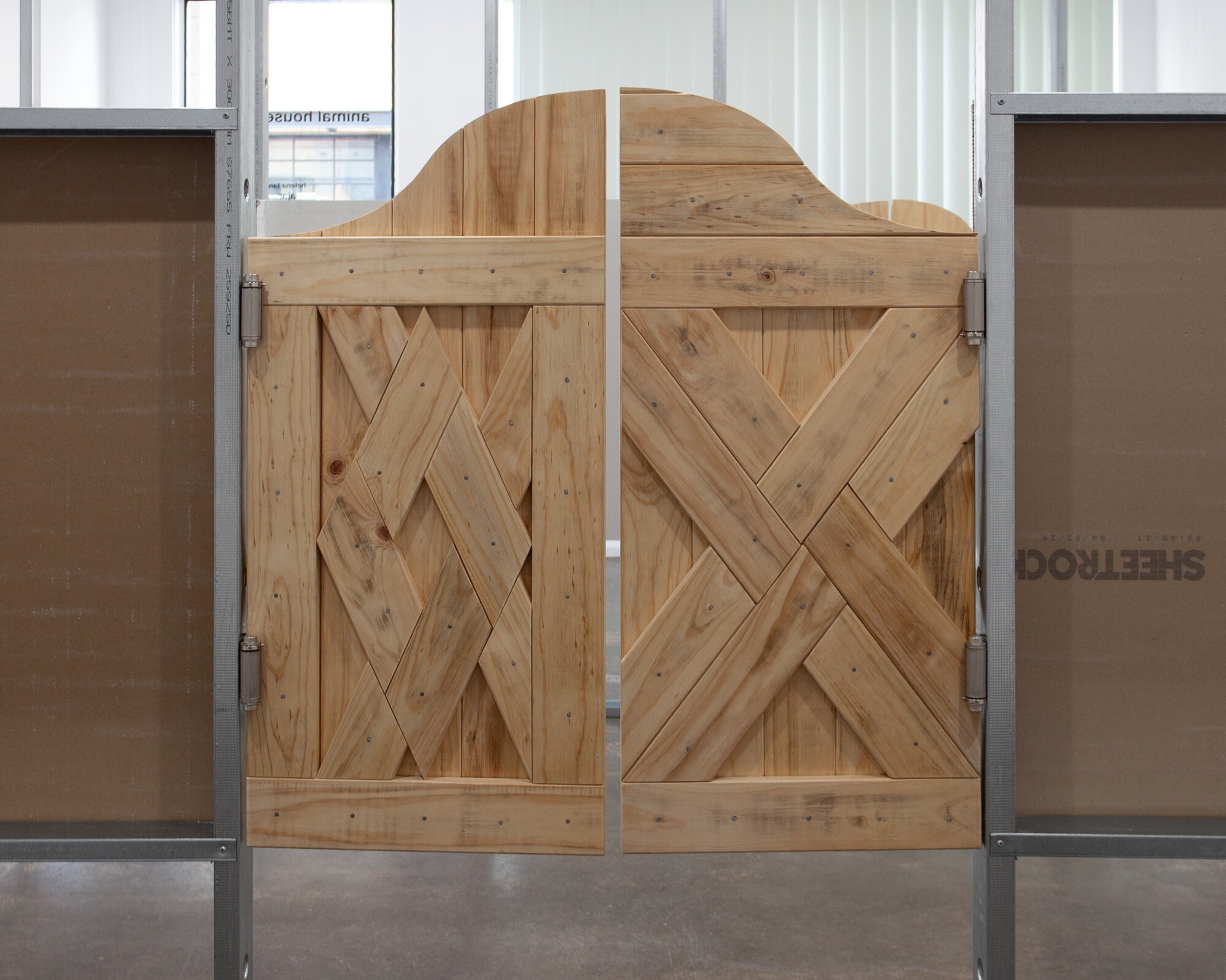
To demonstrate my point, let’s turn our attention to the saloon doors, which are composed of timber beams supported by a minimal frame of steel stud and plaster sheet. The work, which makes one feel like they’re stepping into a half-finished structure, treads a fine line between poetically cryptic and semi-opaque. But I learn that the patterns on the doors come from a very specific source of chinoiserie—William Halfpenny’s Rural Architecture in the Chinese Taste (1755). In the book, Halfpenny offered instructions for the construction of “Chinese” designs for the DIY home carpenter. Of course, the designs were not really from Chinese sources. They were imagined by Halfpenny as part of the British taste for chinoiserie, eighteenth-century hallucinations of the Orient, styles, and designs based more on vibes than facts. In Ajar Tan has transferred two of Halfpenny’s designs to her saloon doors: “A Chinese Double Braid Paling” and “A Chinese Parallelogram.”

Helena Tan, Midriff, 2026. Wood, nails. 95 x 120 x 5 cm in two parts. Photo courtesy of the artist and Animal House Fine Arts.
One criticism of the exhibition could be the lack of formal cues to guide the viewer. But abstraction is the linchpin of the Ajar’s conceptual framework. For it was through a process of abstraction that Halfpenny invented his designs. In the case of Rural Architecture in the Chinese Taste, the logic of “Chineseness” (in and of itself an Orientalist mindset) is reduced to a standard set of patterns. The use of the saloon door invokes another cultural cliché, the Western. In many regards, the reduction of the Western to a genre with flat visual symbols—such as the saloon door, the sheriff’s badge, the rearing horse, the spur, and, of course, the cowboy hat—has also been key to its endurance in popular culture. Indeed, the evacuation of form leaves a shell that looks like the real thing and can nimbly navigate time and space. I soon learn the eighteenth-century Chippendale furniture style was influenced by chinoiserie, and that a Chippendale latticework now features on a door widely available at Home Depot, the American equivalent of Bunnings. In this sense, the process of abstraction has come to its logical apotheosis, existing in a vacated form of mass production that serves the means of capitalism.
I wonder about a line in Trisha Low’s fantastic catalogue essay for Ajar and how it might serve to underscore the double-sword quality that Tan is highlighting in her work. Low writes: “As such, a side effect rarely noticed in historical accounts of chinoiserie: it renders what is Chinese generic … what becomes so ubiquitous as to no longer be locatable or seen.” Tan currently lives in New York where she is presently studying at Bard College. But she also maintains bases in Stockholm and Berlin, where she has previously lived. She was born in Cardiff and her parents live in Melbourne. She ultimately represents the hyper-mobility of the developed world—which us art workers aspire to under the guise of research and networking: Adelaide Biennial this week, Venice the next, and then perhaps a little Cité residency in between? It’s interesting, I think, to consider the logic of the exhibition’s core theme—the abstraction represented by chinoiserie—against the framework of this hypermobility. One might argue, for example, that Tan is part of a growing community of post-millennials with abstracted national identities. As citizens of the world, are we not the ultimate form of unlocatable that Low speaks of?
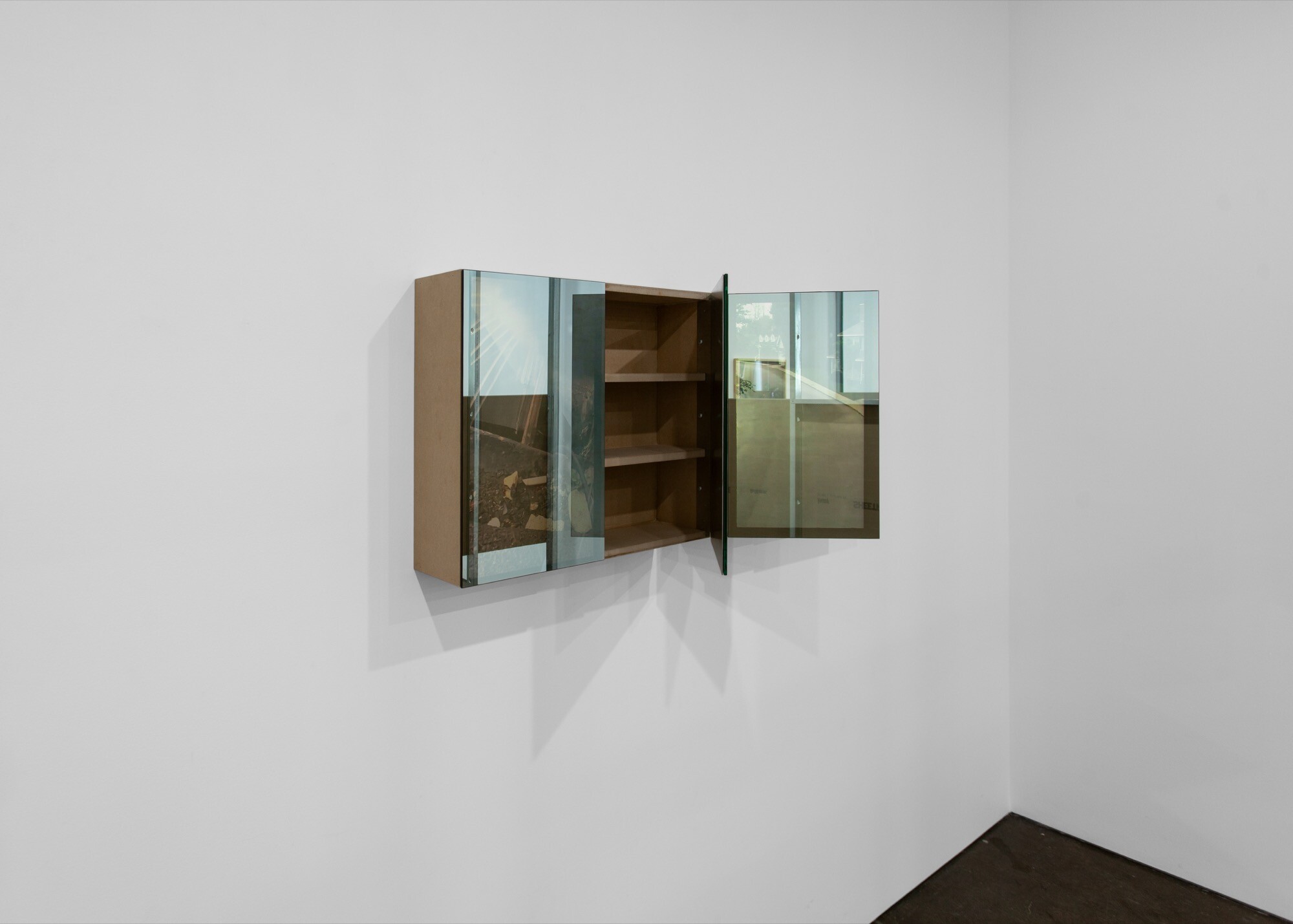
After passing with glee through two sets of saloon doors, the viewer will come face to face with a somewhat perplexing video work playing on a bathroom cabinet fitted with two-way mirrors. The first video is a compilation of footage—some found, some made by Tan—from Go-Pros worn by cats and dogs, including Tan’s family cocker spaniel. The other video depicts the film set street where Gremlins was filmed. Over the years this same street was reconfigured for new uses. It became the set for Smash Mouth’s All Star music video (banger) and Desperate Housewives’ Wisteria Lane. As one watches Tan’s videos, they intermittently cut out, reflecting the viewer back on to themselves. Apparently painted mirrors used to be placed next to exotic animals for rich people to see themselves next to their creatures. The moral? We are surrounded by surfaces with which we fill our own dreams and aspirations. Chinoiserie? A surface through which wealthy Victorian Britons could feel worldly and decadent. “I have a friend who staunchly agrees with me that there is nothing more Asian than a Victorian floral print,” writes Low in Tan’s catalogue essay. Translation: cultural abstraction is eventually recirculated into broader society, and with a strong level of success—superseding the original referent. But I get the sense that Tan’s deployment of the mirror is a clever tactic for implicating the viewer as part of the abstraction machine.

Helena Tan, Fronts, 2026. Wood, aluminium, stainless steel, mirror, monitors, media player. 1.24m x 467 cm x 36.5 cm. Photo courtesy of the artist and Animal House Fine Arts.
Rewatching Gremlins, I remember that the wise old man is named Mr Wing. Is that even a Chinese name? I once had a discussion with artist Sung Tieu, who recounted the experience of playing “Ching,” a teenage sexual deviant of Vietnamese descent, in the early 2000s Berlin comedy Türkisch für Anfänger. Tieu, herself second-generation Vietnamese German, informed the makers of the show that Ching in not a real Vietnamese name. This didn’t matter to them. The name was an easy enough essentialisation of generic Asianness. While essentialising has been part of the colonial project for centuries, it is also a standard human habit. Tan’s Gremlins photos, I realise, are not true restagings of the scenes from the movie, but are romanticised portmanteaus of a few scenes mashed together. Quite deliberately, Tan performs the same reduction and reconfiguration that she identifies as having created chinoiserie or the mythology of the Western.
The intelligence of Ajar is that it does not critique chinoiserie through a simple rehashing of its formal elements. The show resembles more of a bare-bones theatre set than some kind of institutional critique that fuels so much inner-north conversation. Indeed, Ajar considers the power of abstraction as a methodology for concretising images into broader culture. While specificities tend to burden one with too many substantive facts to remember, the process of essentialising evacuates a subject of any complex substance, allowing it to slip seamlessly through time and space. The further something is abstracted, the less it is questioned, thereby compounding its survival status. Don’t feed after midnight. If its stomach is empty, you are safe.
Gallery