A river runs through
May 16, 2026
-
Spence Messih, A river runs through
Venue: UTS Gallery
05 May 2026 – 21 Aug 2026
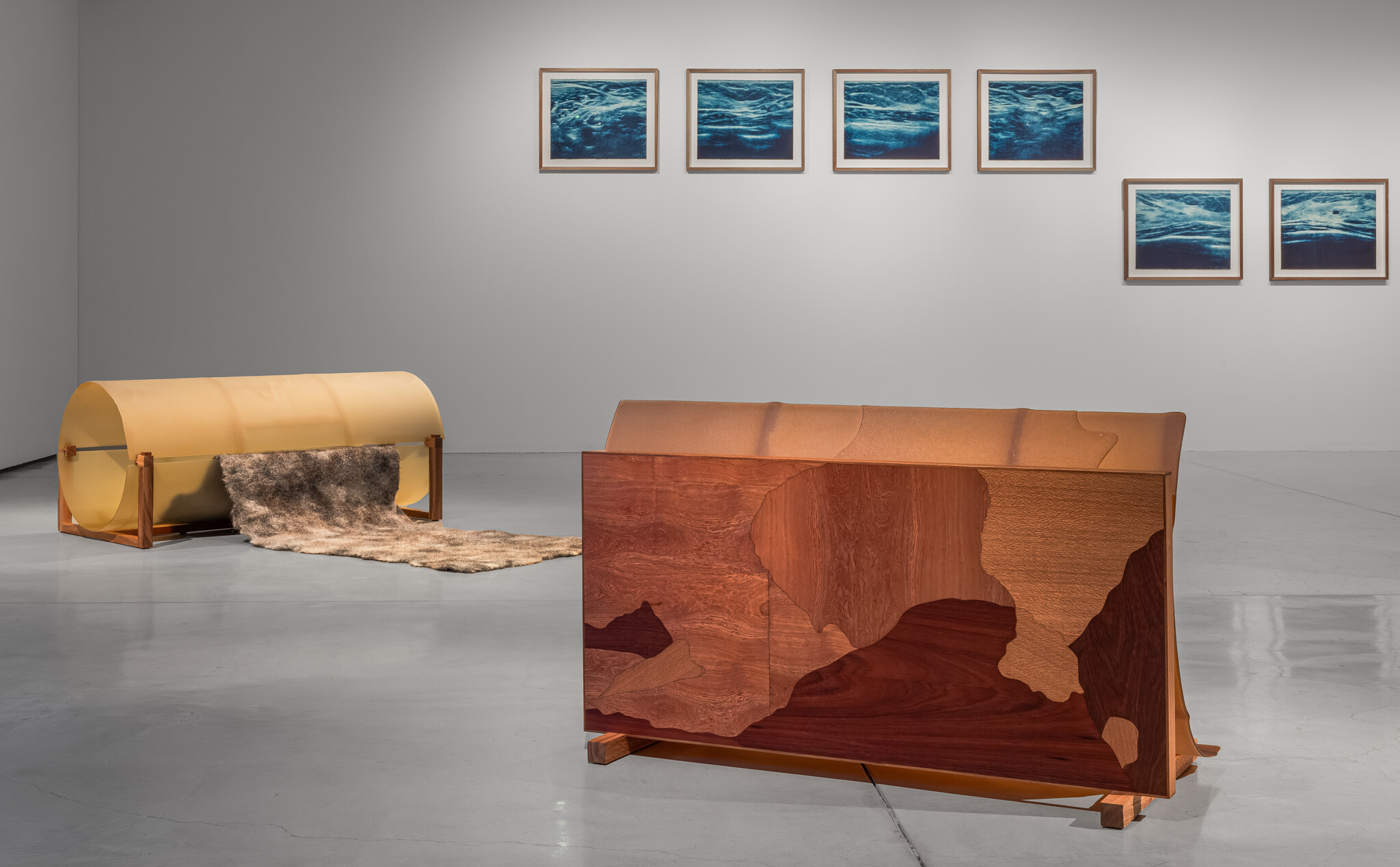
The gallery at UTS is a single open room, bright and quiet. Five glass and timber sculptures stand on the floor, their kiln-formed glass set into timber marquetry of coachwood, silky oak, jarrah, and blackwood. The glass forms move between abstraction and figuration—they could be digestive tracts, pipes, arteries, or water channels. From a round glass pipe in the corner, a length of grey-white goat felt protrudes and lies on the floor. On the back wall, seven blue photogravure prints framed in wood read (at first glance) as waterways or sedimentary layers. In an alcove, a digitised super-8 film loops continuously, casting orange light. The work is generous in its making. The finishes are impeccable. You can feel the many hands that have gone into the work, although they seem to sing in a single voice.
This is a river runs through, a new exhibition by Spence Messih at UTS Gallery. Curated by Stella Rosa McDonald, the exhibition is in development to tour nationally in partnership with Museums & Galleries of NSW. Messih writes—on the blue Riso-printed room sheet—about the relationship between the river, water, and the gendered body, drawing connections between the oppositional word “rival” and its root “rivus,” which means people who shared the same water and whose lives were shared accordingly.
I felt alive in this room. Every piece seems to function like a kind of clue, and the exhibition unravels and then ravels back together, each work drawing meaning from the others. Water has been at the centre of my research for some time, and Messih’s work brought to the fore something I don’t often encounter: a formal restraint, the confluence of emotion and constraint, an unravelling without commotion. Water becomes a way of thinking through other realities, a material—both inside and outside the human body—that also circulates in the pipes of late capitalism, is subject to containment, commodification, and control. But it is rare to find a watery practice that holds the political and the sensuous this tightly together, that seems to refuse spectacle while insisting on urgency.
The body is everywhere in this exhibition, the scent of autobiography permeating the arterial glass forms, in the animal felt, in the orange water that reads as flesh. But the body is never overtly represented. Messih brings water and gender into the same frame across sculptures crafted in timber, glass and felt, a series of photopolymer photogravure prints, a digitised super-8 film, and a publication. While the body is kept in the background, physical location is explicitly mentioned, with Messih acknowledging—in the room sheet—the many Countries he travelled through in developing the work: Gadigal and Wangal Country, Ngunnawal and Ngambri Country, Gundungurra Country, Wurundjeri-willam Country, and Palawa Country in Lutruwita. The elegant publication accompanying the exhibition, Rival: Stories of Gender and Water, also draws from many sources, gathering texts by Arlie Alizzi, Andrew Brooks and Astrid Lorange, Hil Malatino, and Amelia Groom alongside the artist and curator.

Spence Messih, Cell, 2026. Digitised Super-8, 5 minutes 15 seconds, continuous loop. Courtesy the artist.
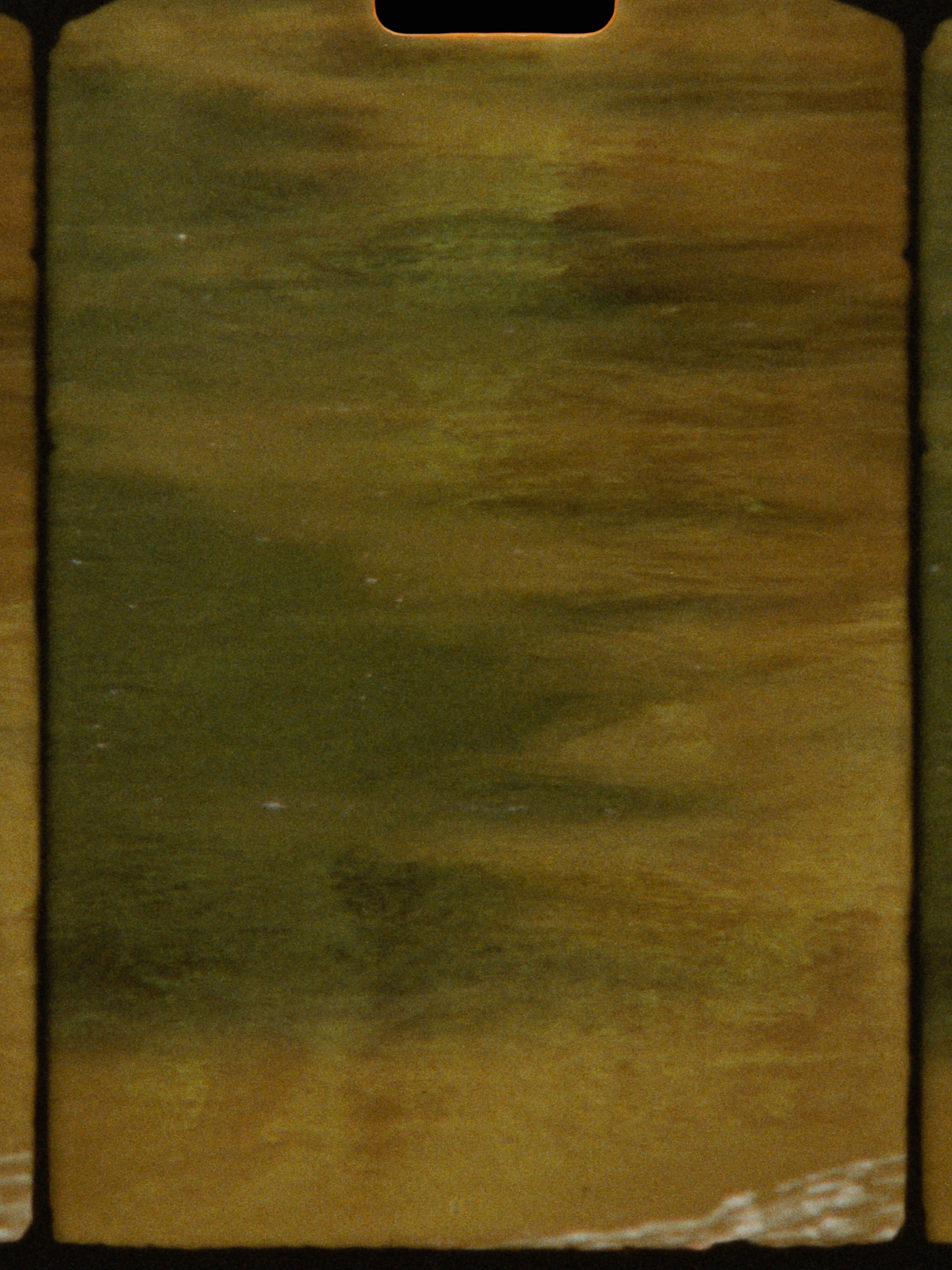
The super-8 film, Cell, 2026, runs as a continuous loop for just over five minutes, playing as a digital projection into a gentle alcove in the otherwise open gallery space. Filmed at the confluence of the so-called King River and Queen River on Palawa Country in Lutruwita/Tasmania, the scratchy film projection streams a rickety, orangey coloured view, close up, complete with that bumpy ride of watching super-8. It brings a certain nostalgia to the fore, a reminder of 1970s early land art, or a nod to my parents’ home videos. We are drawn into the lull of the moving water, our eyes following the patterns, repeatedly made new. But is it light on water? The pumpkin-coloured water, here highly saturated, reads not immediately as liquid; instead, this orange reads more like a microscopic look into a virus, or a macroscopically vast landscape. Despite the colour, the work is still luscious, sensual, hypnotic. It draws the viewer into the watery space, where we are unable to look away from the light reflecting, the endless new configurations of water moving, the river and its limbs, lolloping along.
From the floor sheet I learn more about the two rivers’ colonial-industrial histories. The Queen River runs orange from over a century of acid mine drainage from the Mount Lyell copper mine near Queenstown, which operated from the 1890s and dumped waste directly into the river. The Queen meets the King River, which carries the infrastructure of hydroelectricity. The King and Queen are colonial names imposed on Palawa waterways, what Pakana scholar Theresa Sainty calls the “mis-assignment of gender to geographical features, conflicting with the gender assigned through our living lore.” In my own research, I have written about the colonial-capital logic that delegates water as resource, as modern, as something to be controlled, diverted, and extracted. Watching the orange loop I see this logic made visible in the body of a river. I am reminded of Trawlwoolway artist Julie Gough and her writing on absorption in the rīvus: A Glossary of Water publication, where she writes of Lutruwita’s waterways: “The original names of these arteries of Country are little known and hardly spoken. Some are lost in time.” These waters, Gough continues, “await new names in First language by their Aboriginal people.” The absence is not empty. It is full of residue. The Queen runs orange. The names wait.
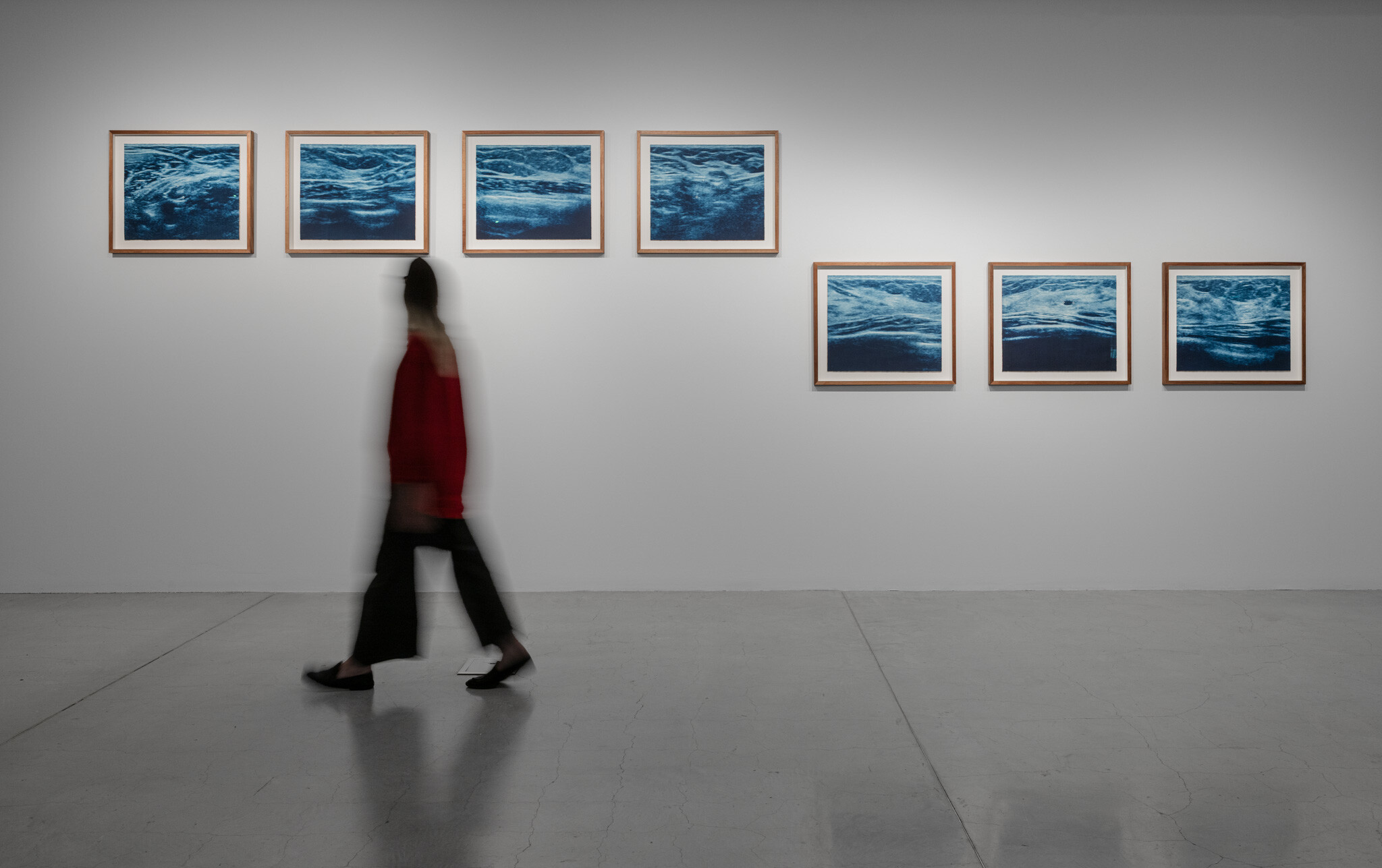
The prints carry the body closest to the surface. Hiddener abode I–VII, 2025, a deeply blue series framed in wood, reads at first as topographical, mapping water or landscapes, perhaps mountain ridges or underwater valleys. The blue is deep and quiet. On further looking, small sonographic annotations, white crosses, clinical and precise, mark moments of rupture, drawing the eye to the flesh. Suddenly you realise you are looking at a body: these are renderings of the artist’s chest ultrasounds. What was scanned for the purposes of medical categorisation, made legible, diagnosable, sortable, has been passed through photopolymer photogravure at Baldessin Print Studio and emerged as something opaque, textural, resistant to easy reading. The diagnostic image becomes water-landscape. The title references Karl Marx’s “hidden abode of production” via writer and scholar Jordy Rosenberg’s idea of a hiddener abode, the site where value is extracted beyond public view. Here the artist’s own body is presented as one such site. There is an ambivalence here that I find deeply affecting: the body is present but refuses to be legible. These are the quietest works in the room and the most unsettling. The body hides in plain sight, a puddle exposed after a passing rain shower.

Detail of Spence Messih, False antithesis I–V, 2026, kiln-formed glass, timber marquetry (coachwood, silky oak, jarrah), blackwood, felted feral goat fibre, dimensions variable. Photo: Jacquie Manning.
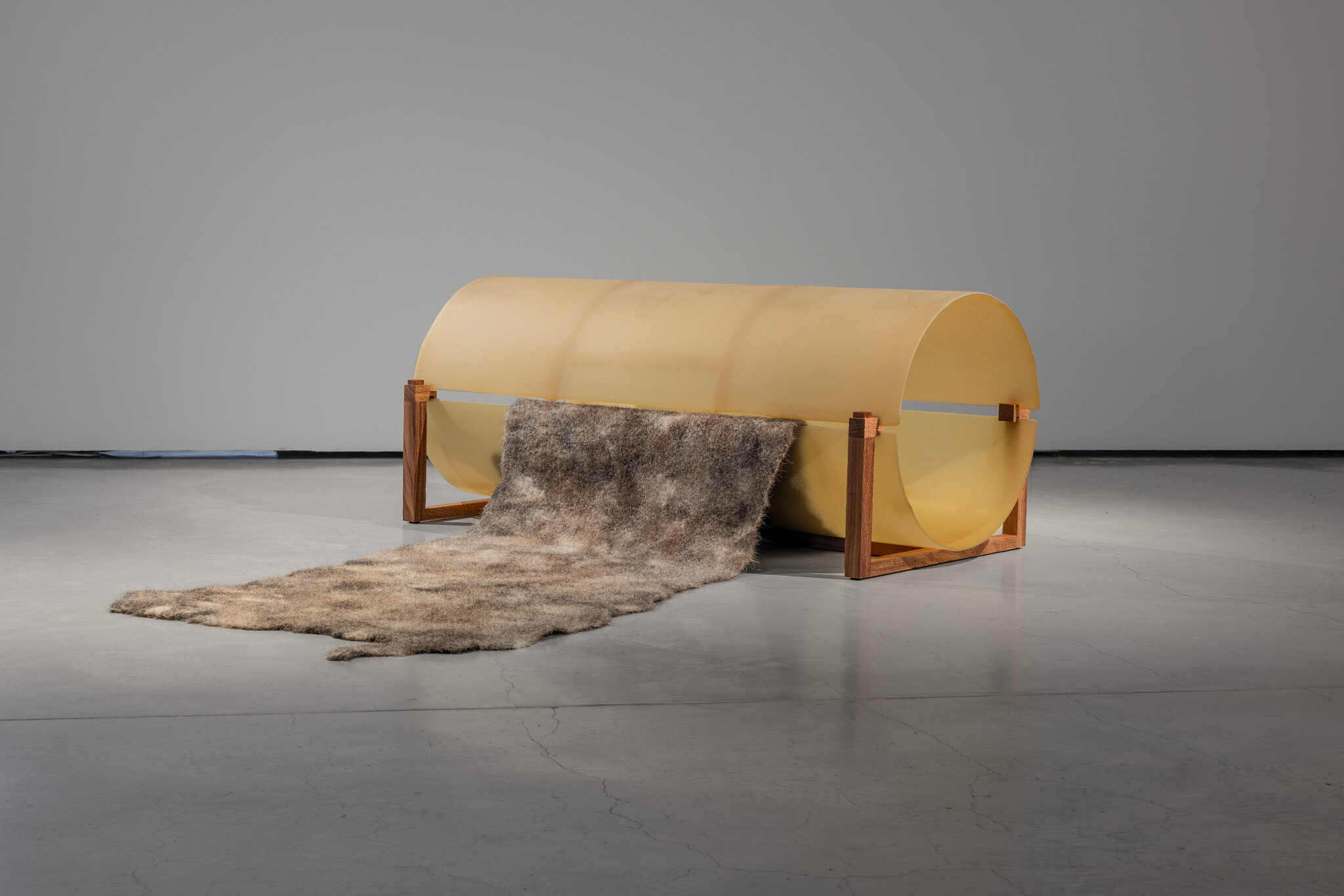
One interruption to the room is the feral goat felt. It’s grey, white, lumpy, and lies on the gallery floor, protruding out of the glass pipes, a roadkill corpse laid to rest. It is scratchy to look at, its roughness rhyming with the grain of the super-8. At the opening, Megan Hanson, who worked with the artist to make the felt, mentions the smell to me: a goatiness. I like that this animal stench penetrates the otherwise very clean and tidy aesthetic of the room. The artist encountered feral goats while following the Baaka/Paaka/Darling River in northwestern New South Wales. Feral goats, introduced by colonial settlement, escaped management and multiplied across the landscape. The goat felt carries a feral logic, an animal introduced by colonial infrastructure that escaped control and multiplied beyond it. The exhibition text names the current moment as one of “gender panic,” a time when the scapegoating of trans and gender diverse bodies is weaponised as a political tool, from Queensland’s ban on hormone treatments for trans young people to Trump’s crackdown on DEI programs in the USA. By using feral goat hair and making the goat felt, the artist seems to point to a broader scapegoating, both convenient figures of blame in a moment of converging crises. I can’t help but see the goat felt like a tongue, sticking out at us, at the gallery, at the clean lines and impeccable finishes that surround it, linking me to the feral, the introduced, categories that are themselves colonial inheritances. This is the work that stays with me. The one that won’t behave.
The glass forms are magnificent. The earthy browns and yellows of False antithesis I–V(2026)—kiln-formed at Canberra Glassworks—glow with a warmth that feels geological, like looking into compressed sediment or amber. The timber armatures sit at strange angles, like school desks or dinner tables abandoned mid-conversation. Together the glass and timber form a kind of chorus, and the felt interrupts it. The title names a false dilemma: the insistence on choosing between two opposing categories when other possibilities exist. The glass forms resemble digestive tracts, pipes, arteries or water channels, systems of intake, sorting and expulsion. Sandblasted surfaces resist transparency. These works slip between landscape, abstraction, and figuration. You could be looking at a body, a geological formation, a section of pipe. They will not settle. The glass is where the exhibition is most seductive and most evasive.
There is a tension I keep returning to, and I think it is a productive one. The exhibition speaks of resistance, of refusal, of what cannot be fixed or contained. And yet the room is quiet, the glass flawless, the prints exquisitely produced. There is a gap between what the work claims and what the work performs, but I am not sure it is a failing. The exhibition is at its most powerful when something leaks through, the super-8 grain scratchy, the orange putrid, the felt pushing back with its smell and its shapelessness. The restraint is what makes the show powerful. It is also what made me want, at moments, for something to crack.
Messih’s work sits within a tradition of queer and trans artists who have used abstraction as a way to refuse the demand for bodily legibility, what Messih speaks of, in their artist’s doctoral thesis Double Bind, as “claiming presence within absence, self-recognition within misrecognition and opacity within obscurity.” Art historian David Getsy, who named Messih in his 2024 Power Institute Lecture at the MCA as an artist committed to queer abstraction, described how such work engages with “queer experiences of non-disclosure, dissemblance and the intimate reveal.” But this exhibition pulls the tradition into muddier territory. Here queerness meets and evades the river, the pipe, the dam, the channel. Abstraction yawns open, swallows the ecological and the extractive whole, holds all of it or none of it, leaching out of the groundwaters.

Installation view of Spence Messih, A river runs through, 2026. Curated by Stella Rosa McDonald, UTS Gallery, Gadigal Nura/Sydney. Photo: Jacquie Manning.
The same logic channelling rivers into pipes and dams also channels bodies into categories and diagnostic images. The ecological and the embodied, the hydrological and the gendered, held together, politicised together. Messih does not resolve this. He holds it. In the gallery the orange river loops. The glass pieces gather heat from the bodies who pass by them. The felt holds its animal smell. There is a stillness here, like the surface of a lake before it has been disturbed, a pause during a chaotic moment. Light passes through the concrete and glass of the gallery walls, forcing warmth into the spaces the artist has cracked open.
Gallery